
The Fear: The “Red vs. Green” Wire Nightmare
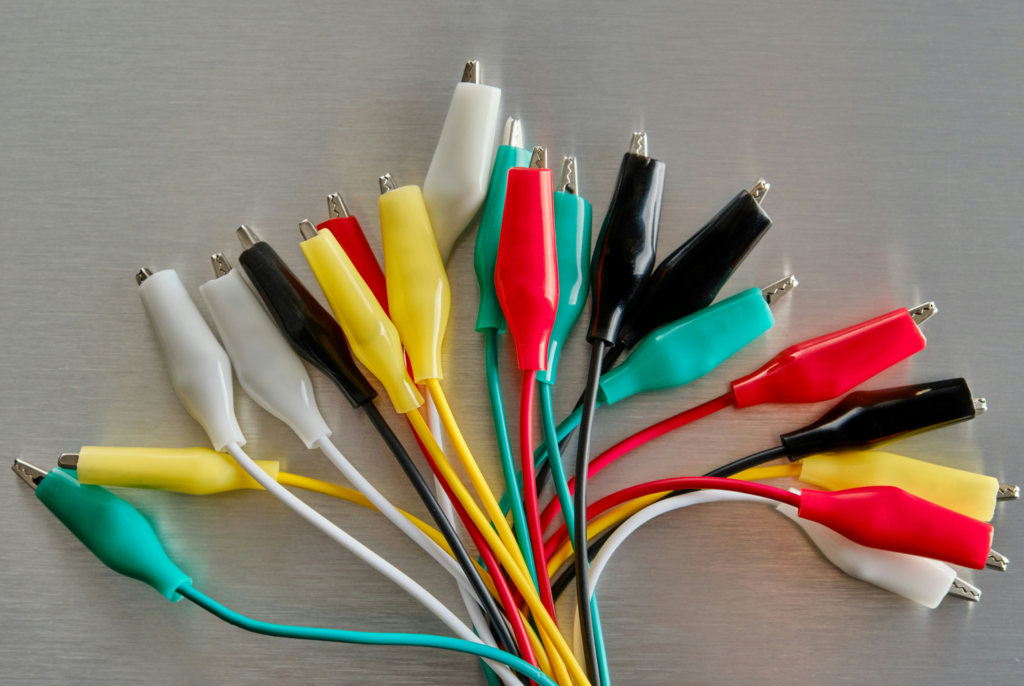
For an electrician or electrical engineer, color blindness is not just an inconvenience—it is a safety hazard. The industry standard is clear: Red is Hot. Green is Ground.
If you have a Deutan (green-weak) or Protan (red-weak) deficiency, these two critical wires can look dangerously similar, especially in the dimly lit environments where you often work (attics, basements, or inside breaker panels).
Many experienced electricians hide their condition for years, relying on coworkers to tag wires for them. But living in fear of the “Wrong Cut” or failing a practical employer screening is exhausting.
The Reality: Safety is the Only “Test” That Matters
Unlike aviation or policing, there is no federal law (like an OSHA ban) that strictly prohibits colorblind people from becoming electricians.
However, the National Electrical Code (NEC) and safety standards like NFPA 70E emphasize the ability to distinguish color codes for safety.
- The Employer’s Rule: Most unions (like IBEW) and private employers require a physical physical exam. If you cannot pass the Ishihara plates, they may view you as a liability.
- The Practical Solution: Employers ultimately care about competence. If you can demonstrate that you can safely identify wires—using corrective tools—you can often secure your job.
Top 3 Surprising Facts About Colorblind Electricians (From Industry Reports)
We analyzed technical reports from Ireland (SOLAS), Australia (Energy Safe Victoria), and trade forums to uncover facts that most apprentices never hear.
Surprise #1: The “Safe” Category (You Don’t Need Perfect Vision)
Most people think vision is “Pass/Fail.” However, a major research report for apprenticeship programs proposes a new classification system.
- The Fact: Researchers defined a category called “Safe CVD” (Color Vision Deficient).
- The Data: This category includes people who fail the Ishihara test but have “safe” red-green discrimination for practical tasks. The report notes that 22% of Deutans (green-blind) fall into this “safe” category and could pass alternative lantern tests.
- The Shift: The report explicitly recommended that boards “discontinue the historical… up-front Colour Vision Defect” barriers for certain electrical programs.
Surprise #2: The “Risk Assessment” Responsibility
In regions like Victoria, Australia, the burden has shifted from the worker to the employer.
- The Fact: Instead of banning you, safety regulators state that employers “should conduct a risk assessment of the workplace” for colorblind staff.
- The Solution: The guidelines mandate “suitable adjustments,” such as:
- Improved lighting (brighter LEDs make color differentiation easier).
- Comparison with known conductors (keeping a “master sample” of wire colors).
- Use of a colour chart on site.
Surprise #3: The “Multimeter” Method
How do colorblind pros actually survive? They don’t guess.
- The Fact: Experienced colorblind engineers and electricians rarely trust their eyes alone. They use multimeters to ring out cables and verify continuity.
- The Insight: As one engineer noted, “A tip for electrical engineers is use a multi meter because you don’t know which colour band is what”. This confirms that tools, not just cones, ensure safety.
Suitable Career Paths & “Workarounds”
Not all electrical work is the same. Based on the uploaded files, here is where you fit best.
- Domestic/Residential Installer:
- Why: Modern wiring (Twin & Earth) uses distinct standard colors (Blue/Brown/Green-Yellow) that are high-contrast.
- Challenge: Old wiring (Red/Black) might be tricky in low light.
- Industrial Maintenance:
- Why: Often involves 3-phase wiring where colors like Grey, Black, and Brown can look identical to a colorblind eye.
- Solution: Mandatory use of cable markers (tags) and digital testing tools.
- Electrical Design / Planning:
- Why: Zero reliance on live wire identification.
The Gap Analysis: Old Barriers vs. New Reality (Compare Table)
How does the “Old School” view compare to the “Modern Reality” found in your uploaded documents?
Table : Bridging the Gap for Colorblind Electricians
| The Gap | Old School Assumption (The Barrier) | Modern Reality (The Solution) |
| The “Legal” Gap | “It is illegal to be an electrician if you are colorblind.” | False. UK law does not prohibit it. Regulators now focus on “Risk Assessment” rather than exclusion. |
| The “Testing” Gap | “If you fail the Ishihara (Dot) test, you are out.” | Outdated. Research suggests using the Farnsworth D-15 or CAD test. Many who fail Ishihara are actually “Functionally Normal” or “Safe” for trade work. |
| The “Safety” Gap | “You will mix up Live and Neutral and cause a fire.” | Manageable. Colorblind pros use Multimeters to verify every connection. They also use “cheats” like knowing Red is usually on top (traffic lights) or strictly following position cues. |
| The “Visual” Gap | “I can’t distinguish faded Red vs. Green wires.” | Correctable. In difficult lighting, ColorKinds® Lenses can boost the saturation of red wires, helping you distinguish them from green ground wires or black/grey phases. |
How ColorKinds® Makes Wires “Pop”
Our lenses are specifically tuned to separate the wavelengths of light reflected by standard electrical insulation.
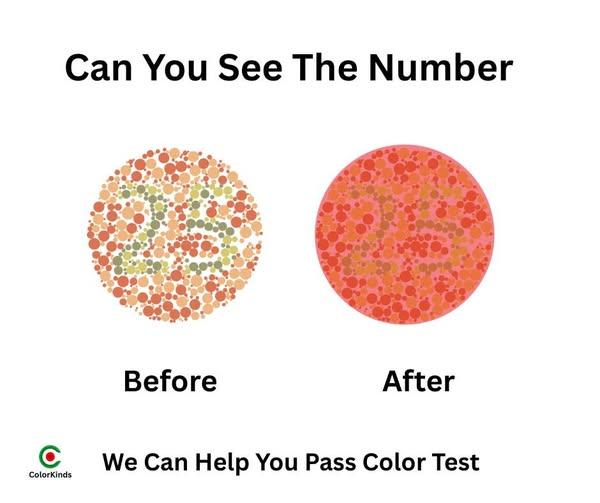
1. Live vs. Ground Distinction
The specific “Notch Filter” in our lenses blocks the muddy frequencies where red and green blend.
- With ColorKinds: The Red wire appears bright, vibrant, and distinct, clearly separating it from the Green ground wire.
2. Identifying “Tracers” and Stripes
Modern wiring often uses “Tracer” lines (e.g., a white wire with a thin red stripe). This is often impossible for colorblind eyes to see. Our lenses increase contrast, making that thin red line stand out against the white or grey insulation.
Electrician Testimonial: “I’ve been an electrician for 10 years, mostly guessing or using a multimeter for everything. I almost got fired for wiring a 277v lighting circuit backwards because I mixed up the brown and orange. I bought these contacts, and it was like someone turned a light on. I can see the red stripe on the fire alarm cables now. I wear them under my safety glasses every day.” — Mark T., Journeyman Electrician
Don’t Guess. Be Sure.
In this trade, certainty is safety. Equip your eyes with the tool that ensures you never second-guess a connection again.
Frequently Asked Questions
Can I wear these under my safety glasses? Yes. ColorKinds contacts are standard soft lenses. You can (and should) wear your standard clear ANSI-rated safety glasses or goggles over them without any interference.
Do they work in low light? Yes, but with a caveat. All color vision (even normal vision) degrades in the dark. However, because our lenses increase the contrast between red and green, many users find it easier to distinguish wires in dim basements than they could with their naked eye. We always recommend using a strong headlamp for maximum safety.
Will I pass the Union (IBEW) physical? Many local chapters use the Ishihara test. While policies vary by local chapter, using our contacts to practice and train your eyes—or wearing them during a “functional” wire test—has helped many candidates prove their safety competence.
Can I become an electrician if I am colorblind? Yes. While it was once an automatic disqualification, modern regulations in many countries (including the UK and parts of Australia/US) do not legally ban colorblind electricians. Instead of a blanket ban, employers now often conduct a risk assessment to determine if you can work safely using tools like multimeters and labeled wires.
What happens if I fail the Ishihara (dot) test? Failing the Ishihara test does not always mean you are rejected. Many apprenticeship boards and unions now offer secondary testing like the Farnsworth D-15 or Lantern Test. Research shows that up to 22% of people who fail the Ishihara test can still pass these secondary tests and be classified as “Functionally Safe” for trade work.
Is it illegal to be a colorblind electrician? No. There is no federal law in the US or UK making it “illegal.” However, private companies and unions may have their own safety policies. The decision often comes down to the specific insurance requirements of the employer rather than government law.
How do colorblind electricians identify wires safely? Experienced colorblind electricians use the “Three-Check Method”:
- Read the Label: Wire spools often have text labels (e.g., “BLK”, “RED”).
- Use a Multimeter: They “ring out” wires to verify continuity rather than trusting their eyes.
- Phase Tape & Markers: They immediately tag wires with numbers or colored tape upon installation to avoid confusion later.
Which electrical jobs are best for colorblind people?
- Residential/Domestic: Modern wiring (Blue/Brown/Yellow-Green) has high contrast and is easier for many colorblind people than industrial 3-phase wiring.
- Rough-In / Pipe Work: Running conduit involves no color coding.
- Planning & Design: Zero exposure to live wires.
- Solar Installation: Often involves pre-made connectors (MC4) that cannot be reversed.
Are there specific tools that help colorblind electricians? Yes. Beyond standard tools, colorblind pros use:
- ColorKinds® Contact Lenses: To enhance the vibrancy of red wires against green grounds.
- Talking Color Identifiers: Apps or devices that speak the color of a wire.
- High-CRI Flashlights: Bright, high-quality light helps distinguish between dark blue, black, and purple wires in dim panels.
Do electrical unions test for colorblindness? Yes. Most IBEW (International Brotherhood of Electrical Workers) locals and JATC training centers require a color vision test during the physical exam. However, if you fail, you can request a “practical” wire test, where you demonstrate your ability to identify real wires rather than dots on a page.
Can I use colorblind glasses or contacts during the exam? It depends. Some strict testing centers (like for military or specific state licenses) forbid them. However, for private employment or daily work, you are generally allowed (and encouraged) to use any assistive device—like ColorKinds® Lenses—that ensures you can work safely.
What are the most dangerous wire colors to mix up? For the most common type of colorblindness (Red-Green / Deuteranomaly):
- Red (Hot) vs. Green (Ground): The most dangerous mix-up.
- Green vs. Bare Copper: Can look identical in low light.
- Brown vs. Red: Common in commercial high-voltage lighting.
- Blue vs. Purple: Often confused in switch legs or communication wires.
Do I have to tell my employer I am colorblind? Legally, it is complex, but practically: Yes. Safety is the priority. Most experienced electricians recommend disclosing it to your foreman so they don’t assign you to “live” color-critical tasks alone. Under disability acts in many regions, employers may be required to provide reasonable accommodations (like better lighting or labeling tools) rather than firing you.
Reference Standards & Safety Codes
Use these sources to understand the regulations:
- OSHA Standards (29 CFR 1910): OSHA does not explicitly ban colorblind electricians, but requires adherence to color codes.
- Source: OSHA Electrical Standards
- NFPA 70 (National Electrical Code): Defines the “Reserved Colors” (Green for ground, White/Grey for neutral).
- Source: NFPA 70 Information