
Yes, a colorblind person can become a pilot. While failing the initial Ishihara test may result in a daytime-only restriction, pilots can take alternative tests like the OCVT or CAD test to prove they are ‘color safe’ and fly commercially
The Fear: The “Night Flying Restriction”
For a pilot, the words “Not Valid for Night Flying or by Color Signal Control” stamped on a Medical Certificate are a career killer.

If you cannot pass the color vision screening, the FAA restricts you to daytime flying only. This effectively disqualifies you from major airline careers, commercial cargo, and military aviation.
The 2026 Reality Check: As of 2026, the FAA and global aviation bodies have firmly shifted away from the old “book” tests. For many initial Class 1 & 2 Medicals, the standard is no longer just the Ishihara plates. Aviation Medical Examiners (AMEs) are increasingly using Computerized Color Vision Testing, specifically:
These 2026 standards are stricter and harder to “memorize” than the old plates. They measure your exact threshold of color detection on a screen.
The “Loophole”: The Signal Light Gun Test (OCVT)
If you struggle with the new computerized screenings, do not panic. You still have one major “Second Chance” option: The Operational Color Vision Test (OCVT).
This is a practical field test where an inspector stands in the tower and shoots a “Light Gun” signal at you on the ground. You must identify:
- Red (Stop/Circle)
- Green (Clear to Land/Takeoff)
- White (Return to start)
If you pass this and a Medical Flight Test (MFT), you can receive a Letter of Evidence (LOE) or a SODA (Statement of Demonstrated Ability), granting you a waiver for life.
How ColorKinds® Supports Aviation Careers
While the FAA generally forbids wearing color-correcting contact lenses during the official medical exam, our lenses are a vital tool for training, safety, and daily life.
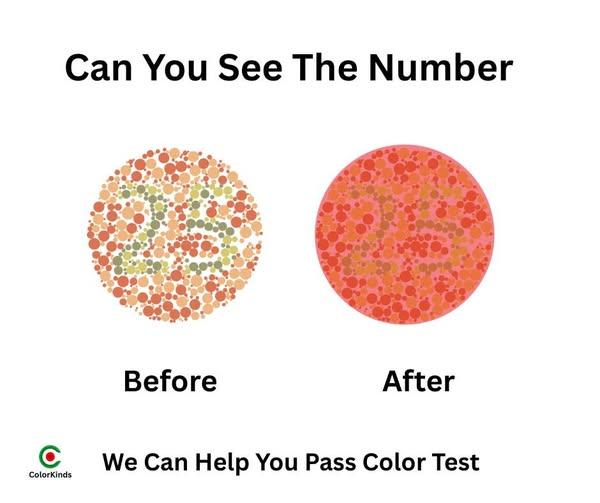
1. Training for the “Signal Light” Test
The OCVT is often a one-time, pass-or-fail event. You cannot retake it easily.
- The Strategy: Use ColorKinds lenses during your practice sessions at a local airfield. They teach your brain to distinguish the high-contrast “pop” of the Green signal versus the White signal.
- The Result: Many pilots report that after training with our lenses, their brain learns to recognize the subtle hue differences better, even when they take the lenses out for the official test.
2. Cockpit Safety (General Aviation)
For private pilots (Class 3) or those flying with waivers, safety is paramount.
- Glass Cockpits: Modern Garmin/Avidyne displays use Red/Green/Amber alerts. Our lenses help maximize the contrast of these digital displays.
- Runway Lighting: Distinguishing the PAPI/VASI lights (which tell you if you are too high or too low on approach) is critical. Our spectral notch filter separates the White lights from the Red lights, ensuring a safer approach path.
Pilot Testimonial: “I was terrified of the light gun test. I bought these glasses to practice at my local FBO. They helped me finally see what ‘Green’ actually looks like against the sky. I went into my OCVT confident and passed. I now have my unrestricted Class 1.” — Capt. S.L., Commercial Pilot
Prepare for Your Waiver.
The signal light test is your career lifeline. Train your eyes to see the difference before you step onto the tarmac.
Top 3 Surprising Facts About Colorblind Pilots
We analyzed the FAA AME Guide, EASA regulations, and the NAOHP 2025 Update to find the facts that flight schools often forget to mention.
Surprise #1: The 2025 “Computerized” Mandate
Most pilots expect to see a book of dots. That is changing.
- The Fact: As of 2025, the FAA is phasing out traditional plate books for new applicants in favor of Computerized Color Vision Tests (CCVT) like the CAD (Color Assessment and Diagnosis) or Waggoner CCVT.
- The Data: These digital tests use randomized, calibrated colors on a screen to detect the severity of deficiency, not just the presence. The CAD test is particularly “surprising” because it can quantify if you are “Color Safe” even if you have a genetic deficiency.
- Why It Matters: You can no longer memorize the plates. You must prepare your eyes for screen-based contrast sensitivity.
Surprise #2: The “Do or Die” Practical Test
If you fail the screenings, you can request a “real world” test, but it comes with a massive risk.
- The Fact: You can take the OCVT (Operational Color Vision Test), where you identify light gun signals from a tower and read charts.
- The Catch: This is often a one-time opportunity. If you fail the OCVT, the restriction on your license (No Night Flying) becomes permanent and cannot be removed by later testing.
- The Reward: If you pass, you get a Letter of Evidence (LOE) (formerly SODA), and you never have to take a color vision test again.
Surprise #3: The “Strict Ban” on Lenses
Unlike electricians or designers who can wear corrective lenses to work, pilots face a hard line.
- The Fact: The FAA explicitly prohibits the use any color-correcting contact lenses during the medical exam or while flying.
- The Reality: If you wear them during the test, you will fail or face revocation. You must pass with your “naked” eyes (or standard clear prescription glasses).
Suitable Career Paths for Colorblind Pilots
If you have a color vision restriction (“Daytime VFR Only”), you are not grounded, but your career path changes.
Table : Aviation Career Suitability by Vision Status
| Career Path | Restriction Status | Why It Fits (or Doesn’t) |
| 🔴 Airline Pilot (ATP) | Must be Unrestricted | Airlines require a Class 1 Medical without restrictions. You must pass the OCVT or CAD test to fly passengers at night. |
| 🟡 Agricultural Pilot (Crop Duster) | Restricted OK | Crop dusting is almost exclusively a Daytime VFR job. Many ag pilots fly successfully with the “No Night Flying” restriction. |
| 🟡 Flight Instructor (CFI) | Restricted OK (Conditional) | You can teach students during the day. However, you cannot teach night flying requirements, which limits your utility to flight schools unless you team up with another instructor. |
| 🟢 Sport / Private Pilot | Restricted OK | You can fly for fun, carry passengers (in daylight), and own a plane. The restriction only stops you from flying at night or reacting to light gun signals. |
| 🟢 Air Traffic Controller (ATC) | Strict Standards | Surprisingly, ATC standards are often stricter than pilot standards because they rely entirely on color-coded screens. |
The Gap Analysis: Old Assumptions vs. 2026 Reality
The aviation medical landscape is shifting. Here is how the “Old Rules” compare to the “New Reality” in your files.
Table: The “Gap” Analysis for Aspiring Pilots
| The Gap | Old Assumption (The Myth) | 2026 Reality (The Source) |
| Testing Method | “I just need to memorize the 14 Ishihara plates.” | Deprecated. New applicants face randomized Computerized Tests (CAD/CCVT) that cannot be memorized. |
| The “Fail” Outcome | “If I fail the plates, I can never be a commercial pilot.” | False. You can take the OCVT. If you demonstrate you can see Light Gun Signals and read Charts, you get a waiver (LOE) and a Class 1 Medical. |
| Correction | “I’ll just wear Enchroma or Colorkinds lenses to pass.” | Banned. “Color Vision Correcting Lens (e.g., Colorkinds) are NOT acceptable to the FAA”. |
| Night Flying | “I can fly at night if I use instruments.” | Restricted. Without passing the color test, your license will state: “Not valid for night flying or by color signal control”. |
Frequently Asked Questions (FAA Specific)
- New Applicants: Must take a Computerized Color Vision Test (CCVT) like the CAD or Waggoner test. The old Ishihara book is no longer accepted for initial exams .
- Existing Pilots: If you already have a medical without restrictions, you are “grandfathered” in and do not need to retake the test unless your condition changes.
- Why it’s better: It quantifies exactly how colorblind you are. Many people who fail Ishihara plates are found to be “Color Safe” by the CAD test and get their unrestricted license .
Reference: Official FAA Standards
Always verify with your AME.
- AOPA Pilot Protection Services:
- Details: Resources on how to apply for the OCVT and Medical Flight Test waivers.
- FAA Guide for Aviation Medical Examiners (Item 52):
- Details: Lists the approved testing devices (Optec, Ishihara, CAD, Rabin) and the prohibition of corrective lenses during testing.
- Source: FAA AME Guide – Color Vision
Related Information
See How Our Contacts Help Pilots Pass Color Vision Tests
How to Prepare FAA Pilot Color Vision Test Guide
Can Colorblind People Be Pilots? FAA Requirements, Test Options & Solutions (2026)