
The Fear: The “Engine Room” Sentence
For anyone dreaming of being a Ship’s Captain, a Deck Officer, or a Naval Aviator, the color vision test is the “Gatekeeper.”
- The Rule: To hold a Deck License (STCW) or serve in unrestricted Navy roles, you must possess “Normal Color Vision.”
- The Consequence: If you fail the initial screening (Ishihara), you are typically restricted to the Engineering Department or Stewart roles. You are banned from “Navigation Watch” duties because you cannot distinguish red from green signal lights at night.
The Reality: The “Lantern” Loophole
The maritime industry is one of the few that offers a widely accepted “Second Chance” test immediately.
If you fail the Ishihara plates, most authorities (including the US Coast Guard and US Navy) allow you to take the Farnsworth Lantern Test (FALANT) or its modern equivalent, the Optec 900.
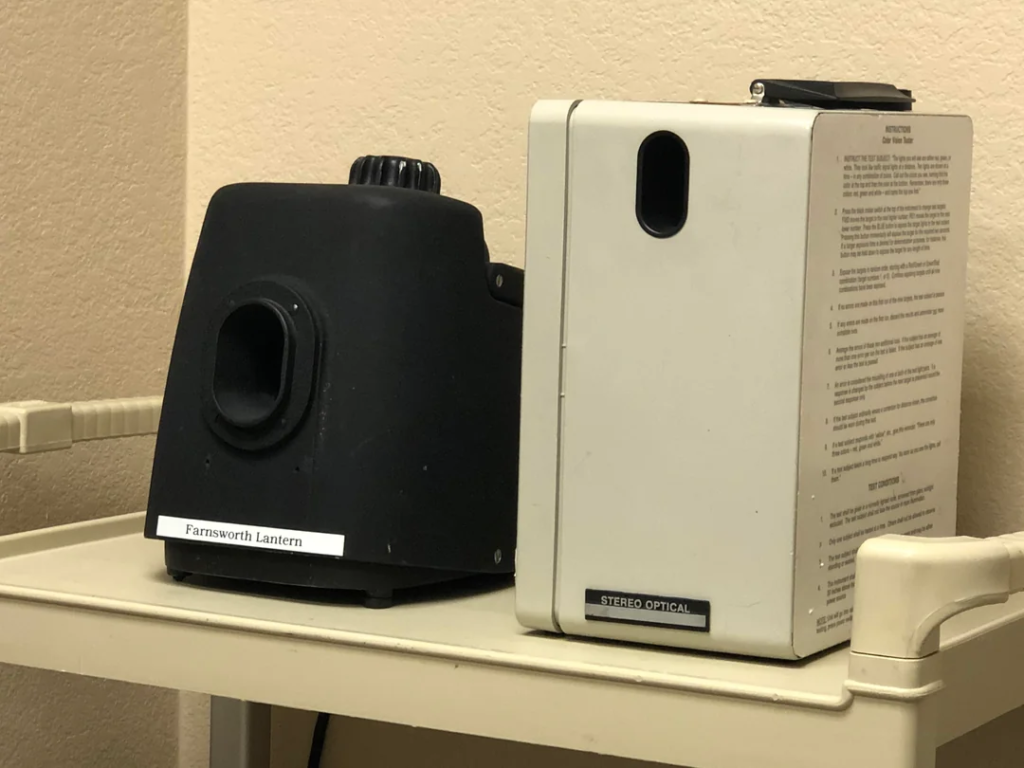
- How it works: You view pairs of vertical lights (Red, Green, or White) from a distance.
- The Good News: These tests are generally easier to pass than Ishihara plates because they test for light recognition rather than subtle pattern matching.
Top 4 Surprising Facts About Maritime Color Vision
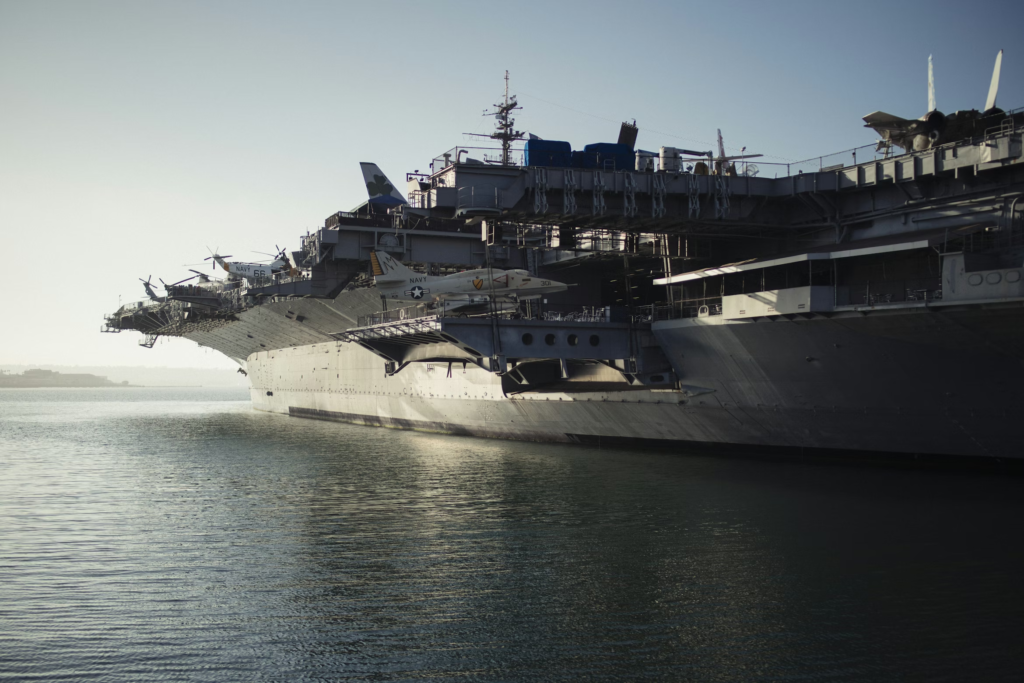
Fact #1: You CAN be a Captain (Just not at night). According to Narragansett Bay Maritime Training and 46 CFR 10.305, if you fail all color vision tests (even the lantern test), the Coast Guard does not ban you. Instead, they issue a license with a restriction: “Valid for Daylight Operations Only.” You can still run charter boats, ferries, or tugs during the day.
Fact #2: The “Navy SEAL” Contact Lens Legend. In a famous case (Navy SEAL David Charbonnet), a candidate was so desperate to join BUD/S that he wore a red contact lens hidden behind his eyeball during the regular eye exam, then rolled it forward for the color test.
- The Lesson: Don’t risk your eye health with dangerous tricks. Use ColorKinds to train your brain to recognize color differences before you take the test legally.
Fact #3: Engineers Have Different Rules. According to gCaptain forums and Martide, the Engineering Department often has significantly lower standards than the Deck Department. While Deck Officers need to distinguish red/green navigation lights at a distance, Engineers often only need to distinguish colored wires or warning lights, which is much easier to pass with a waiver or functional test.
Fact #4: The “Farnsworth D-15” is the Golden Ticket. Many people fail the Ishihara (Book) and the Farnsworth Lantern (Lights). However, 46 CFR 10.305 explicitly states the Coast Guard accepts the Farnsworth D-15 Hue Test. This is a “color arrangement” test (putting caps in order) which is statistically easier for many colorblind people to pass than the dot test.
How ColorKinds® Keeps the Watch Safe
While you generally cannot wear corrective lenses during the official USCG exam, ColorKinds® Lenses are a critical tool for your safety and career longevity once you are on the water.
1. Port (Red) vs. Starboard (Green)
The universal language of the sea is light.
- The Danger: At night, a distant green starboard light can look like a white stern light to a Deutan (green-blind) sailor. This leads to dangerous misinterpretation of right-of-way rules.
- The Solution: Our lenses use a spectral notch filter to separate these wavelengths. The Red (Port) light appears deep and distinct, while the Green (Starboard) light maintains its brightness. This contrast allows for faster, more confident decision-making on the bridge.
2. Buoys & Chart Plotters
- IALA Buoyage: Entering a harbor means keeping the “Red on Right” (or left, depending on region). Mistaking a red nun buoy for a green can buoy runs the ship aground.
- ECDIS Screens: Modern Electronic Chart Display (ECDIS) systems use color-coding for depth and danger zones. Our lenses enhance the contrast of these screens, reducing eye strain during long watches.
Mariner Testimonial: “I work on tugboats and have a color vision waiver. The hardest part was always distinguishing the channel markers at dusk. I started wearing ColorKinds during my watch. The red markers finally look ‘Red’ instead of a muddy brown. It’s a huge relief for my anxiety.” — Mate T.B., Merchant Mariner
Navigate with Confidence
The sea is unforgiving of mistakes. Ensure you can distinguish every light, every buoy, and every signal.
Suitable Maritime & Navy Career Report
Based on Navy MANMED Chapter 15 and Reddit r/newtothenavy data.
| Career Path | Strictness | Vision Requirement (Source: MANMED/USCG) | Access for Colorblind? |
| Navy SEAL / EOD | Critical | Passed PIP (Ishihara) or FALANT. No Waivers. | ❌ No (Generally Disqualified) |
| Navy Pilot | Critical | Passed PIP (12/14) or computerized CCT/CAD. | ❌ No (Waivers rare/impossible) |
| Merchant Deck Officer | High | Must distinguish Red/Green/White Signal Lights. | ⚠️ Conditional (Must pass Lantern or D-15) |
| Ship Engineer | Medium | “Ability to distinguish red, green, blue, yellow.” | ✅ Yes (Easier testing standards) |
| Navy Cryptology (CTI) | Low | No color vision requirement. | ✅ Yes (Highly recommended on Reddit) |
| Navy Yeoman (YN) | None | Administrative duties. | ✅ Yes |
| USCG Captain (OUPV) | Variable | Pass Color Test OR accept Daylight Restriction. | ✅ Yes (With restriction) |
| Logistics Specialist | Low | Basic color discrimination. | ✅ Yes |
The “Gap Analysis”: Normal vs. Colorblind Mariner
This table visualizes exactly what they lose without a solution (or a waiver).
| Feature | Sailor with Normal Vision | Sailor with Uncorrected Color Blindness |
| Night Watch | Can stand solo lookout at night. | Prohibited (Cannot distinguish navigation lights). |
| Licensing | Unrestricted USCG Master’s License. | Restricted: “Daylight Operation Only.” |
| Navy Ratings | Open to all jobs (Pilot, SEAL, Diver). | Restricted to ~60% of jobs (Admin, Intel, Construction). |
| Testing | Passes Ishihara (Dot) Test instantly. | Fails Ishihara. Must pray for a FALANT or D-15 waiver. |
| Daily Safety | Sees Red vs. Green buoys easily. | Confuses channel markers; relies on buoy shape (Nun vs. Can). |
Reference: Authority Standards
Know the rules before you apply.
- USCG Merchant Mariner Medical Manual (COMDTINST M16721.48):
- Details: Outlines the specific requirement for “Deck Officers” to distinguish Red, Green, and White lights. Lists the Farnsworth Lantern as the accepted alternative.
- Source: USCG Medical Manual
- Navy MANMED Chapter 15:
- Details: The Manual of the Medical Department for the US Navy, detailing which ratings require normal color perception.
Top 20 Frequently Asked Questions (FAQ)
General & Legal
Can you work at sea with color blindness?
Yes, depending on the role. Engineering and catering roles typically have no color vision requirements. Deck officers and navigation watchkeepers face restrictions but may qualify through alternative testing routes.
What is the STCW color vision test?
The STCW code requires color vision testing for deck officers using approved tests such as the Ishihara, Farnsworth D-15, or specialized lantern tests.
Can Colorkinds contacts help with STCW testing?
Colorkinds CCG-088 contacts enhance red-green discrimination for off-duty training and daily awareness. They are not worn during official medical exams but help build the visual recognition skills needed on the bridge.
What happens if I fail the STCW color vision test?
Failing the Ishihara screening does not disqualify you. Most flag states accept alternative tests (Farnsworth D-15, Waggoner CCVT, lantern test) as meeting STCW requirements.
**How do colorblind mariners identify navigation lights?
Navigation lights follow a universal position system (port = left, starboard = right), making them identifiable by position alone. Modern ships also have radar and AIS for confirmation.
Can I get a USCG Captain’s License if I fail the Ishihara test?
Yes. If you fail the Ishihara, you can take the Farnsworth Lantern or D-15 test. If you fail those, you can still get a license, but it will be restricted to “Daylight Operations Only.”
Is the “Daylight Restriction” permanent?
Yes, unless you can later pass an approved color vision test.
Can I wear ColorKinds contacts during the official Coast Guard exam?
No. Official regulations (46 CFR 10.305) prohibit the use of “color-sensing lenses” during the test. However, you can use them to train for the test or for safety while boating recreationally.
What is the “Lantern Test” everyone talks about?
The Farnsworth Lantern (FALANT) simulates navigation lights at a distance. You must identify vertical pairs of lights (Red, Green, White). It is considered easier to pass than the book test.
Does the Navy still use the Lantern Test?
It is being phased out in favor of computerized tests (Rabin CCT / Waggoner), but it is still listed in MANMED Chapter 15 as an alternative for certain personnel who entered before 2017.
Navy Specific (Recruitment)
Can I be a Navy Pilot if I am colorblind?
No. Naval Aviation standards are the strictest. Even with waivers, color blindness is a “hard down” for pilot training.
Can I join the Navy SEALS?
Historically, no. Color vision is critical for underwater demolition (wires) and identifying targets.
What Navy jobs (Ratings) are best for colorblind recruits?
According to veterans, the best ratings are CTI (Cryptology), YN (Yeoman), LS (Logistics), and MU (Musician).
Will I get kicked out of basic training if I fail the color test there?
No, but you will be “re-classed.” This means you will lose your original job contract and have to choose from a list of available colorblind-friendly jobs.
Is the Navy vision test harder than the Army’s?
They utilize similar standards (PIP Plates), but the Navy is often stricter about waivers for combat roles.
Maritime Industry (Civilian)
Can I work in the Engine Room?
Yes. Engineering roles generally have more lenient vision requirements than Deck roles.
Do cruise ships hire colorblind crew?
Yes. If you fail the Ishihara, you can take the Farnsworth Lantern or D-15 test. If you fail those, you can still get a license, but it will be restricted to “Daylight Operations Only.”
What is the “D-15” test?
The Farnsworth D-15 involves arranging 15 colored caps in a gradient from one hue to another. It is accepted by the USCG as an alternative if you fail the plates.
How do colorblind sailors tell port from starboard at night?
Without correction, they often rely on the brightness of the light or the position (if visible). This is dangerous, which is why we recommend ColorKinds lenses for unverified/private operations.
Can I work on a tugboat?
Yes, but you likely need to pass the D-15 or Lantern test to become a Mate or Captain. Deckhands may face fewer restrictions depending on the company.
Product & Safety
Will ColorKinds help me see channel markers (Buoys)?
Yes. Our Red-Green filters increase the contrast between Red (Nun) buoys and the green vegetation or water behind them.
Can I use these for “Lookout” duty?
If you have a waiver or work on a private vessel, yes. They significantly enhance your ability to distinguish navigation lights on the horizon.
Do these contacts work for the “Wire Test” in the Navy?
The Navy sometimes uses a “Falant” or practical wire test for electricians. Our lenses enhance the red/green wire contrast, making practice for these tests much more effective.
Are these allowed for private yachting?
Yes. For private operation (not carrying paying passengers), you can use whatever vision aids make you safe.
Why do I see “White” instead of “Green” lights?
This is common for Deuteranopia (Green Blindness). The green light lacks saturation. ColorKinds lenses block the “noise,” helping the green signal stand out as distinct from white.