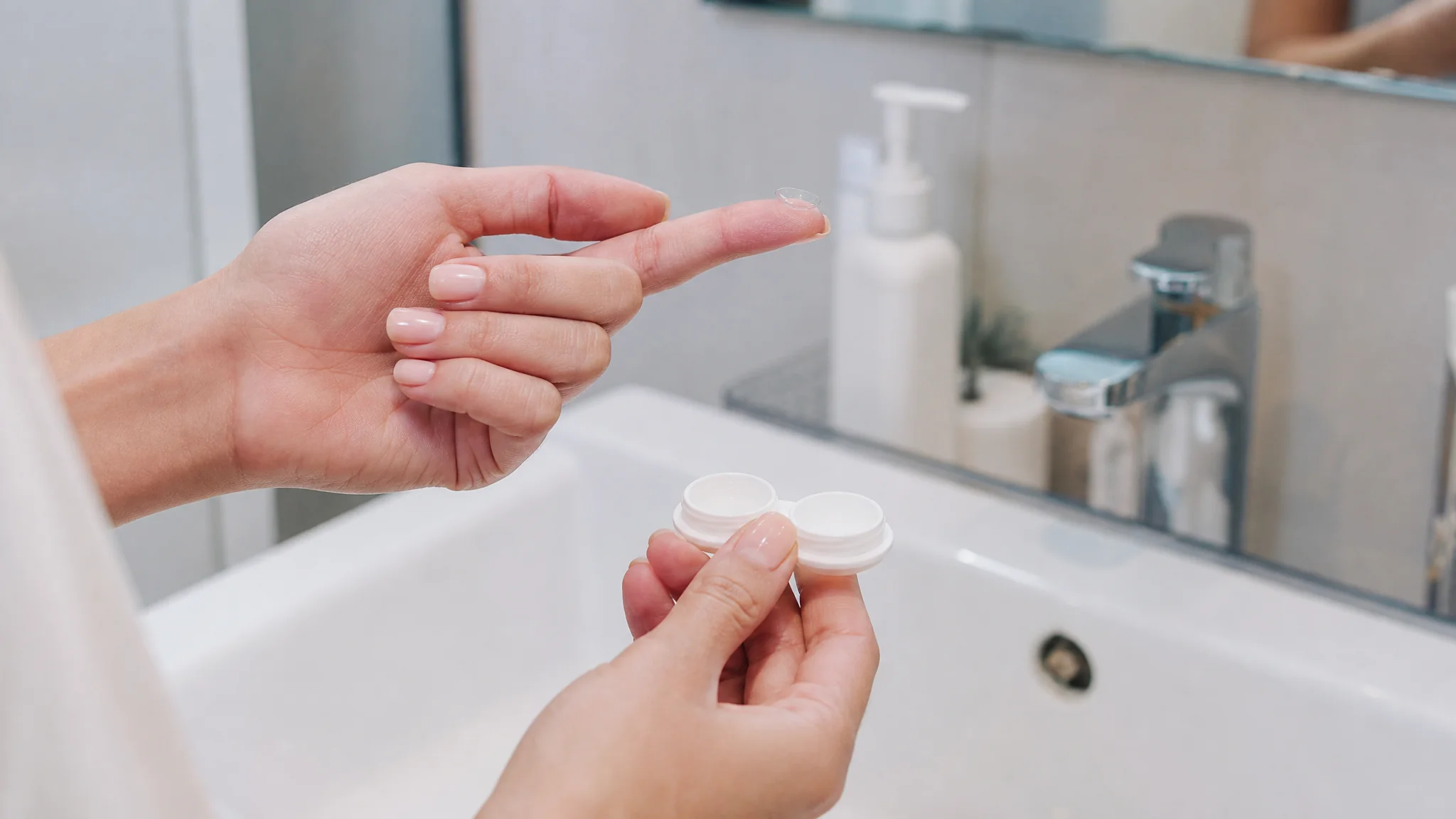
Are Colorblind Contacts Safe? FDA Status, Side Effects & Complete Safety Guide (2026)
Putting something in your eye is a big deal. Your eyes are among the most sensitive organs in your body — and the idea of wearing a filter inside your eye for color correction raises legitimate questions about safety.
Here’s the direct answer: Yes, colorblind contacts are safe when you buy from reputable manufacturers and follow proper hygiene practices. Both major commercial options — ChromaGen (FDA 510(k) cleared since 2000) and Colorkinds (FDA-registered Polymacon material) — meet medical device safety standards. The risks are the same as wearing any soft contact lens, and they are well-understood and manageable.
This guide covers everything: FDA regulatory status, known side effects, contact lens risks, proper care, who should avoid them, and how to spot dangerous unregulated products.
Key Takeaways:
- ChromaGen has FDA 510(k) clearance (granted 2000). Colorkinds uses FDA-registered Polymacon material, the same material used in millions of soft contact lenses worldwide
- Colorblind contacts have the same risk profile as standard cosmetic or corrective soft contacts — well-established and manageable
- The most common side effects are reduced low-contrast acuity, reduced night vision, and minor distance perception distortion (mostly with darker tints)
- Proper hygiene — washing hands, fresh solution, cleaning cases — eliminates most serious risks
- Unregulated lenses sold on third-party marketplaces pose real dangers; always buy from legitimate manufacturers
- When used correctly, colorblind contacts are safe for daily wear up to 12+ hours
FDA Regulatory Status of Colorblind Contacts
The regulatory landscape for colorblind contacts depends on the product.
ChromaGen — FDA 510(k) Cleared
ChromaGen received FDA 510(k) clearance in 2000 (K991398). This means the FDA reviewed the product and determined it is “substantially equivalent” to a legally marketed predicate device. The clearance specifically covers the use of ChromaGen contact lenses for color vision deficiency.
This is the same regulatory pathway used by thousands of contact lens products on the market. It requires the manufacturer to demonstrate:
- The device is as safe and effective as a legally marketed equivalent
- The materials are biocompatible (not toxic to eye tissue)
- Manufacturing quality controls meet FDA standards
- Labeling accurately represents the product’s intended use
Colorkinds — FDA-Registered Material
Colorkinds uses Polymacon, an FDA-registered soft hydrogel material (USP Class II medical device). Polymacon is one of the most widely used contact lens materials in the world — it has decades of clinical data supporting its safety for daily wear.
- Polymacon has been used in soft contact lenses since the 1970s
- It is the same material used in many major-brand daily and yearly disposable lenses
- The water content (40%) is within the standard range for soft hydrogel contacts
- The product is manufactured in ISO-certified facilities
The key difference: ChromaGen has device-level FDA clearance as a colorblind-specific product, while Colorkinds uses a material with established FDA registration used safely in millions of lenses.
Both pathways represent legitimate regulatory compliance with medical device safety standards.
What FDA Clearance Actually Means
FDA 510(k) clearance is not the same as FDA “approval” (which applies to drugs and Class III medical devices). Class I and II medical devices receive clearance by demonstrating substantial equivalence to an existing device. For colorblind contacts:
- The material is proven safe for extended eye contact
- The filter technology does not alter the material’s safety profile
- The manufacturing process follows ISO 13485 quality management standards
While no colorblind contact has FDA “approval” (because they are Class I/II devices, not Class III), the 510(k) pathway is the standard and appropriate regulatory route for this product category.
Known Side Effects of Colorblind Contacts
Colorblind contacts share most side effects with standard soft contact lenses, plus a few that are unique to color-filtering lenses.
General Contact Lens Side Effects
| Side Effect | Frequency | Duration | Management |
|---|---|---|---|
| Dryness | Common | During wear | Rewetting drops, limit hours |
| Lens awareness | Common (first week) | Temporary | Adjustment period |
| Minor irritation | Occasional | Brief | Remove, clean, reinsert |
| Redness | Occasional | Brief | Usually resolves quickly |
| Allergic reaction | Rare | Varies | Discontinue use |
Colorblind-Specific Side Effects
Reduced low-contrast acuity. Because colorblind contacts filter specific wavelengths, they can reduce your ability to see subtle differences in low-contrast situations — especially in dimly lit environments. The spectral notch filter blocks some light in the red-green range, which can make certain shades appear more similar than they do without correction.
This is most noticeable in:
- Dimly lit rooms or hallways
- Overcast outdoor conditions
- Early morning or dusk
- Situations with monochromatic color schemes (all grays, all blues)

Reduced night vision. The filter reduces overall light transmission to the retina, which can impact night vision. Users often report that streetlights, headlights, and other point light sources appear slightly dimmer. Colorkinds uses a lighter tint than some competitors, which minimizes this effect — but some reduction is expected with any filtered lens.
Distance perception distortion. Some users report a minor change in distance judgment during the first few days of wear. This is common with any new contact lens prescription and typically resolves as your brain adjusts to the lens. The effect is more pronounced with darker tints.
Important context: These side effects are generally mild and manageable. Most users adapt within 1-2 weeks. Colorkinds uses a discreet red tint rather than a dark tint, which significantly reduces the night vision and contrast issues compared to darker alternatives.
General Contact Lens Safety Risks and Prevention
Any contact lens carries inherent risks. The good news: these risks are well-understood and almost entirely preventable with proper care.
| Risk | What It Is | How to Prevent |
|---|---|---|
| Corneal infection | Bacterial or fungal infection of the cornea | Wash hands before handling; never sleep in lenses; use fresh solution daily |
| Corneal scratch | Mechanical damage to corneal surface | Keep nails trimmed; use proper insertion technique; ensure lenses are clean |
| Dryness | Insufficient tear film under the lens | Use preservative-free rewetting drops; limit wear to 12 hours; stay hydrated |
| Allergic reaction | Sensitivity to lens material or solution | Check material compatibility; switch solution brands if irritation persists |
| Giant papillary conjunctivitis | Inflammation of inner eyelid | Replace lenses on schedule; clean lenses thoroughly; take breaks from wear |
| Corneal edema | Swelling from reduced oxygen | Follow recommended wear schedule; never overwear yearly disposables |
7 Safety Rules for Colorblind Contacts
Follow these rules to ensure safe daily wear:
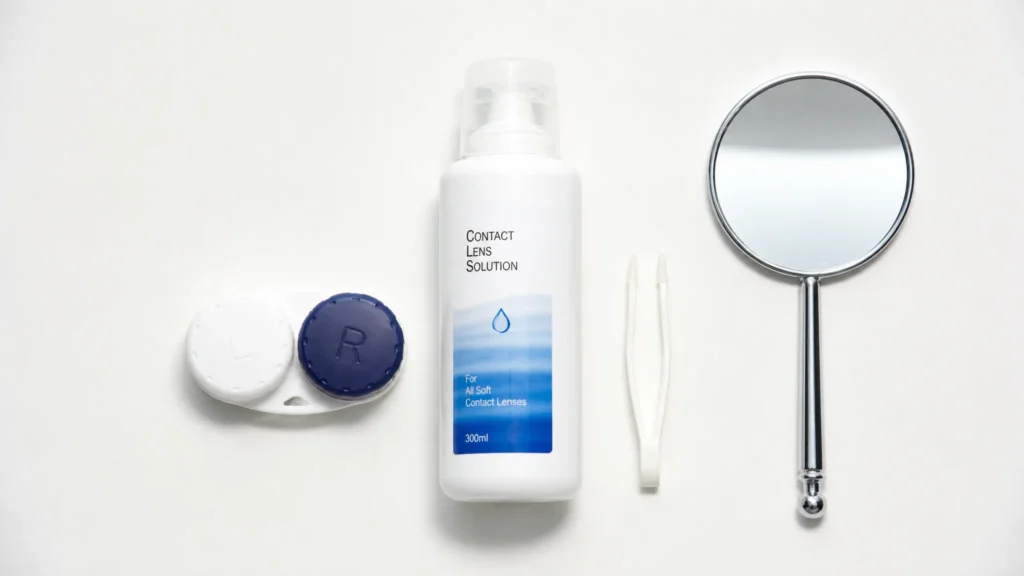
1. Always wash your hands before handling your lenses. Use soap and water, dry with a lint-free towel. This single habit prevents the majority of contact lens complications.
2. Use fresh contact lens solution every time. Never top off old solution. Never use water, saliva, or homemade solutions. Multipurpose solution is formulated to disinfect and condition your lenses — nothing else works.
3. Clean your lens case regularly. Rinse with fresh solution (not water) and air-dry upside down. Replace the case every 3 months. Bacteria thrive in moist, enclosed environments.
4. Limit wear to 12 hours per day. Colorblind contacts are designed for daily wear only. Never sleep in them. Extended wear significantly increases infection risk.
5. Remove lenses immediately if you experience pain, redness, or blurred vision. Do not “wait it out.” Remove the lens, inspect for damage, clean it, and reinsert. If symptoms persist, stop wearing lenses and consult an eye care professional.
6. Never share your lenses. Contact lenses are medical devices prescribed for individual use. Sharing transfers bacteria and can cause infection.
7. Always carry your lens case and solution. If you need to remove your lenses unexpectedly (dryness, irritation, or a work environment change), you need a clean, solution-filled case ready.
Who Should NOT Wear Colorblind Contacts
Colorblind contacts are safe for most people, but some individuals should avoid them:
Severe dry eye syndrome. If you have chronic dry eyes that make standard contact lens wear uncomfortable, colorblind contacts will likely feel worse. The lens adds an extra layer between your cornea and eyelid that exacerbates dryness.
Recurrent eye infections. If you have a history of repeated conjunctivitis, styes, or corneal infections, added lens wear increases recurrence risk. Consult your eye doctor before trying colorblind contacts.
Certain eye conditions. Keratoconus, corneal scarring, severe allergies, and blepharitis can all make contact lens wear problematic. An eye exam can determine if your eyes are healthy enough for lens wear.
Previous contact lens intolerance. If you’ve tried standard contacts in the past and couldn’t tolerate them, colorblind contacts will feel similar. The material (Polymacon) is standard soft hydrogel — not a special low-irritation material.
Children under 12. Most eye care professionals recommend against contact lens wear for pre-teens due to hygiene compliance concerns.
Occupations with high eye exposure risk. If your job involves significant dust, chemicals, or airborne particulates (construction, chemical manufacturing, certain laboratory settings), daily contact lens wear requires extra caution and should be discussed with your eye doctor.
The Danger of Unregulated Lenses
A critical safety warning: Do not buy colorblind contacts from unregulated sellers on Amazon, eBay, AliExpress, or social media marketplaces.
These products are not subject to:
- FDA registration or 510(k) clearance
- ISO quality management standards
- Material biocompatibility testing
- Sterilization requirements
- Accurate labeling
Risks of unregulated lenses include:
- Unknown materials that may be toxic to corneal tissue
- Improper fit that can scratch the cornea
- No sterilization leading to bacterial or fungal contamination
- Incorrect tint application that blocks too much light or wears off
- No customer support if something goes wrong
Only buy from established manufacturers with verifiable regulatory compliance. Colorkinds and ChromaGen are the two commercially available options with legitimate safety credentials.
Contacts vs Glasses: Safety Comparison
While both options are safe, they have different risk profiles:
| Safety Factor | Contacts | Glasses |
|---|---|---|
| Infection risk | Low with proper hygiene | None |
| Physical eye risk | Minor (scratch, irritation) | None |
| Vision obstruction risk | None | Fogging, slipping, frame obstruction |
| Impact safety | None (no frames) | Frame breakage risk |
| Hygiene requirement | High (daily cleaning) | Low (lens cleaning only) |
| UV protection | Some models (Colorkinds) | Available |
| All-day comfort | Requires adjustment period | Immediate |
The honest comparison: glasses are safer in the sense that they carry zero infection risk and zero corneal contact risk. But contacts carry well-understood, manageable risks that millions of contact lens wearers navigate safely every day.
Over 45 million people in the United States wear contact lenses. The complication rate for daily wear soft contacts is approximately 0.04% per year for serious infections. With proper hygiene, colorblind contacts are as safe as any other soft contact lens.
Final Safety Assessment
Colorblind contacts from legitimate manufacturers — Colorkinds and ChromaGen — are safe for daily wear when you follow standard contact lens hygiene. The FDA-registered materials, established manufacturing standards, and decades of contact lens safety data all support this conclusion.
The side effects are real but manageable: reduced low-contrast acuity, minor night vision changes, and standard lens adjustment period. Colorkinds’ lighter tint minimizes these effects compared to darker alternatives.
The real danger in this market isn’t the established products — it’s unregulated lenses from unknown sellers. Buy from verified manufacturers, follow hygiene rules, and your colorblind contacts will be as safe as any contact lens on the market.
If they don’t work for you? Colorkinds colorblind contacts come with a 60-day money-back guarantee. Try them risk-free and see the difference for yourself.
ChromaGen has FDA 510(k) clearance (granted 2000) specifically for color vision deficiency. Colorkinds uses FDA-registered Polymacon material, the same soft hydrogel used in millions of contact lenses worldwide. Both meet medical device regulatory standards.
When used correctly with proper hygiene, colorblind contacts are as safe as any soft contact lens. The primary risk is infection from poor hygiene — which is almost entirely preventable with hand washing and proper lens care.
Yes, to some degree. The spectral filter reduces overall light transmission, which can make night vision slightly worse. Colorkinds uses a lighter tint than some competitors to minimize this effect. Users typically adapt within 1-2 weeks.
Yes. Colorkinds contacts are designed for daily wear up to 12 hours. They should be removed before sleeping. Yearly disposable format means you replace them after 12 months.
Extended wear beyond recommended hours increases your risk of corneal edema, dryness, and infection. Always follow the recommended wear schedule and remove lenses at the first sign of discomfort.
No. Lenses from third-party sellers on Amazon, eBay, AliExpress, or social media are not subject to FDA registration, material safety testing, or sterilization requirements. Only buy from established manufacturers with verifiable regulatory compliance.
Not when properly inserted and maintained. You may feel mild awareness during the first few days of wear as your eyes adjust. Pain is not normal — if lenses hurt, remove them immediately and check for damage or debris.
No. Colorkinds and most colorblind contacts are daily wear lenses. Sleeping in them significantly increases your risk of corneal infection, even with occasional use.
Generally yes for teenagers 12 and older who can demonstrate proper hygiene habits. Younger children should avoid contacts due to compliance concerns. Consult an eye care professional for age-specific guidance.
Colorkinds contacts include UV400 protection as part of the lens material. This adds a layer of defense against UV radiation, though it does not replace UV-blocking sunglasses for extended outdoor exposure.
Use fresh multipurpose contact lens solution every time. Rub the lens gently with solution, rinse, and store in a clean case filled with fresh solution. Never use water, saliva, or any non-sterile solution.
Yes, significantly. Modern materials like Polymacon, standardized manufacturing practices, better preservation solutions, and increased awareness of hygiene best practices have all contributed to dramatically lower complication rates over the past 30 years.
Ready to order? Get Colorkinds colorblind contacts for ~$99 with free worldwide shipping and a 60-day guarantee. Invest in your career today.
Related guides: