
The Fear: “Can I Be a Nurse if I’m Colorblind?”
Do you dream of saving lives but worry that your colorblindness might disqualify you from nursing school? You are not alone. Thousands of aspiring nurses panic when they see “color vision testing” listed on admission forms.
The short answer is: Yes, you can be a nurse if you are colorblind.
While color vision is important for certain tasks—like finding veins or reading test strips—it is rarely a total barrier to entry. In this guide, we break down the global policies, the specific challenges you’ll face, and which nursing specialties are perfect for your vision.
Global Policies: Do Nursing Schools Test for Colorblindness?
Unlike becoming a pilot or a train driver, where regulations are strict and federally mandated, nursing requirements vary heavily by region and institution.
We have compiled data from global medical admission standards and nursing boards to give you a clear comparison of where the restrictions lie.
Table : Global Nursing & Medical Admission Policies
| Region / Country | Status | Policy Details & Sources |
|---|---|---|
| United States | 🟢 Generally Allowed | Color vision deficiency is generally not a criterion for rejection in medical or nursing schools. The Joint Commission does not require color-blind testing for hospital employees, though individual facilities may screen for competency. |
| United Kingdom | 🟢 Allowed | The UK does not restrict medical school entry based on color vision. Screening is sometimes done for awareness, but normal color vision is not a prerequisite for practice by the Nursing and Midwifery Council (NMC). |
| Thailand | 🟡 Screened (Awareness) | Applicants are screened to make them aware of their deficiency, but it is generally not used to exclude them from medical or nursing programs. |
| Myanmar | 🟡 Screened (Awareness) | Similar to Thailand, screening is conducted primarily for student awareness regarding future career limitations rather than for exclusion. |
| Indonesia | 🔴 Restricted | Policies are stricter here. Medical school applicants with any color vision impairment are often excluded from admission to ensure patient safety standards. |
| Malaysia | 🔴 Restricted | Historically, Malaysia has excluded applicants with color vision deficiencies from medical and nursing programs due to safety regulations. |
Key Takeaway: If you are in the US, UK, or Singapore, a failed Ishihara test usually means you just need to be aware of your limitations, not that you are banned. In parts of Southeast Asia, regulations remain stricter.
The 3 Biggest Visual Challenges for Nurses
Even if you are accepted, the hospital floor presents specific visual hurdles. Being aware of these allows you to use tools—like ColorKinds® Lenses—to overcome them.
1. The “Invisible” Vein (IV Starts)
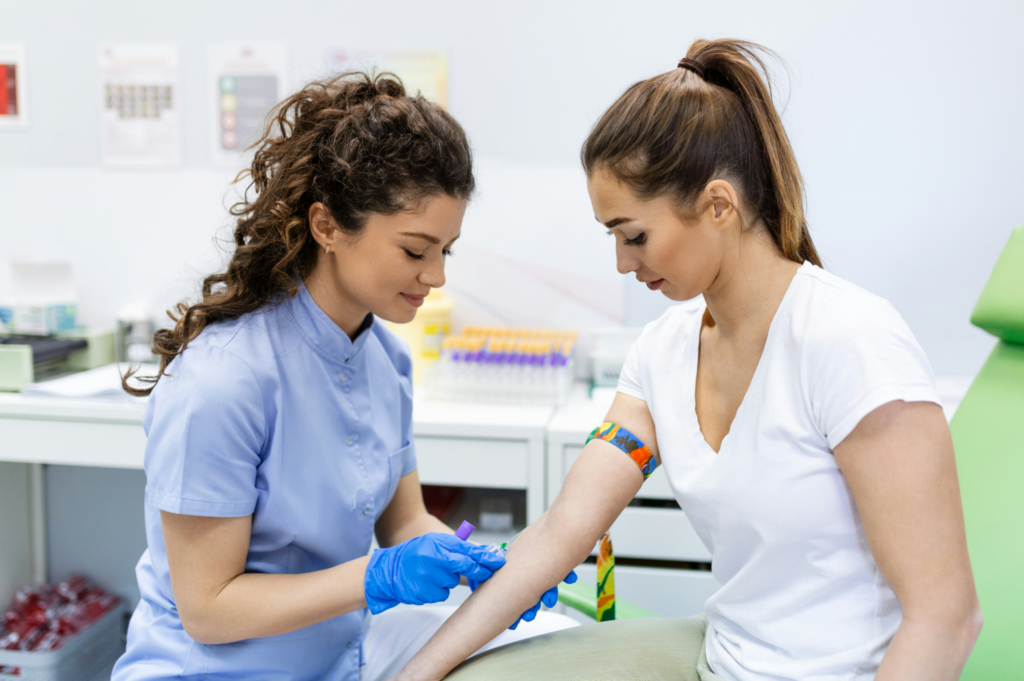
Starting an IV requires locating veins that often appear as faint blue or green lines beneath the skin.
- The Problem: For those with red-green blindness, the red tone of the skin can wash out the vein’s color, making it invisible.
- The Solution: Many nurses use ColorKinds® Colorblind Contact Lenses. These function like a “manual vein finder” by filtering light to increase the contrast between the vein and the skin, making the vessel appear darker and more defined.
2. Assessment of Skin Tone (Cyanosis & Jaundice)
- The Problem: Detecting “cyanosis” (a bluish tint indicating low oxygen) or “jaundice” (yellowing skin) is a critical assessment skill.
- The Solution: Do not rely on color alone. Use pulse oximetry to check oxygen levels and bilirubin tests for jaundice. Ask a colleague for a “second set of eyes” if unsure.
3. Color-Coded Triage & Medications
- The Problem: Emergency tags (Red/Green/Black) and medication labels often use color as a primary identifier.
- The Solution: Always read the text. Never rely on color coding alone. Most hospitals now require barcode scanning for medications, which significantly reduces this risk.
Which Nursing Specialty fits You?
Not all nursing jobs are created equal. If you struggle heavily with color discrimination, you might thrive in a specialty that relies less on visual cues and more on data, therapy, or administration.
Table : Nursing Specialty Suitability for Colorblind Professionals
| Suitability Level | Specialty | Why It Is a Good Fit |
| 🟢 Excellent Fit | Psychiatric / Mental Health | Focuses on behavioral assessment and therapy. Very few tasks require color differentiation (no IVs, complex wound care, or triage tags). |
| 🟢 Excellent Fit | Case Management | An administrative role focused on coordinating care plans and insurance. Work is primarily computer and phone-based. |
| 🟢 Excellent Fit | Public Health / School Nursing | Focuses on education, vaccinations, and general health maintenance rather than acute emergency assessment or critical monitoring. |
| 🟢 Excellent Fit | Nurse Informatics | Combines nursing knowledge with IT. You manage data systems rather than patients, removing visual risk entirely. |
| 🟡 Good (With Aids) | Med-Surg / General Ward | Requires IVs and wound checks. Manageable if you use ColorKinds® Lenses or ask peers to verify ambiguous test strips. |
| 🔴 Challenging | Emergency (ER) / ICU | High-pressure environment relying on rapid visual assessment (skin color changes, triage tags). Harder to stop and ask for help during a crisis. |
How ColorKinds® Acts as a “Vein Finder” for Your Eyes
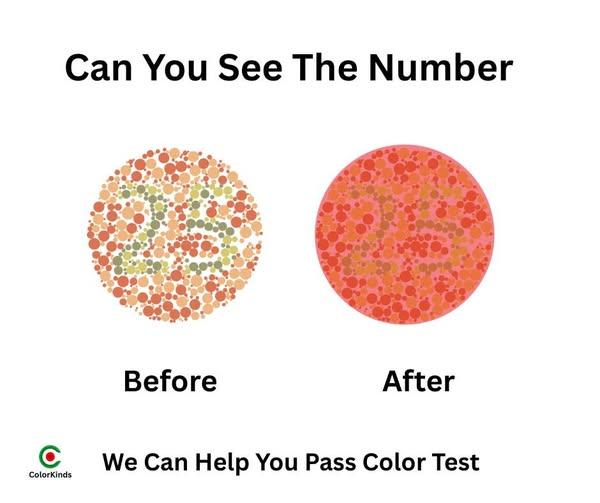
Our lenses are not just for passing the entrance exam; they are a daily clinical tool that enhances tissue contrast.
1. Mastering IV Starts & Phlebotomy
One of the hardest tasks for a colorblind nurse is locating veins, which often look faint green or blue against pink or brown skin. To a red-green deficient eye, the vein blends into the skin tone.
- The Fix: ColorKinds lenses filter the “confusion” wavelengths. This causes the blue/green vein to appear darker and more distinct against the surrounding skin, acting like a low-tech “Vein Finder.”
2. Accurate Patient Assessments
- Pressure Ulcers: Identifying “non-blanchable redness” is critical for catching bedsores early. Our lenses make the red inflamed area “pop” against healthy skin.
- Lab Strips: Urinalysis and pH strips often rely on subtle color changes from orange to green. The spectral filter helps separate these hues so you can record accurate vitals.
Nurse Testimonial: “I almost quit nursing school because I couldn’t see the flash in the IV chamber or read the dipsticks. I bought these contacts as a last resort. Now, I’m an ER nurse. The contrast helps me see veins I used to miss entirely. I don’t go to a shift without them.” — Sarah J., RN, BSN
Deliver Better Care Today.
Don’t let color confusion compromise your patient care. Equip yourself with the vision tool that helps you assess with confidence.
Frequently Asked Questions
Do I need to tell my employer?
This is a personal choice and depends on your hospital’s policy. However, many nurses choose to use our contacts simply to make their job easier and safer, just like using a stethoscope or amplified hearing aids.
Will these help with “Code Red/Blue” charts?
Yes. Hospital charts and electronic medical records (EMR) frequently use Red (Allergy/Danger) and Green (Safe) indicators. Our lenses enhance the brightness of red on screens and paper, reducing the risk of a charting error.
Can I wear them for a 12-hour shift?
Yes. ColorKinds are made from high-quality, breathable hydrogel material designed for all-day comfort, whether you are in the ER or the ICU.
How does color vision deficiency affect nursing responsibilities?
Color vision deficiency can impact several nursing tasks that rely on color recognition. Nurses often need to identify changes in skin color, such as cyanosis or jaundice, which indicate serious health conditions.
Color vision deficiency can impact several nursing tasks that rely on color recognition. Nurses often need to identify changes in skin color, such as cyanosis or jaundice, which indicate serious health conditions.
What are the implications of being colorblind in the medical field?
Not knowing about color blindness could lead to misinterpretation of screening tests and result in patient harm. This creates a safety concern that healthcare facilities must address.
The prevalence of color vision deficiency among nurses is significant. Approximately 9,695 nurses registered with the Nursing and Midwifery Council in the UK likely have this condition, based on general population statistics.
Some nursing specialties present fewer challenges than others. Areas that require frequent color-based assessments may be more difficult for colorblind nurses to navigate safely.
Are there any special accommodations for colorblind nurses in the workplace?
Yes,Advancements in technology and workplace accommodations have made it possible for colorblind individuals to pursue successful nursing careers. These adaptations help ensure patient safety while allowing nurses to perform their duties.
Colorblind nurses can consult with peers for interpretation of patient screenings. They can also request confirmation of any assessment related to color to verify their findings.
Digital tools and apps can help identify colors accurately. Some healthcare facilities provide alternative testing methods that don’t rely solely on color changes.
How does a color vision deficiency impact the interpretation of clinical tests?
Clinical tests that use colorimetric determinations pose the greatest challenge. These tests produce results based on color changes that must be matched to reference charts.
Urine dipstick tests are particularly problematic. The strips change color to indicate the presence of various substances, and matching these colors to the reference chart requires accurate color vision.
Blood glucose monitors and other point-of-care testing devices may display color-coded results. However, many modern devices now use digital readouts that eliminate the need for color interpretation.
Is color vision testing mandatory for nursing professionals?
Yes,Color-blind testing may be used as part of an organization’s initial or ongoing competency assessment program. However, it is not universally required across all healthcare settings.
Some facilities test for color blindness during orientation and competency validation. This is especially common in areas where colorimetric tests are frequently used.
Organizations can evaluate an individual’s ability to interpret colorimetric determinations through alternative mechanisms. These methods focus on the nurse’s actual ability to perform specific tasks rather than general color vision.
What career advice is available for prospective nurses with color vision deficiencies?
Hundreds of opportunities exist in nonacute care nursing, including research, school nursing, public health, home care, insurance, and case management. These roles typically require less color-dependent assessment work.
Prospective nurses should consider their specific type and severity of color blindness. Some individuals only struggle with certain shades or unusual colors, which may have minimal impact on their practice.
Choosing a nursing specialty that minimizes color-dependent tasks is a practical approach. Administrative roles, informatics, education, and telephone triage positions often require less color discrimination than bedside nursing roles.
Reference:
- Patient Safety: The primary goal of any assistive device is to ensure accurate assessment.
- Accommodation: Under the ADA (in the US), employers are often required to provide reasonable accommodation unless it causes undue hardship. Using personal corrective lenses is a standard accommodation.