Color Blindness in the Electrical Trade: Complete Guide for Electricians (2026)
Color Blindness in the Electrical Trade: Complete Guide for Electricians (2026)
You’re an electrician — or training to become one — and you’ve just learned that color vision is part of the licensing process. Red, green, brown, and blue wires carry critical information, and you need to tell them apart. You have color blindness, and suddenly you’re worried that a wiring mistake could cost you your career before it even starts.
Here’s the direct answer: Color blindness does not automatically disqualify you from becoming an electrician. In fact, thousands of colorblind electricians work safely and productively every day. They use a combination of position memory, labeling systems, multimeter verification, and smart work habits — not just color vision — to identify wires correctly. Most states allow alternative testing or reasonable accommodations, and neither OSHA nor NFPA 70E requires color vision as a condition of employment.
This guide covers everything you need to know about working as a colorblind electrician: what the law says, how to identify wires without relying on color, which states test color vision, and what accommodations are available.
Key Takeaways:- Color blindness does not prevent you from becoming a licensed electrician in most jurisdictions
- Wire color can be confirmed by position, labeling, and multimeter testing — not just sight
- Many states offer alternative color vision testing for electrical licensing
- OSHA does not specifically require color vision for electricians
- NFPA 70E (electrical safety) standards emphasize labeling and testing over color reliance
- Colorkinds contacts can help distinguish wire colors during training and daily work
Why Wire Colors Exist — and Why They’re Not the Only Way
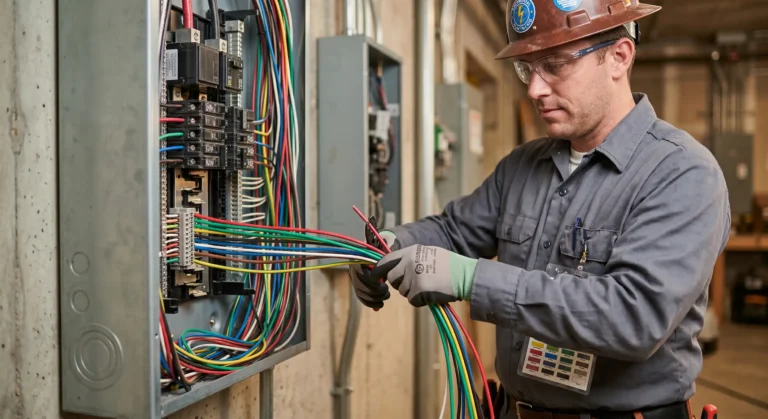
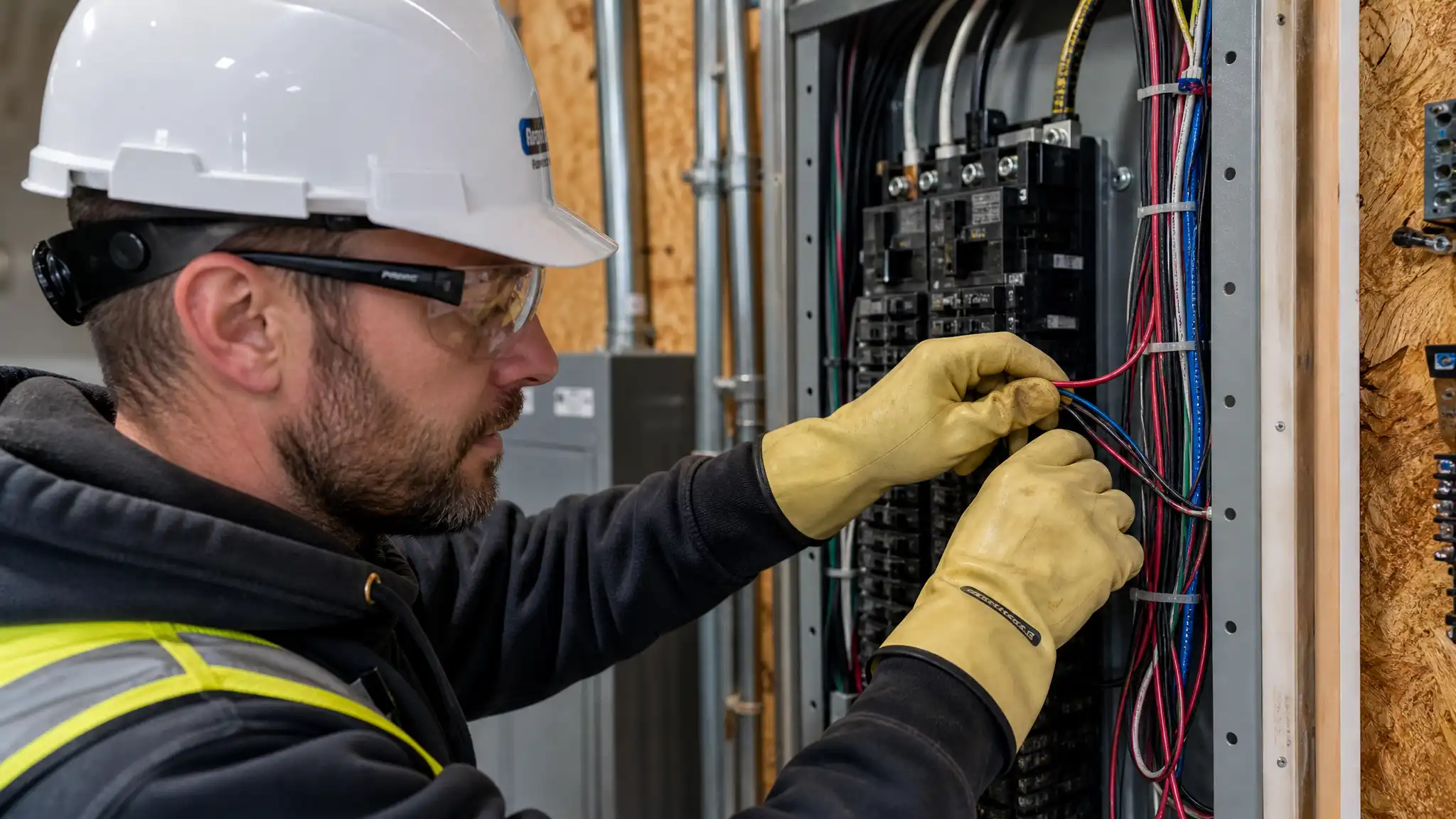
The National Electrical Code (NEC) standardizes wire colors to make electrical work safer and more consistent. When every electrician in the country knows that black means hot and white means neutral, troubleshooting becomes faster and errors less likely. It’s a system that works well — as long as you can see the colors.
But the NEC also recognizes that color is just one layer of identification. That’s why the code requires:
- Permanent labeling on panels and junction boxes
- Written documentation for all circuits
- Testing procedures before any work begins
- Multiple identification methods for critical circuits
The electrical industry built redundancy into the system from the start. Color blindness doesn’t break the system — it just means you rely more heavily on the other layers of identification. And that’s perfectly fine.
Licensing Requirements by State
Electrical licensing in the United States is regulated at the state level. There is no federal licensing standard for electricians. This means color vision requirements vary dramatically depending on where you live.
The Current Landscape
| State Policy | How Common | What It Means for You |
|---|---|---|
| No color vision test required | Many states | Licensing exam focuses on code knowledge — color vision never comes up |
| Screening optional | Some states | You may be tested during apprenticeship physical, but alternative tests are available if you fail |
| Required for specific licenses | Few states | Usually for high-voltage or master electrician licenses; waivers may be available |
| Test with waiver option | Some states | You can request a waiver with an employer letter or practical skills assessment |
What This Means for You
If you’re in a state that doesn’t test color vision at all — and many don’t — then color blindness is simply not a factor in getting licensed. If you’re in a state that does test, your next step is to find out which test they use and whether alternative testing is available.
Most states that screen for color vision use the Ishihara color plate test as the initial screening. If you fail the Ishihara, many states will accept a secondary test like the Farnsworth D-15 as an alternative. The D-15 measures your ability to arrange colored caps by hue — and many people who fail the Ishihara pass the D-15 without issue.
Some states go further and accept:
- Waggoner CCVT (computerized color vision test)
- Practical skills assessments (demonstrating safe wire identification)
- Employer waiver letters (confirming you can perform the work safely)
> Practical tip: Before you apply for licensing, call your state’s electrical licensing board and ask three questions: (1) Do you test color vision? (2) Which test do you use? (3) What alternative tests do you accept if I fail the initial screening? Getting these answers upfront saves surprises later.
OSHA and Color Vision: What the Law Actually Says
A common myth among electricians is that OSHA requires normal color vision. It doesn’t.
The Occupational Safety and Health Administration’s electrical safety standards (29 CFR 1910 Subpart S) focus on safe work practices — not on your ability to distinguish wire colors. The standards require:
- De-energizing equipment before working on it
- Proper lockout/tagout procedures to prevent accidental energization
- Using appropriate PPE for the task
- Following manufacturer instructions and NFPA 70E standards
None of these require color vision. They require training, attention to safety, and consistent procedures — all of which are fully achievable with color blindness.
What OSHA does require is that you perform your work safely. If your color vision deficiency prevents you from safely completing a specific task, you’re expected to use alternative methods — like multimeter testing or asking for confirmation from a colleague. This is no different from any other accommodation a skilled tradesperson might use.
A Note About Employer Policies
While OSHA doesn’t require color vision, individual employers may have their own policies. Some companies that do high-voltage or critical electrical work may screen for color vision during the hiring process. If this happens:
- Ask what test they use
- Offer to take an alternative test
- Request a practical assessment
- Provide a letter from a previous employer confirming safe performance
Most employers care about one thing: can you do the work safely and correctly? If you can demonstrate that, color vision rarely remains a barrier.
NFPA 70E: Why This Standard Matters More Than Color Vision
The National Fire Protection Association’s NFPA 70E standard is the most important safety document for electricians in the United States. It establishes the requirements for electrical safety in the workplace — and it has surprisingly little to do with color vision.
What NFPA 70E Actually Requires
The standard focuses on three core principles:
1. Labeling Before ColorNFPA 70E requires that all electrical equipment be labeled with specific information:
- Nominal voltage
- Arc flash boundary
- Available incident energy
- Required PPE
These labels use words and numbers — not colors. A colorblind electrician can read an arc flash label just as easily as anyone else.
2. Testing Before TouchingThis is the most important rule in NFPA 70E: always verify that circuits are de-energized before working on them. This is done with a voltage tester or multimeter — both of which provide clear, non-color-dependent readings.
The standard is explicit: “Verify the absence of voltage” is a step that must be completed regardless of wire color, experience level, or eyesight. This rule protects everyone equally.
3. PPE RequirementsArc-rated clothing, safety glasses, insulated gloves, and voltage-rated tools are required based on the task — not on the electrician’s vision. Color blindness has no bearing on what PPE you need to wear.
How Colorblind Electricians Use NFPA 70E to Their Advantage
Experienced colorblind electricians know that NFPA 70E is actually their ally. The standard’s emphasis on labeling, testing, and documentation means that wire color is just one layer of a multi-layer safety system. If you rely on that system properly, you’re working just as safely as anyone else.
- You label panels and junction boxes clearly
- You test every circuit before touching it
- You follow documented procedures
- You wear the right PPE for the job
These habits protect every electrician, regardless of color vision.
How Colorblind Electricians Identify Wire Colors
Every experienced electrician knows that wire color alone is never a guarantee. Even with normal color vision, you’ve probably encountered faded insulation, poor lighting, or wires that look different from what the code says. That’s why professionals always confirm.
The Seven Strategies of Colorblind Electricians
1. Multimeter Testing (The Gold Standard)Before touching any wire, test it. A multimeter tells you voltage, continuity, and polarity — all without requiring you to identify a single color. This is the most reliable method, and it’s the one NFPA 70E requires for everyone anyway.
2. Position MemoryElectrical connections follow standard conventions:
- Ground wire connects to the green screw
- Neutral wire connects to the silver screw
- Hot wire connects to the brass screw
- In a panel, the main breaker is typically at the top
These positions don’t change. Once you learn them, you can identify wires by where they connect.
3. Labeling SystemsMany colorblind electricians develop their own labeling system:
- Colored tape with written labels
- Zip ties with tags
- Permanent marker on wire insulation
- Numbered wire markers
The NEC actually requires labeling for most commercial installations, so this is standard practice — not an accommodation.
4. Bright, Full-Spectrum LightingThe difference between red and green wire insulation becomes much more apparent under high-quality lighting. A good headlamp with high Color Rendering Index (CRI) LEDs can make wire identification significantly easier. Poor lighting, on the other hand, makes color discrimination harder for everyone.
5. Wire Texture and FeelGround wires often have a different texture than hot or neutral wires. Some are stranded instead of solid. Some have a different jacket material. These tactile differences provide additional identification cues.
6. Partner VerificationOn complex jobs, it’s standard practice to have another electrician verify your work. This isn’t about color blindness — it’s about safety. Having a second set of eyes confirm your connections protects everyone.
7. Colorkinds ContactsColorkinds CCG-088 contacts use spectral notch filter technology to enhance the contrast between red and green wavelengths. Many electricians find that wearing them makes wire colors more distinguishable — particularly for the most common confusion pairs (red/green, brown/red).
Common Wire Colors and How to Identify Them
| Wire Color | Standard Use | Best Identification Method |
|---|---|---|
| Black | Hot/live (120V, 240V) | Multimeter, position (brass screw) |
| Red | Secondary hot, switch legs | Labeling, multimeter confirmation |
| Green | Ground | Position (green screw), texture (often different jacket) |
| White/Gray | Neutral | Position (silver screw), labeling |
| Blue | Traveler, 3-way switch | Labeling, multimeter |
| Brown | High-voltage phase | Labeling, multimeter |
| Orange | High-voltage phase | Labeling, multimeter |
| Yellow | High-voltage phase | Labeling, multimeter |
Practical Strategy Comparison
| Strategy | How It Works | Most Useful For |
|---|---|---|
| Multimeter testing | Measures voltage regardless of insulation color | All tasks — the gold standard |
| Labeling systems | Tape, tags, or markers with written identifiers | Panels, junction boxes, long runs |
| Position memory | Standard screw colors (green = ground, silver = neutral, brass = hot) | Outlets, switches, fixtures |
| Lighting adjustments | High-CRI LED work lights for better color rendering | Dim basements, attics, outdoor work |
| Wire texture | Ground wires often feel different from hot/neutral | Romex, MC cable, wiring bundles |
| Colorkinds contacts | Spectral notch filter enhances red-green contrast | Training, daily identification practice |
Testing and Accommodations: Your Rights
If you’re pursuing electrical licensing and encounter a color vision test, here’s what you need to know:
Your Testing Options
| Option | What It Is | How to Access It |
|---|---|---|
| Farnsworth D-15 | Hue arrangement test — many who fail Ishihara pass this | Request from your testing administrator |
| Waggoner CCVT | Computerized adaptive test — accepted in many jurisdictions | Ask your licensing board if they accept it |
| Practical assessment | Demonstrate safe wire identification using tools | Request as a reasonable accommodation |
| Employer waiver | Letter from employer confirming safe performance | Ask your employer to provide documentation |
How to Request Accommodations
1. Be upfront: When you apply for licensing, disclose your color vision deficiency early 2. Ask about alternatives: “I have red-green color blindness. Do you offer alternative testing options?” 3. Document everything: Keep records of all test results and correspondence 4. Bring supporting evidence: Employer letters, training certificates, or documentation of safe work history
Most licensing boards will work with you if you approach them professionally and demonstrate that you can perform the work safely using alternative methods.
FAQ: Color Blind Electricians
Yes. Color blindness does not automatically disqualify you from becoming an electrician. Most states and licensing boards allow alternative testing or reasonable accommodations. Many practicing electricians with CVD work safely using multimeters, labeling, and position cues.
Requirements vary by state. Some states test color vision during the licensing process, while others do not. For states that do test, alternative testing options (Farnsworth D-15, Waggoner CCVT) or waiver processes are often available.
No. OSHA does not have a specific standard requiring color vision for electricians. OSHA’s electrical safety standards focus on safe work practices, de-energizing equipment, and proper use of PPE — not on color vision ability.
Electricians with CVD use multiple strategies: multimeter testing to confirm voltage, labeling wires with tape markers, memorizing position conventions (ground = green screw, neutral = silver, hot = brass), using bright full-spectrum lighting, and Colorkinds contacts for enhanced color discrimination.
Yes. Colorkinds CCG-088 contacts use spectral notch filter technology to enhance red-green discrimination. Many electricians find this helpful for distinguishing red, green, and brown wires — the most commonly confused colors in electrical work.
Red vs. green is the most common confusion (red-black wires, green ground). Brown vs. red and blue vs. purple can also be challenging depending on the type of color vision deficiency. Multimeter confirmation is always recommended regardless of perceived color.
No. Each state sets its own requirements. Some use the Ishihara color plate test, others accept the Farnsworth D-15, and some have no color vision test at all. Check with your state’s electrical licensing board for specific requirements.
Common accommodations include: alternative color vision testing, waiver letters from employers, practical assessments demonstrating safe wire identification, and the use of assistive tools like multimeters, label makers, and Colorkinds contacts.
Yes. Colorblind master electricians work in the field every day. The master electrician exam tests code knowledge and practical experience — not color vision. As long as you can safely perform the work with available accommodations, color blindness is not a barrier.
Full-spectrum natural daylight or high-CRI (Color Rendering Index) LED work lights provide the most accurate color rendering. Poor lighting significantly reduces color discrimination ability. A quality headlamp with high-CRI LEDs is a worthwhile investment.