
What Jobs Cant You Do With Colour Blindness
Color Vision Deficiency (CVD) is a highly prevalent congenital condition, affecting approximately 8% of men and 0.4% of women globally. While certain professions enforce strict medical standards regarding color perception due to the safety-critical nature of the work, the vast majority of career paths remain completely open to individuals with CVD.
This guide breaks down the specific occupations where normal color vision is legally or functionally required, the diverse career paths that remain fully accessible, and how targeted optical interventions can assist in occupational screenings.
The Physiology Behind Occupational Restrictions
Occupational restrictions are rarely arbitrary. They are instituted when public safety, technical accuracy, or rapid decision-making relies on the ability to distinguish specific spectral wavelengths—most commonly in the red-green axis. Individuals with protanomaly (red-weakness) or deuteranomaly (green-weakness) often struggle to identify low-contrast visual cues, colored warning lights, or color-coded schematics under poor lighting conditions.
✅ Jobs Colorblind Can Do (Unrestricted or High-Success Fields)
The reality is that colorblindness only cuts you out of a tiny fraction of jobs. The following sectors are highly accessible to colorblind individuals, offering excellent professional growth without strict reliance on precise color perception.
1. Technology, Administration, & Business Operations
Modern corporate and tech environments rarely require precise color vision. Where color is used, digital tools and accessibility settings make workarounds seamless.
- Web Developer & Software Engineer: Building applications, writing code, and managing backend systems do not require strict color vision.
- Project Manager: Overseeing corporate timelines, directing web projects, and managing cross-functional teams.
- Cyber Security & IT Specialist: Monitoring network security data and managing infrastructure, where high-contrast software themes can easily be applied.
- Human Resources & Executive Administration: Tracking corporate metrics, handling talent acquisition, and managing company logistics.
2. Sciences, Healthcare, & Practical Trades
Many hands-on professions do not face the strict safety-critical regulations of aviation or heavy rail.
- Pharmacist: Dispensing medications and consulting with patients. Pharmacists rely on chemical names, barcodes, and technical labels to identify drugs, not color.
- Astronomer / Data Scientist: Analyzing stellar data and cosmic spectra using digital filtering and spectrum detection tools rather than the naked eye.
- Landscaper & Business Owner: Operating a green industry business, relying on plant leaf structure, labels, and easy-to-learn visual workarounds.
- Chef / Culinary Professional: Running a professional kitchen, relying on internal temperature gauges, timers, and culinary assistants for visual doneness checks.
⚠️ Professions with Variable Restrictions (The Middle Ground)
Many industries fall into a gray area—they require color vision testing, but a failure does not automatically end a career. Depending on the severity of the CVD and the specific employer, accommodations or secondary testing may be permitted.
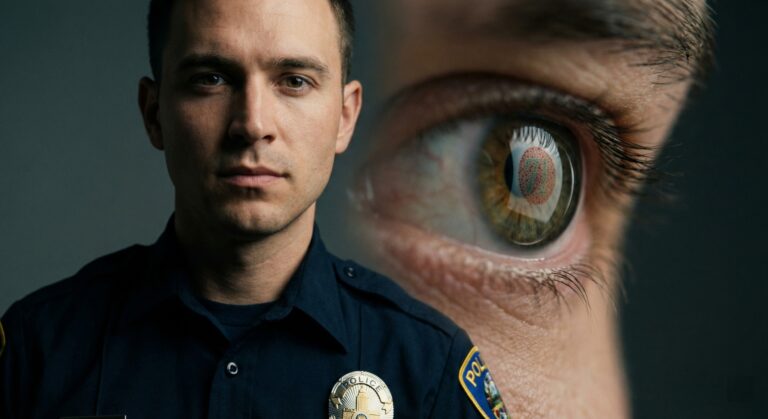
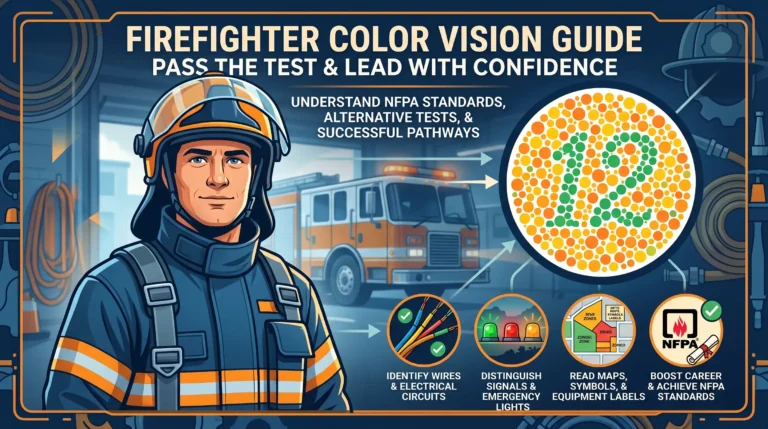
- Public Safety (Police Officers, Firefighters, EMTs): Color vision is needed to identify suspect vehicle colors or chemical hazard placards, but regulations vary significantly by local jurisdiction.
- Engineering & Trades (Electricians, Telecom Technicians): Involves differentiating between closely colored wires, such as distinguishing a live wire from a ground wire. Many technicians successfully use high-contrast lighting or assistance from peers to navigate these challenges.
- Healthcare (Nurses, Lab Technicians): Involves assessing patient skin tone for cyanosis or reading colored lab stains, though many professionals successfully adapt using context and alternative clinical signs.
🚫 Jobs Colorblind Can’t Do (Strictly Restricted)
In these fields, failing a standardized clinical test (such as the Ishihara 24-plate test or the Farnsworth D-15) can result in immediate disqualification. These roles are strictly blocked because missing a colored signal under poor environmental conditions poses a direct threat to public safety.
| Industry | Specific Roles | Why Normal Color Vision is Required |
| Aviation | Commercial Airline Pilot, Air Traffic Controller | Must interpret multi-colored cockpit instrument panels, runway approach lights (PAPI/VASI), and color-coded flight progress strips in adverse weather conditions. |
| Railways | Train Conductor, Locomotive Engineer | Required to instantly recognize red, yellow, and green trackside block signals at high speeds to prevent catastrophic collisions. |
| Maritime | Ship Officer, Commercial Sailor | Must identify red (port) and green (starboard) navigation lights on other vessels to determine direction of travel at night. |
| Military | Special Operations, EOD (Explosive Ordnance Disposal), Aviation Officers | Tactical environments require reading color-coded maps, identifying uniform markers, and safely handling color-coded wiring in explosives. |
Note: In highly regulated fields like commercial aviation and heavy rail operation, the restriction is absolute. If a candidate cannot pass the standard color plates or a secondary lantern test, they cannot hold the requisite medical certification.
Occupational Color Vision Test Requirements Database
Need to check if a specific career is available to you? Our Occupational Color Vision Test Requirements Database provides a comprehensive, searchable list of color vision standards across hundreds of professions. From aviation and law enforcement to electrical trades and maritime careers, find the exact requirements and acceptable tests for your chosen field.
Cited Resources & Community Discussions
Aviation & Aerospace Requirements
- Discussion on the job market and restrictions for colorblind pilots: https://www.reddit.com/r/flying/comments/53cv1i/how_bad_is_the_job_market_for_colorblind/
- Mertens, H. W., & Milburn, N. J. (1992). Performance of Color-Dependent Tasks of Air Traffic Control Specialists as a Function of Type and Degree of Color Vision Deficiency. PsycEXTRA Dataset.
Military & Defense Restrictions
- Analysis of accessible vs. restricted Army roles for red/green colorblindness: https://www.reddit.com/r/army/comments/hq9fo7/list_of_jobs_for_redgreen_colorblindness/
- General military job guidelines for color vision deficiency: https://www.reddit.com/r/Militaryfaq/comments/1scndzy/what_jobs_can_a_colorblind_person_do_in_the_army/
- Gao, H., Kirkendall, C. D., Kinney, M. J., Preston, A. M., & Reddix, M. D. (2022). Color Vision Testing, Standards, and Visual Performance of the U.S. Military. Military Medicine, 188(1), 49–57.
Railways & Maritime Occupations
- Discussions on train crew and signaling regulations: https://www.reddit.com/r/railroading/comments/1bbhqxl/any_train_car_crew_jobs_for_colorblind_folks/
- Maritime opportunities and navigation light restrictions: https://www.reddit.com/r/maritime/comments/166yef1/what_are_the_job_opportunities_if_i_am_color_blind/
Engineering, IT, & Practical Trades
- IT careers and overcoming colorblind limitations (e.g., cabling): https://www.reddit.com/r/ITCareerQuestions/comments/dn4oiu/can_i_be_an_it_major_if_i_am_colorblind/
- Engineering fields and low color reliance: https://www.reddit.com/r/AskEngineers/comments/2mlmgv/being_a_colorblind_engineer/
- Electrical work and navigating wire color differentiation: https://www.reddit.com/r/electricians/comments/12a7v6z/can_a_color_blind_person_do_this_job/
Public Safety & Healthcare
- Law enforcement medical disqualification discussions: https://www.reddit.com/r/AskLE/comments/1gsxiur/color_blind_cant_be_a_police_officer_cant_be_a/
- Nursing and ICU job offer conditions related to color deficiency: https://www.reddit.com/r/nursing/comments/1jqqj3m/can_my_icu_job_offer_be_rescinded_due_to_being/
Physiological Data
- Fareed, M., Anwar, M. A., & Afzal, M. (2015). Prevalence and gene frequency of color vision impairments among children of six populations from North Indian region. Genes & Diseases, 2(2), 211–218. https://pubmed.ncbi.nlm.nih.gov/30258865/