How to Pass the Ishihara Test: Proven Strategies, Tips, and Scientific Solutions
Failing the Ishihara color blind test can be a frustrating roadblock, especially when applying for your dream career. You’ve done the training, passed the interviews, and met every requirement — only to have a single vision screening stand between you and your future.
Here’s the direct answer: While congenital color vision deficiency (CVD) cannot be cured, there are proven, actionable strategies and optical tools designed to help you successfully navigate and pass pseudoisochromatic plate tests. From lighting optimization to precision-tinted contact lenses, this guide covers every legitimate method available.
This guide breaks down the science of the Ishihara test and provides four proven strategies you can use today to improve your performance.
Key Takeaways
- The Ishihara test uses pseudoisochromatic plates that hide numbers by removing luminance contrast — forcing pure color discrimination
- Lighting is the one environmental variable that can significantly affect results; warm incandescent lighting can alter perceived colors
- Red-tinted contact lenses with spectral filtration have been clinically proven to improve Ishihara plate identification scores by up to 50%
- Memorization of transformation plates can help, but professional examiners use multiple editions to prevent this
- Different careers (aviation, law enforcement, medical) have different testing standards and alternative pathways
Understanding the Enemy: How the Ishihara Test Works
Before you can develop a strategy to pass the Ishihara test, you need to understand exactly how it works — and why it is so effective at detecting red-green color vision deficiency.
The Mechanics
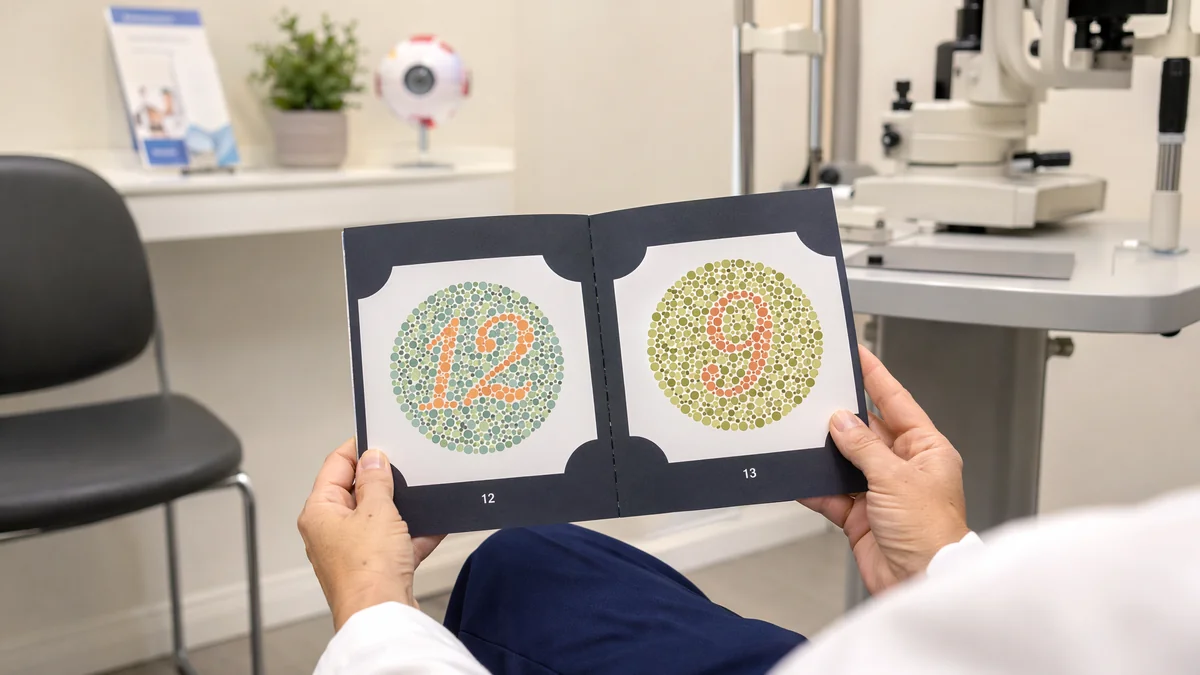
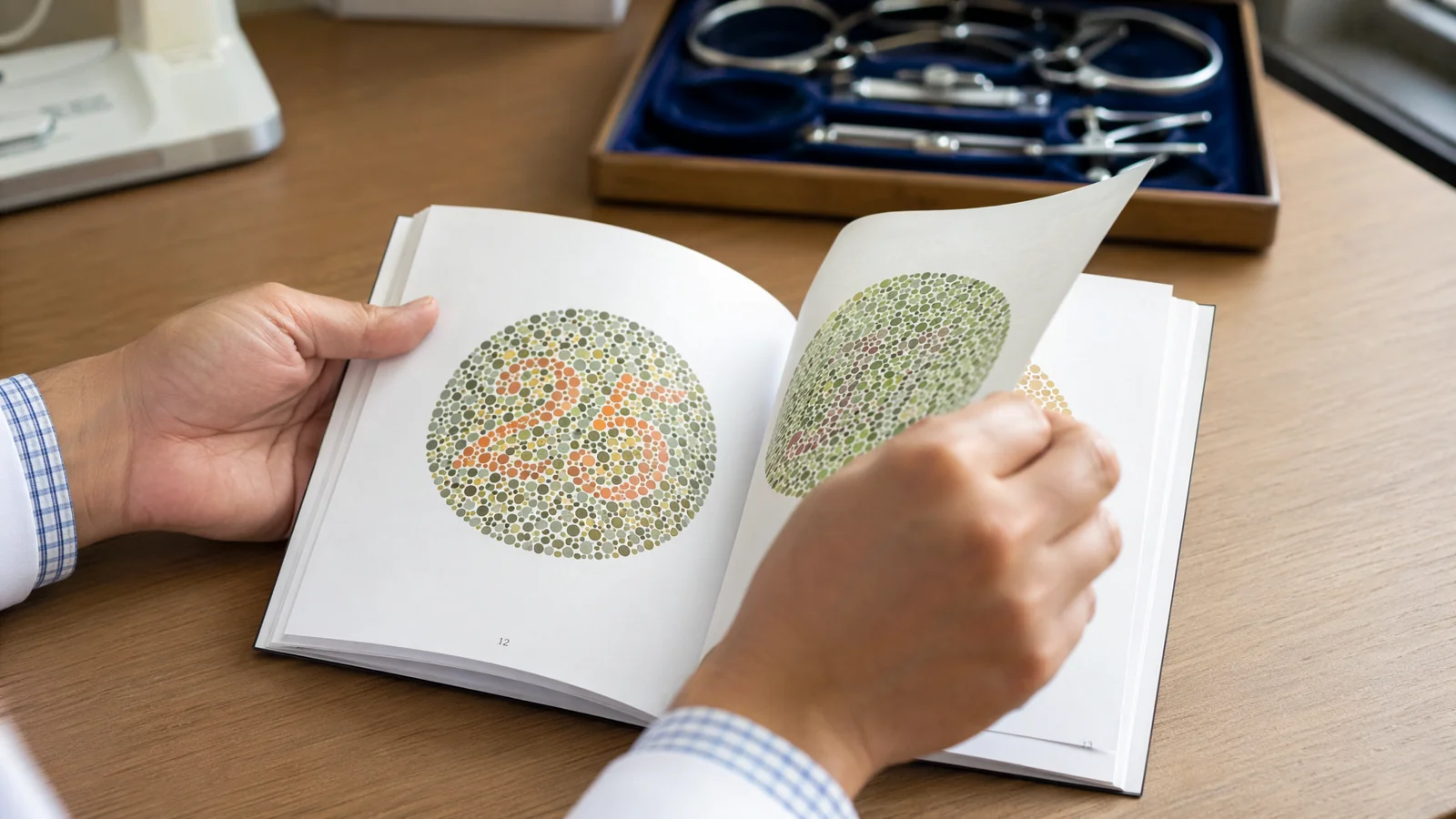
The Ishihara test uses pseudoisochromatic plates — specialized images composed of colored dots carefully arranged to camouflage a number or shape within the pattern. The dots vary in hue but are carefully matched in brightness and saturation. This makes the number invisible to someone who cannot distinguish the specific hue difference.
The Trap
The brilliance of the Ishihara design lies in how it minimizes luminance contrast. In normal vision, objects can be distinguished by either color differences or brightness differences. The Ishihara plates strip away the brightness cue, forcing the eye to rely purely on color perception. For someone with red-green color vision deficiency, the hues blend together — the number simply disappears into the background.
The Plates You Will Encounter
| Plate Type | What Normal Vision Sees | What Colorblind Vision Sees | Purpose |
|---|---|---|---|
| Transformation plates | Number A (e.g., “8”) | Number B (e.g., “3”) | Identifies deficiency type |
| Vanishing plates | Number | Random dots | Detects presence of deficiency |
| Hidden digit plates | Random dots | Number | Confirms deficiency diagnosis |
| Diagnostic plates | Specific number | Different or no number | Classifies protan vs deutan |
Strategy 1: Optimizing the Lighting Environment
The Ishihara test is standardized for a specific lighting condition — but that doesn’t mean you can’t ensure optimal conditions.
The Ideal Setup
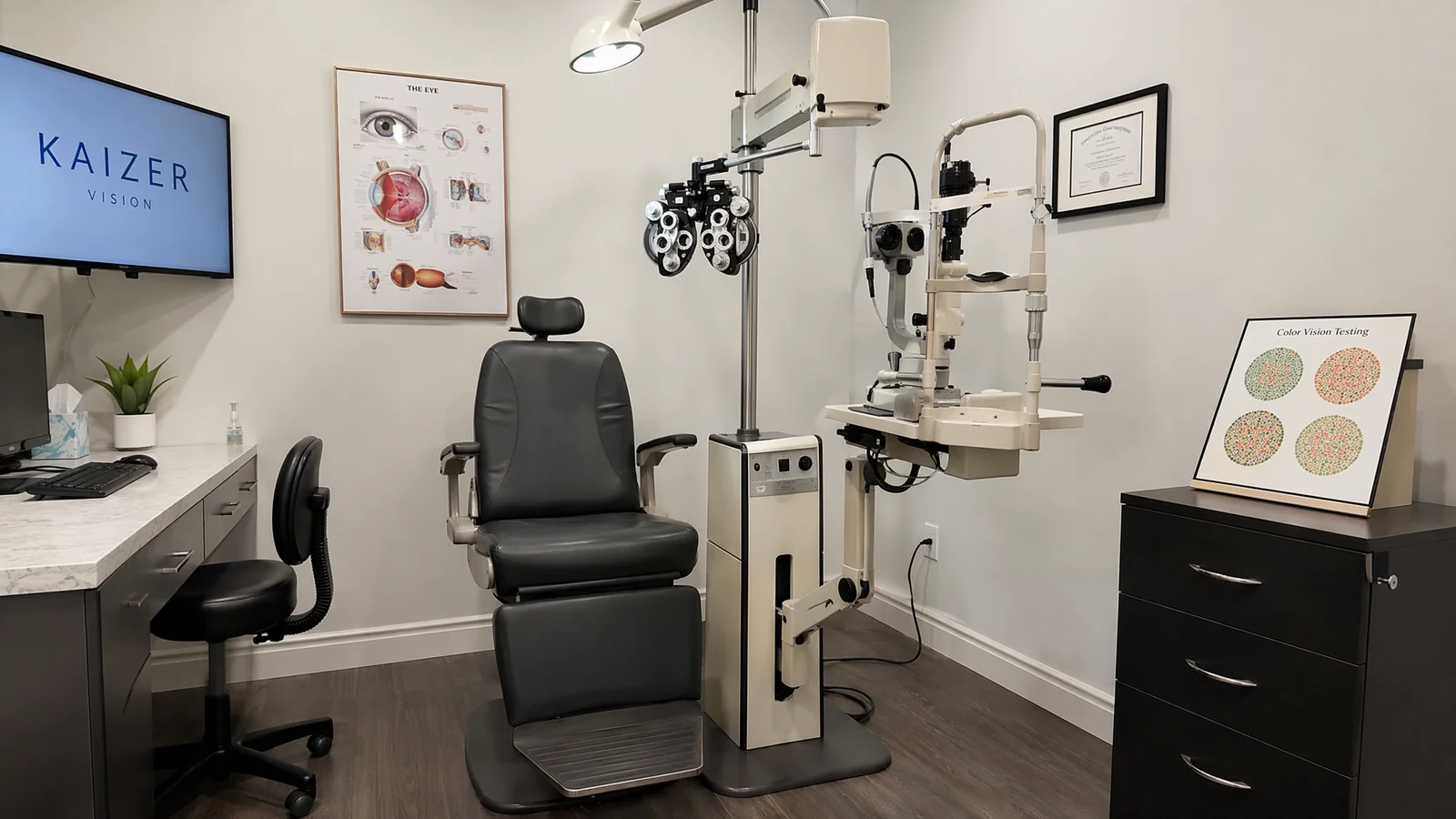
The test is designed to be taken under bright, white daylight measured at approximately 6000–7000 Kelvin with a Color Rendering Index (CRI) of 90 or higher. This is called CIE Illuminant C or D65 standard lighting. The plates should be viewed at a 45-degree angle from a distance of 75 cm (30 inches), with 3 seconds allowed per plate.
The Loophole
Here is where environmental factors become important: lighting quality directly affects test outcomes. Warm, yellow incandescent bulbs (around 2700K) alter the apparent shades of the colored dots on Ishihara plates. Research has shown that non-standard lighting can inadvertently help individuals with red-green deficiencies score higher because the color shift creates unintended luminance contrast cues.
Important: While manipulating lighting is technically possible, it is considered deceptive in formal occupational screenings. The legitimate approach is to ensure the test is administered under proper daylight-standard lighting. Poor lighting — such as standard office LED bulbs with low CRI — can produce inaccurate failure results. If your test environment uses substandard lighting, you are within your rights to request proper conditions.
Strategy 2: Memorization and Pattern Recognition
The Ishihara test follows consistent patterns across editions. While professional examiners take steps to prevent memorization, understanding the common plates can help you perform better.
The Flashcard Method
The standard Ishihara test contains 38 plates, though the 14-plate version is most common for occupational screening. Some people attempt to memorize the expected answers. However, this approach has significant limitations:
- Examiners may rotate between different editions
- Plate order is often randomized
- Shorter or longer versions may be used
- Some examiners use plates from multiple editions
Knowing the “Trick” Plates
Transformation plates are the most useful to understand because they show different numbers to different viewers. If you know what to look for, you can sometimes identify the pattern:
| Plate | Normal Vision Sees | Colorblind May See | Type |
|---|---|---|---|
| Plate 2 | 8 | 3 | Transformation |
| Plate 3 | 6 | 5 | Transformation |
| Plate 4 | 29 | 70 | Transformation |
| Plate 5 | 5 | 2 | Transformation |
| Plate 7 | 15 | 17 | Transformation |
The key insight: If a number looks like it could be read two ways, the transformation plate is testing whether your deficiency shifts your perception. On transformation plates, colorblind viewers typically see a different number — not no number at all.
Strategy 3: The Ultimate Solution — Red-Tinted Colorblind Contacts
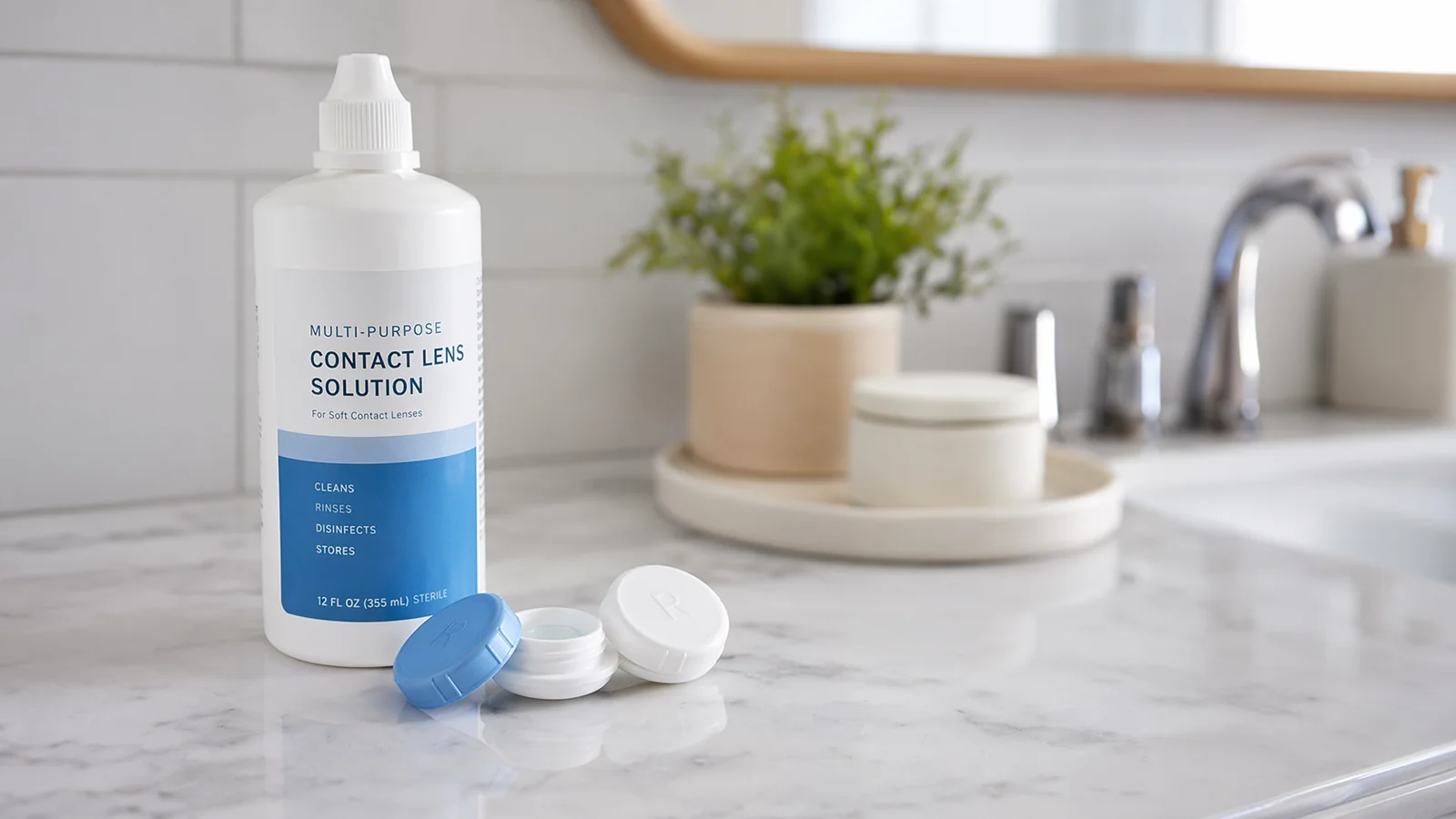
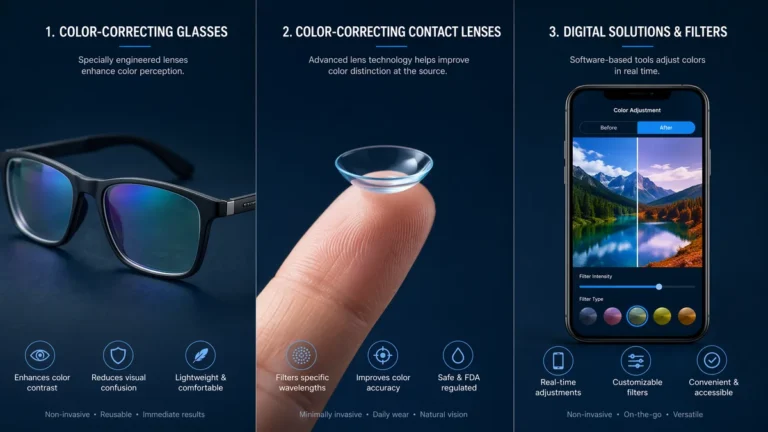
The most effective tool for passing the Ishihara test is a properly designed spectral filter contact lens. Unlike glasses, which sit at a distance from the eye and filter broadly, contact lenses deliver precision filtration directly on the cornea.
Contacts vs. Glasses
Standard colorblind glasses (like EnChroma or Pilestone) are designed to enhance overall real-world color vibrancy — making autumn leaves brighter and sunsets more vivid. However, these glasses often fail to help users pass the Ishihara test because the test uses highly desaturated colors designed specifically to defeat broad-spectrum filters.
Colorblind contact lenses work differently. By placing a precision-tinted filter directly on the eye — often in a monocular configuration (one eye only) — the lens creates a luminance differential between the two eyes that the brain uses to detect color contrast. This is far more effective for the specific demands of pseudoisochromatic plate testing.
Discretion and Design
Modern colorblind contacts are designed with a specialized red dot pattern scaled precisely to 60% of the pupil size. This ensures the tint is completely effective for the test while remaining highly discreet to the outside observer. No one needs to know you are wearing color correction.
The Science of Spectral Filtration
Clinical research validates the effectiveness of spectral filter contacts for Ishihara test performance:
- National Institutes of Health (NIH) / PMC:
“Efficacy of red contact lens in improving color vision test performance based on Ishihara, Farnsworth D15, and Martin Lantern Test” — This quantitative clinical trial found that mean error scores on the Ishihara test were significantly reduced (from 7.87 down to 3.93), allowing subjects to consistently pass standard color vision tests. - PubMed / National Library of Medicine:
“Red tinted contact lenses on Ishihara test error scores in color deficient subjects” — A controlled pilot study confirming that specifically calibrated red lenses significantly decrease Ishihara error scores, particularly those blocking light in targeted confusion wavelengths. - Advanced Healthcare Materials / NIH:
“Contact Lenses for Color Blindness” — Research documenting how filtering specific wavelength bands safely and effectively manages anomalous trichromacy, helping bridge the red-green color gap. - Visual Neuroscience / Cambridge Core:
“Discrimination of colors by red–green color vision-deficient observers through digitally generated red filter” — Clinically validates the monocular filtering approach, confirming the optical principles of contrast shift that make hidden test patterns visible to color-deficient individuals.
Navigating Occupational Vision Requirements

Different careers have different Ishihara test requirements and different alternative testing pathways. Here is what you need to know for the most common color-critical professions.
Aviation
The FAA uses the Ishihara 14-plate test as the initial screening for pilot medical certificates. First, second, and third-class medicals all require color vision screening.
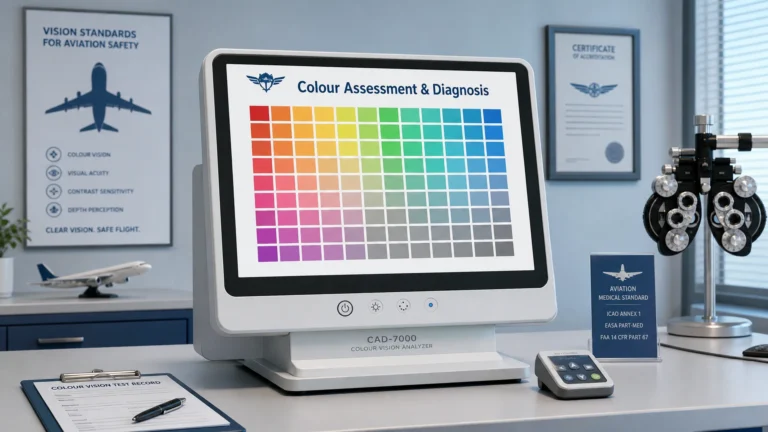
If you fail: Pilots can take alternative tests including the OCVT (Operation Color Vision Test), the Farnsworth lantern test, the CAD test, or the Rabin Cone Contrast Test. Passing an alternative test removes the night flying restriction.
Learn more about FAA color vision testing
Law Enforcement
Most police departments use the Ishihara test as part of the pre-employment medical evaluation. Requirements vary significantly by agency.
If you fail: Many departments offer secondary testing using the Farnsworth D-15 or Waggoner CCVT. Some agencies accept a letter from a board-certified optometrist confirming functional color vision.
Learn more about police color vision requirements
Medical and Engineering
Nurses, doctors, and technical engineers face specific color vision requirements depending on their role:
- Nurses: Must distinguish color-coded patient monitoring equipment, medication labels, and skin tone assessment (cyanosis, flushing, jaundice)
- Engineers and Electricians: Must identify color-coded wiring, circuit components, and safety indicators
- Surgeons: Require precise tissue differentiation during procedures
Learn more about color vision for medical professionals
Frequently Asked Questions
Online Ishihara tests differ from printed books in important ways. Backlit screens (LCD, OLED) emit light differently than printed paper reflects it, which can affect the apparent colors. Online tests are useful for screening and familiarization, but only a professionally administered in-person test with a printed book and controlled lighting can provide an official result accepted by employers.
Rules vary widely between agencies. The FAA, military, and most federal agencies prohibit wearing any color-correcting lenses during official vision screenings. Some local police departments and employers may permit them. Always check with your specific agency before test day.
No. EnChroma glasses are designed for real-world color enhancement, not for the Ishihara test. The test uses highly desaturated colors that broad-spectrum filter glasses cannot enhance effectively.
On the standard 14-plate test, passing typically requires 12 out of 13 scored plates correct. The demonstration plate (usually number 12) is not scored. Different organizations may use different thresholds.
Memorization is possible for the standard 38 plates, but professional examiners use multiple editions, randomize plate order, and may use shorter or longer versions to prevent this. Transformation plates are the most predictable because they show different numbers to different viewers.
The best alternative depends on your career. The Farnsworth D-15 is widely accepted by police departments. The CAD test is becoming the FAA standard. The Rabin Cone Contrast Test is used by the U.S. military. Check with your specific agency for approved alternatives.
Lighting quality directly affects test outcomes. The test requires CIE Illuminant C or D65 daylight-standard lighting (6000-7000K, CRI 90+). Warm incandescent light can alter perceived colors and may inadvertently help or hinder performance. Standard office LED lighting often produces inaccurate results.
A transformation plate shows different numbers to different viewers. People with normal color vision see one number, while those with color deficiency see a different number. For example, plate 2 shows an 8 to normal vision but a 3 to red-green deficient viewers.
Yes. Failing the Ishihara test does not disqualify you from becoming a pilot. The FAA offers alternative testing pathways including the OCVT (signal light gun test), CAD test, and Rabin Cone Contrast Test. Passing an alternative test removes the night flying restriction.
Clinical studies show that monocular red filter contact lenses reduce mean Ishihara error scores from 7.87 to 3.93 — a 50% improvement. Nearly half of subjects (47.5%) achieved normal color perception scores while wearing the lenses.