
Don’t settle for a desk job. Protect your dream of becoming a Sworn Officer.
If you are reading this, you probably know the sinking feeling of looking at an Ishihara color plate and seeing nothing but dots. For thousands of police recruits every year, this is the moment their dream of joining the academy hits a wall.
While many departments suggest “civilian roles” for colorblind applicants, we know that’s not what you want. You want to be out in the field. This guide explains how ColorKinds® Corrective Lenses can help you meet the vision standards required for active duty.
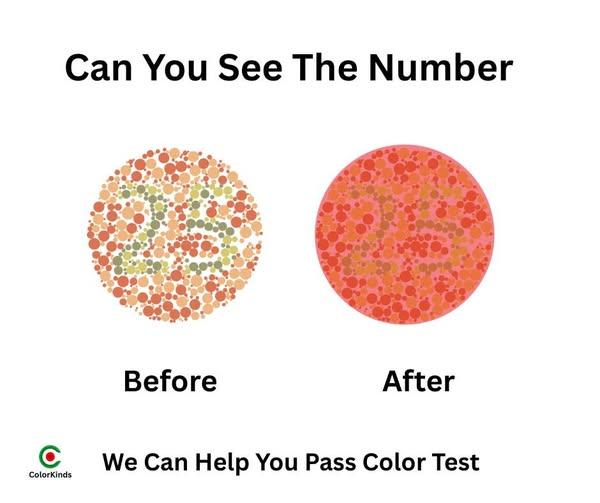
The Barrier: The Ishihara Test
Most police departments (from NYPD to local sheriff offices) use the Ishihara Plate Test as the initial screening.
- The Test: You must identify numbers hidden in a pattern of red and green dots.
- The Problem: If you have Deutan (green-weak) or Protan (red-weak) vision, the red numbers blend into the green background. You see a “3” instead of an “8,” or nothing at all.
- The Consequence: Immediate disqualification from “Sworn Officer” status.
How ColorKinds Helps You Pass
Our specialized contact lenses work by filtering out specific wavelengths of light that cause “color confusion.”
- Contrast Boost: The lens darkens the green wavelengths, making the red numbers “pop” out against the background.
- Passing the Plate: Many users report seeing the hidden numbers clearly for the first time immediately after putting the contacts in.
“I failed my initial medical for the State Troopers because of the color plates. I bought the ColorKinds contacts, practiced with a book at home, and could finally see the difference. It gave me the confidence to re-apply.” — Officer M.D. (Verified Buyer)
Beyond the Test: Officer Safety on the Streets
Passing the medical exam is step one. Staying safe on patrol is step two. Color vision is not just a bureaucratic rule; it is a safety tool.
Real-World Scenarios Where Contacts Help:
- Suspect Identification: Distinguishing a “Red Hoodie” from a “Grey Hoodie” during a foot chase.
- Traffic Stops: Instantly recognizing the color of a vehicle (Silver vs. Light Blue) at night.
- Taser Operation: Seeing the red laser dot on a suspect’s green or brown clothing.
The “Waiver” Secret (Farnsworth D-15) If you fail the Ishihara test, do not give up. Ask your recruiter if the department allows an alternative test called the Farnsworth D-15. This test involves arranging colored caps in order. It is much easier to pass than Ishihara, and our color-correcting lenses are incredibly effective at helping you sort the caps in the correct order.
Frequently Asked Questions for Recruits
Can I wear these contacts during the medical exam? This depends entirely on the specific department’s medical officer. Some strict departments forbid “auxiliary aids.” However, many candidates wear the contacts to demonstrate that their corrected vision is normal, similar to wearing glasses for 20/20 vision. Tip: Always be honest, but show them you have a solution that works.
Do they work for the “Wire Test”? Yes. If your department uses a practical test (identifying wires or colored pencils), these contacts make distinguishing red and green wires significantly easier.
Take Control of Your Career
You have trained your body and mind for the academy. Don’t let your eyes hold you back.
Related Information
How To Use Colorblind Contacts For Police Exam Preparation
How to Prepare Police & Law Enforcement Color Vision Test Guide
Why Do Police Need Color Vision? The Truth Behind Law Enforcement Sight Standards
The Ultimate Guide to the Waggoner Color Vision Test: Clinical Precision & Occupational Standards
The Police Color Blind Test: How to Pass & What If You Fail (2026)