The Ultimate Guide to the Waggoner Color Vision Test: Clinical Precision & Occupational Standards
For decades, the assessment of chromatic discrimination—how well your eyes distinguish between colors—has been a source of intense anxiety for job applicants and a logistical headache for medical examiners. For almost 100 years, the medical world relied heavily on the Ishihara pseudoisochromatic plates (the famous book of colored dots). However, legacy paper tests are severely flawed. They fade, they can be memorized, and they completely miss certain types of vision loss.
Enter the Waggoner Color Vision Test.
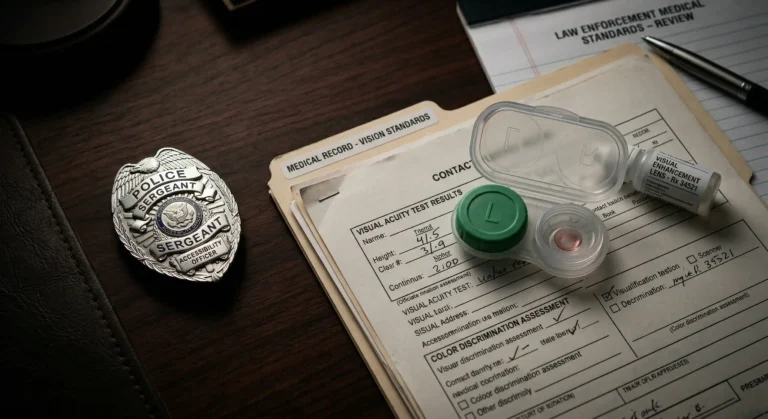
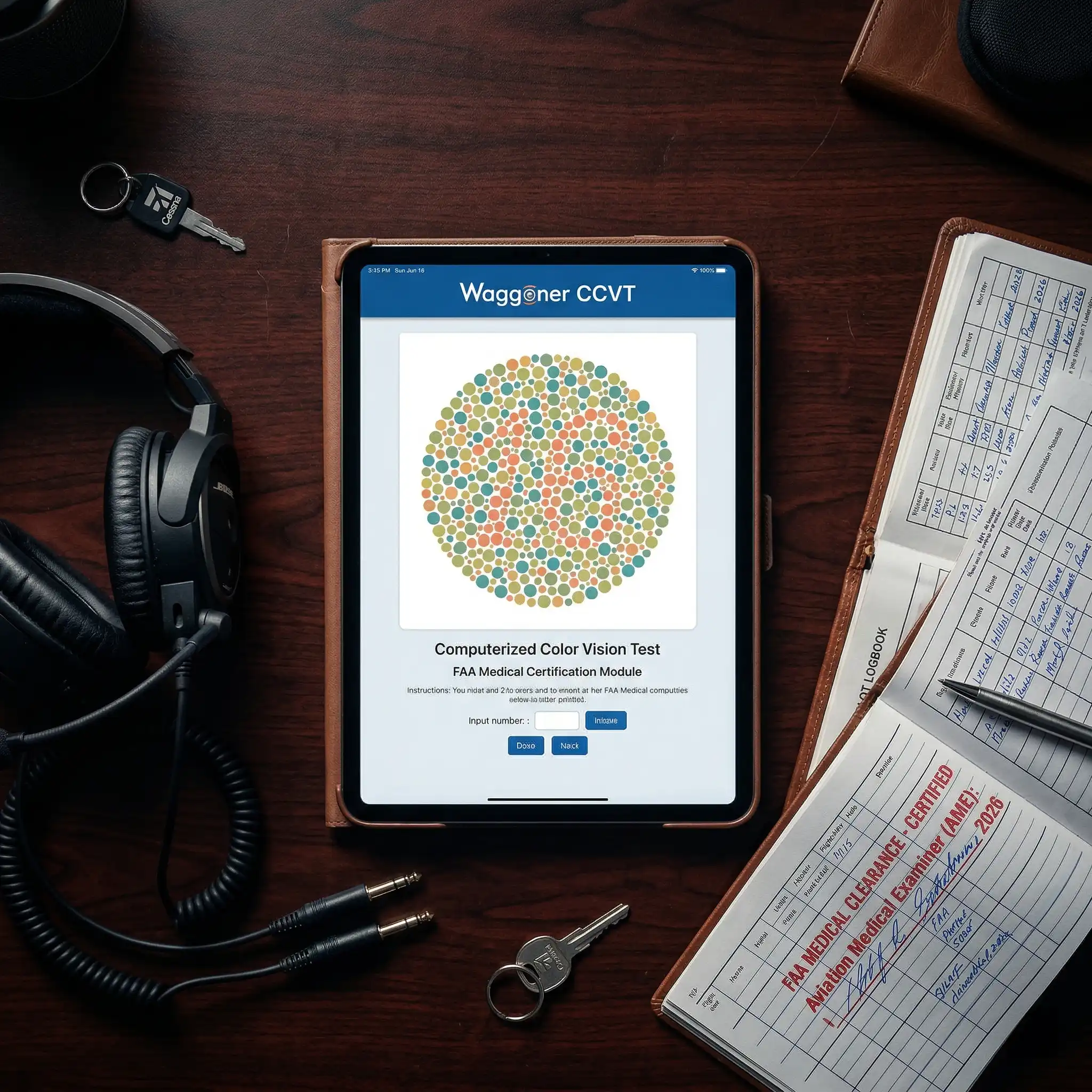
Spearheaded by Dr. Terrace Waggoner, the Waggoner diagnostic suite represents the digital transformation of color vision testing. It has rapidly become the gold standard for clinical optometry, pediatric screening, and strict occupational licensing. Whether you are an aspiring pilot facing FAA medical standards, a law enforcement recruit worried about police vision requirements, or a clinic administrator looking to modernize your practice, understanding this computerized test is critical.
In this comprehensive guide, we will break down exactly what the Waggoner Computerized Color Vision Test (WCCVT) is, why it is rendering paper tests obsolete, how it grades your vision, and why proper screen calibration is the secret to accurate results.
What is the Waggoner Computerized Color Vision Test (WCCVT)?
The Waggoner Computerized Color Vision Test (WCCVT) is a highly advanced, all-in-one digital diagnostic suite used to identify and quantify the exact severity of a patient’s color vision deficiency.
The Featured Facts
- Digital Precision: Administered on calibrated monitors or tablets (like an iPad).
- Elite Approvals: The WCCVT is one of only three “precision” computerized color vision tests officially approved by the FAA for pilot medical certification.
- Military Validation: It is fully validated and utilized by the U.S. Navy, Army, Marines, and Coast Guard.
- Comprehensive Detection: Unlike older tests, it accurately identifies Protan (red), Deutan (green), and Tritan (blue-yellow) deficiencies.
For candidates whose careers rely on passing an eye exam, the Waggoner suite removes the subjectivity of human examiners. It replaces the old “pass/fail” binary with precise, data-driven diagnostics.
Waggoner CCVT vs. Ishihara: Why Paper Tests are Obsolete
If you have ever taken a vision exam, you have likely stared at the Ishihara plate book . Introduced in 1917, it is the most famous color blind test in the world. However, occupational health directors and federal agencies are actively phasing it out. Here is why the Waggoner test is superior.

The Death of Memorization and “Cheating”
The greatest flaw of the Ishihara book is its static nature. Because the plates never change, highly motivated applicants can simply purchase the book online, memorize the hidden numbers, and “pass” the test despite having a severe deficiency. Furthermore, some candidates attempt to wear red-tinted lenses to beat the test.
The Waggoner CCVT eliminates these vulnerabilities entirely:
- Randomization: The software randomizes the order of the plates, the shapes displayed, and the orientation of the targets. Memorization is impossible.
- Adaptive Luminance: The test constantly shifts the brightness and contrast of the background noise. This adaptive algorithm neutralizes the optical tricks provided by color-correcting contact lenses.
- Physical Degradation: Paper books absorb oils from fingerprints and their pigments fade over time, leading to false failures. A calibrated digital screen maintains perfect chromatic integrity indefinitely.
Color Vision Testing Comparison Matrix
To understand the landscape of modern testing, compare the legacy systems against the modern digital suites approved by the federal government.
| Diagnostic Test | Detects Red-Green? | Detects Tritan (Blue-Yellow)? | Cheating Risk | FAA / Military Approved? |
|---|---|---|---|---|
| Ishihara (Paper Book) | Yes (Screening only) | No | High (Memorizable) | Yes (Primary screen only) |
| Farnsworth D-15 (Caps) | Yes (Severity grading) | Yes | Moderate | Yes (As a secondary test) |
| Waggoner CCVT (Digital) | Yes (Exact quantification) | Yes | Zero (Randomized) | Yes (Precision Tier) |
| Rabin Cone Contrast (RCCT) | Yes (Exact quantification) | Yes | Zero (Randomized) | Yes (Precision Tier) |
The Applicant’s Survival Guide to the Waggoner CCVT
If you are an applicant walking into a Medical Examining Processing Station (MEPS) or an aviation medical examiner’s office, seeing a tablet instead of a book can be intimidating. Here is what you need to know about taking the Waggoner test.

How the Test Works
Instead of the doctor flipping pages, the software drives the exam. You will be asked to identify numbers, letters, or shapes (like a “C” with a gap) on a screen filled with visual “noise.” You typically only have a few seconds to input your answer using a connected response pad or the touchscreen. As you answer correctly, the contrast between the target and the background decreases, testing the absolute limit of your cone cells.
Applicant Strategy: Grading and Severity
The Waggoner software automatically grades your deficiency as Normal, Mild, Moderate, or Severe. Warning: Clinical studies have noted that the Waggoner CCVT can occasionally be strict, sometimes grading anomalous trichromats (mild deficiencies) as “severe.” Because a “severe” grade is an automatic disqualification for many federal jobs, you must stay hyper-focused. Do not rush, utilize the full time allotted for each image, and ensure you are not sitting in glare.
If you are anxious about your upcoming physical, understanding how occupational arrangements work is crucial. Read our breakdown on how applicants prepare for the Farnsworth D-15 secondary test.
Beyond Red-Green: Detecting Acquired Vision Loss
While occupational testing focuses heavily on genetic red-green defects (Protan and Deutan), the clinical world prizes the Waggoner test for a different reason entirely: its ability to detect the elusive Tritan color vision defect.
A tritan defect is a blue-yellow deficiency. While it is incredibly rare to be born with this condition, it is highly common to acquire it later in life.
| Deficiency Type | Affected Cone | Primary Cause | Detected By Ishihara? |
|---|---|---|---|
| Protan | L-Cones (Red) | Genetic (X-Chromosome) | Yes |
| Deutan | M-Cones (Green) | Genetic (X-Chromosome) | Yes |
| Tritan | S-Cones (Blue) | Acquired (Disease/Toxicity) | No |
Oculomics: The Eye as a Window to the Brain
The eyes are an extension of the central nervous system. Because the S-Cones (blue receptors) are highly fragile, they are often the first cells to die when the body experiences systemic stress. By using the Waggoner’s Tritan module, doctors can detect subclinical signs of severe diseases—such as Glaucoma, Multiple Sclerosis (MS), Macular Degeneration, or diabetic retinopathy—months or years before physical symptoms appear.
Furthermore, it is used to monitor patients taking high-risk medications like Plaquenil (hydroxychloroquine), which can cause retinal toxicity.
Preventing False Tritan Failures
Clinicians must be careful. The Waggoner test utilizes short presentation times (often 2 to 3 seconds per image). Elderly patients or those with slower cognitive processing speeds may falsely fail the blue-yellow test simply because they couldn’t click the button fast enough. Ensure patients are fully prepped on the speed of the exam before initiating the module.

The Tech Behind the Test: Why Screen Calibration Matters
The transition from paper to pixels solves many problems, but it introduces a major technical vulnerability: Display Calibration.
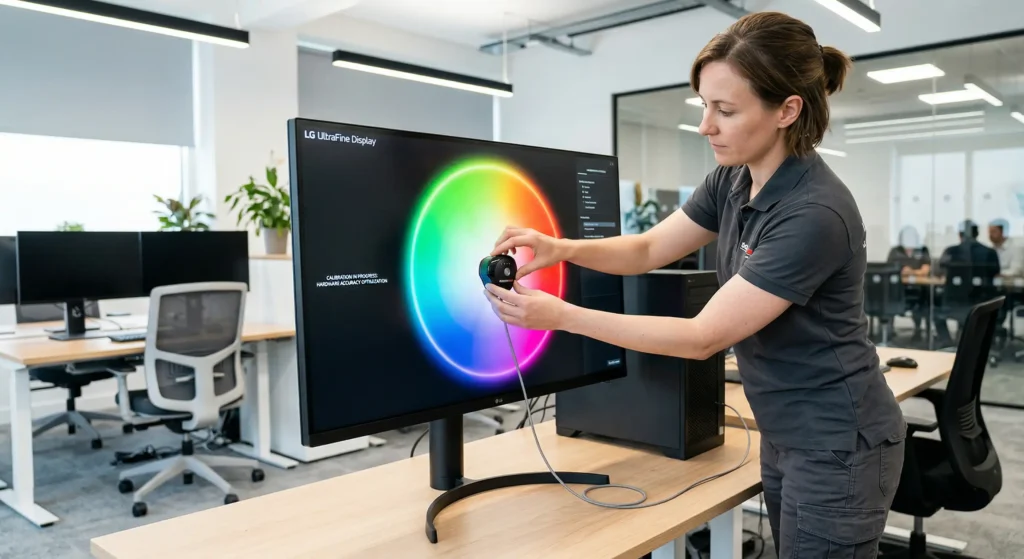
The Waggoner Color Vision Test is only as accurate as the monitor it is displayed on. If a clinic’s monitor has a poor color gamut, terrible contrast, or a blue-light filter turned on, the software cannot render the precise chromatic differences required for the test. Consequently, a patient with perfectly normal vision might fail the exam.
The Hardware Configuration Checklist
If you are an IT director or a clinician setting up the Waggoner CCVT on a Windows PC or an Android tablet, you must ensure the display adheres to strict CIE (International Commission on Illumination) standards:
| Calibration Metric | Required Standard | Why it Matters |
|---|---|---|
| Color Temperature | 6500 K (D65 Illuminant) | Replicates perfect, neutral daylight. |
| Gamma | 2.2 | Ensures proper mid-tone contrast rendering. |
| Luminance (Brightness) | ~100 to 120 cd/m² | Prevents the screen from washing out subtle color differences. |
The “Night Shift” Warning
You must absolutely disable features like Apple’s “True Tone,” “Night Shift,” or Windows “Night Light.” These features artificially warm the screen by removing blue light to reduce eye strain. Leaving them on will instantly ruin the diagnostic accuracy of the Waggoner test. Note: Waggoner Diagnostics highly recommends using Apple iPads, as their Retina displays feature incredibly consistent, factory-calibrated color performance out-of-the-box.
Testing Toddlers: The Pediatric Color Vision Guide (CVTME)
One of the most celebrated modules in the Waggoner ecosystem is the Color Vision Testing Made Easy (CVTME) program.
Testing young children for color blindness has always been incredibly difficult. You cannot ask a three-year-old to read the number “74” hidden in a dot matrix if they haven’t learned their numbers yet. Because of this, many children historically went undiagnosed until middle school, leading to learning difficulties when utilizing color-coded educational materials.
How the CVTME Works
The CVTME abandons numbers entirely. Instead, it utilizes universally recognized shapes and objects: a star, a circle, a square, a boat, and a dog. If the child can point to the shape or match it to a physical card in their hand, the clinician can accurately assess their color vision.
Clinical Administration Tips for Nurses:
- Watch the Distance: Toddlers will naturally try to lean their face inches from the screen. You must enforce the standard testing distance (usually 24 to 30 inches) to prevent false passes.
- Keep it Moving: Do not let the child stare at a single image for more than 3 to 5 seconds. Extended viewing times allow the brain to search for edge-contrasts rather than true color differences.
- Shape Complexity: Clinical studies note that Part 2 of the CVTME (which uses complex shapes like boats and dogs) can sometimes confuse toddlers who simply don’t recognize the drawing. If a child struggles with Part 2, revert to Part 1 (simple geometry like circles and stars).
Optometry Practice ROI: Billing CPT 92283
For private practices, adopting the Waggoner CCVT is not just a clinical upgrade; it is an economic one. Implementing digital testing allows clinics to move beyond the basic screening code.
When an ophthalmologist or optometrist administers the comprehensive diagnostic modules of the Waggoner suite (identifying the specific axis and severity of the defect), they can legally bill medical insurance using CPT code 92283 (Extended Color Vision Examination). With an average national reimbursement rate hovering around $55 per test, the software rapidly pays for itself while elevating the standard of patient care.
Master the Visual Field: Train Smarter
Are you facing a strict occupational physical for aviation, law enforcement, or the military? Don’t let a color vision deficiency catch you off guard. While you cannot wear color-correcting lenses during the Waggoner test, wearing them during your civilian life helps train your brain to recognize critical contrasts.
Build your visual memory and step into your medical exam fully prepared.
Shop ColorKinds® LensesFrequently Asked Questions About the Waggoner Test
What is the Waggoner Computerized Color Vision Test (WCCVT)?
The WCCVT is a precision, digital diagnostic suite used to detect and quantify color vision deficiencies. It replaces traditional paper dot tests and is officially approved by the FAA, U.S. Military, and numerous law enforcement agencies.
Is the Waggoner CCVT FAA approved?
Yes. The Waggoner CCVT is one of only three precision computerized color vision tests officially approved by the Federal Aviation Administration (FAA) for pilot medical certification.
How does the Waggoner test differ from the Ishihara plates?
Unlike the Ishihara book, which only tests for red-green defects and can fade or be memorized, the Waggoner test is digital, randomizes its targets to prevent cheating, and tests for blue-yellow (tritan) deficiencies.
Can I use colorblind contacts to pass the Waggoner test?
No. The Waggoner CCVT utilizes adaptive luminance and randomized background noise that neutralizes the optical tricks of color-correcting lenses. Furthermore, wearing them during an official occupational exam is considered an integrity violation.
What is Color Vision Testing Made Easy (CVTME)?
CVTME is the pediatric module of the Waggoner testing suite. Instead of requiring a child to read numbers, it uses universally recognized shapes like stars, circles, and dogs, allowing accurate color vision screening for children as young as three years old.
What is a tritan color vision defect?
A tritan defect is a blue-yellow color vision deficiency. While rare genetically, it is frequently acquired later in life due to aging, macular degeneration, glaucoma, or toxicity from medications like Plaquenil.
How long does the Waggoner color vision test take?
The administration time varies based on the module being used. A basic screening can take less than 2 minutes, while a comprehensive diagnostic evaluation testing for protan, deutan, and tritan defects can take between 5 to 10 minutes.
What is the computerized D15 color vision test?
It is a digital version of the traditional Farnsworth D-15 arrangement test. Included in some Waggoner suites, it requires patients to arrange colored squares in a smooth chromatic gradient on a screen, automatically calculating crossing errors.
Why is screen calibration important for the Waggoner test?
Digital color vision tests rely on exact color representation. If a monitor is too dim, or if features like ‘Night Shift’ or ‘True Tone’ are enabled, the screen’s color temperature changes, which can cause a patient with normal vision to falsely fail the test.
What is the CPT code for Waggoner color vision testing?
Optometrists and ophthalmologists can typically bill for administering the comprehensive diagnostic modules of the Waggoner test using CPT code 92283 (extended color vision examination).