Can a Police Officer Be Color Blind? Explore Career Opportunities in Law Enforcement
Color blindness is a condition that affects many individuals, raising important questions about suitability for various professions, including law enforcement. Many police departments allow individuals with color blindness to become officers, as long as the deficiency does not significantly impair their ability to perform essential duties. This creates opportunities for aspiring officers who may be concerned about their condition limiting their career choices.
As the discussion surrounding diversity and inclusion within the police force expands, the topic of color blindness becomes increasingly relevant. Understanding how these policies play out across different jurisdictions can help candidates make informed decisions about their careers in law enforcement.
Criteria for Police Officer Vision Requirements
Vision requirements for police officers vary by agency, but generally include several key criteria.
1. Visual Acuity: Most departments require a minimum visual acuity of 20/20 in one eye, with or without correction. Some agencies may accept 20/40 vision with corrective lenses.
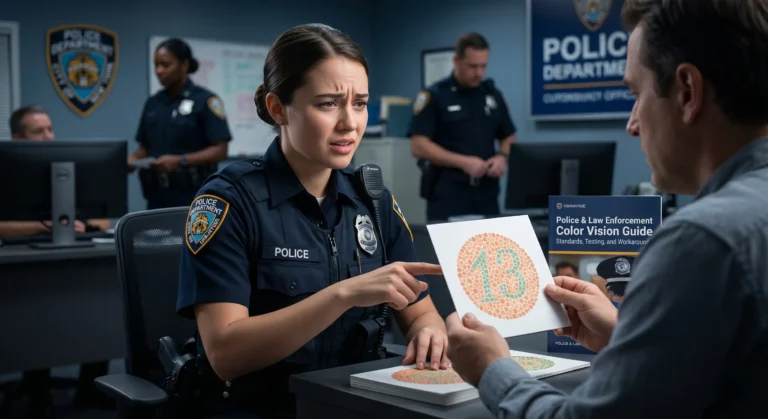
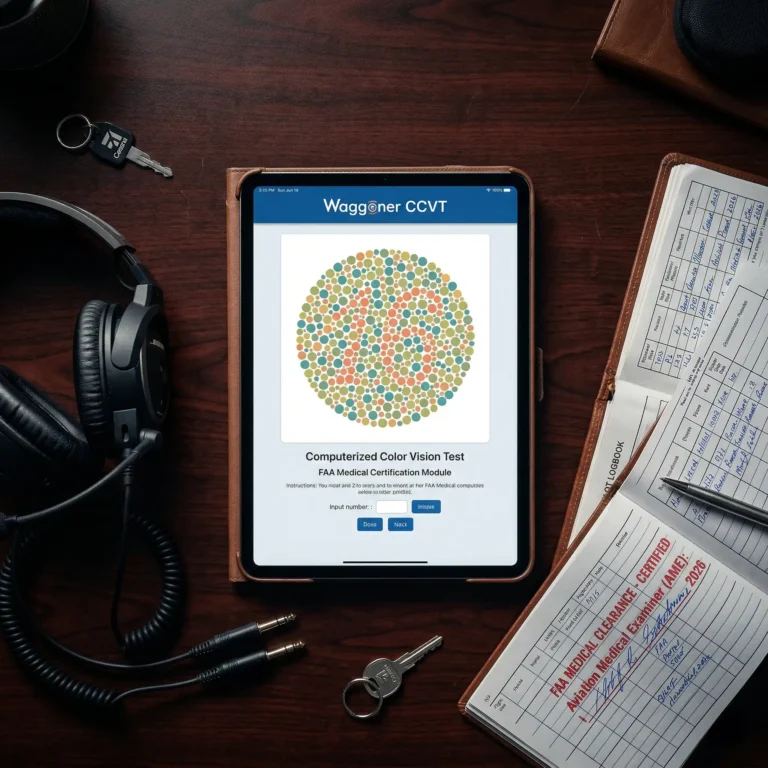
2. Color Vision: Color vision testing is a standard part of the hiring process. Many agencies administer the Ishihara Color Blindness Test. Passing this test is often essential to ensure officers can identify traffic signals and color-coded alerts.
3. Depth Perception: Adequate depth perception is critical for assessing distances during high-pressure situations. Testing for depth perception is also incorporated into the medical examination.
4. Peripheral Vision: Officers must have sufficient peripheral vision to remain aware of their surroundings. Requirements may stipulate a minimum degree of peripheral awareness.
5. Night Vision: Some agencies assess officers’ ability to see under low-light conditions. Night vision is vital for patrol duties and responding to emergencies.
Each police department may have specific requirements, and candidates are advised to check local guidelines. Both state and federal laws can influence these standards, as they aim to ensure public safety and effective law enforcement. It is essential for applicants to be aware of these criteria early in the recruitment process.
Departments Allow Colorblind Police Officers in US
Colorblind individuals may face restrictions when applying for sworn officer positions in some police departments due to the need to accurately distinguish colors for identifying suspects, vehicles, and signals. However, many non-sworn positions and some specialized roles within law enforcement may be accessible to individuals with color vision deficiencies.
Sworn (Officer) Positions (Depends on Department Policy)
Most police departments in the United States do not permit colorblind individuals to serve as sworn officers. The ability to distinguish colors is often deemed essential for various duties.
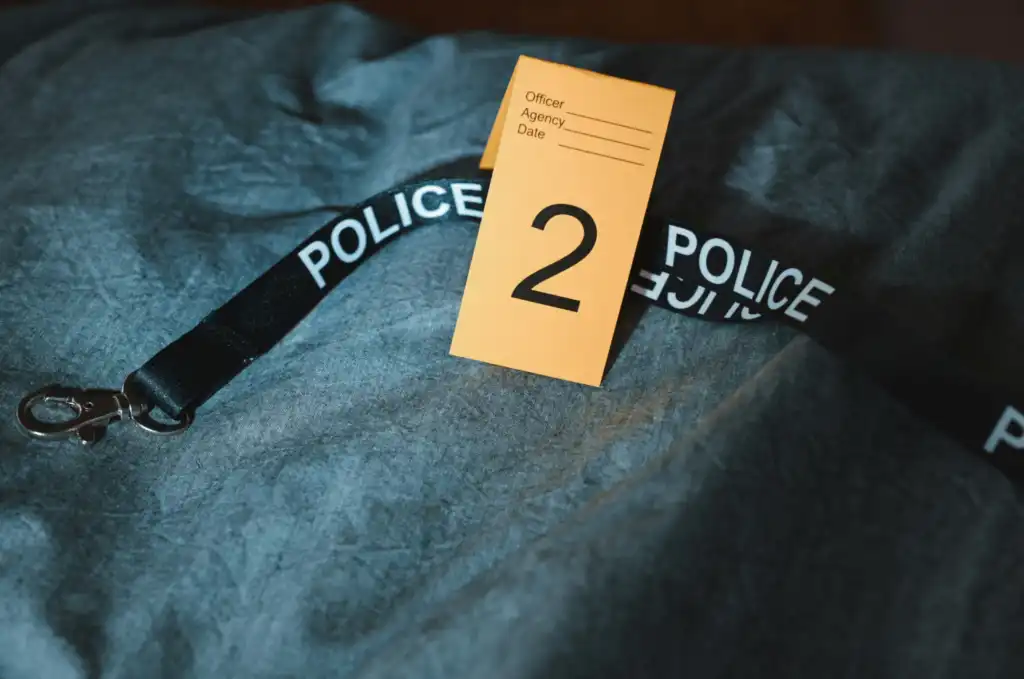
Sworn officers are police officers with arrest powers who actively patrol communities, respond to emergencies, and investigate crimes. Many departments have color vision standards to ensure officers can accurately identify suspect descriptions, traffic signals, and other important visual cues.
Non-Sworn (Civilian) Positions
Non-sworn police department positions are fewer vision restrictions in the United States, which may be suitable for individuals with color vision deficiencies. These roles generally involve administrative, support, or specialized non-sworn duties that do not require direct law enforcement fieldwork or strict vision standards.

Top 20 Police Department Positions with Fewer Vision Restrictions:
- Police Dispatcher (911 Operator)
- Answering emergency calls, dispatching officers, and coordinating responses.
- Vision is important but typically does not require color vision.
- Crime Scene Investigator (CSI)
- Analyzing crime scenes and collecting evidence.
- Some tasks may not involve color-based identification.
- Forensic Analyst
- Working in a lab setting, analyzing physical evidence like DNA, fingerprints, or weapons.
- Color differentiation is not often critical in most forensic roles.
- Records Clerk
- Handling and organizing police records and documents.
- Primarily clerical work with minimal color-dependent tasks.
- Police Administrative Assistant
- Providing clerical and administrative support to officers and other staff.
- Limited need for color recognition.
- Crime Analyst
- Analyzing crime patterns and compiling data to help guide law enforcement strategies.
- Heavy focus on statistics and data, not on color-based tasks.
- Evidence Technician
- Cataloging and storing evidence collected by officers.
- Vision is important, but color recognition may not be crucial for many evidence types.
- Public Information Officer (PIO)
- Managing communication between the police department and the public.
- Involves writing press releases, conducting interviews, and handling social media.
- Police Records Supervisor
- Overseeing the management of case files and police records.
- Limited direct interaction with physical objects requiring color identification.
- IT Specialist
- Maintaining and troubleshooting the department’s computer systems, databases, and technology.
- Colorblindness typically does not impact the work.
- Digital Forensics Specialist
- Investigating cybercrimes and examining digital devices for evidence.
- Minimal reliance on color vision for analyzing digital data.
- Fleet Services Technician
- Managing and maintaining the department’s vehicles and equipment.
- Mostly mechanical tasks that do not require color perception.
- Community Service Officer
- Assisting with non-emergency calls, writing reports, and supporting officers on scene.
- Generally requires less stringent vision requirements.
- Parking Enforcement Officer
- Issuing parking citations and patrolling for parking violations.
- Color vision is generally not a critical factor.
- Crime Prevention Specialist
- Educating the community on crime prevention techniques.
- Administrative and outreach-focused, with no direct law enforcement action required.
- Victim Assistance Advocate
- Helping victims of crime navigate the justice system and providing support.
- Vision requirements are typically less stringent.
- Police Payroll Administrator
- Managing payroll and budgeting for police department employees.
- Primarily office-based work with no significant visual demands.
- Laboratory Technician
- Supporting forensic science work in criminal investigations, processing physical evidence.
- Color recognition is often not a key component of the job.
- Safety Coordinator
- Ensuring the police department’s workplace safety standards are met.
- Role focuses on policies, training, and administrative duties.
- Police Training Officer (Non-Sworn)
- Developing and implementing training programs for new recruits and officers.
- Work is focused on curricula and instruction, with minimal need for color differentiation.
Key Notes:
- Vision requirements for police officers and staff can vary significantly by department and position. If you have concerns, it’s recommended to check with the specific department’s recruitment or medical office.
- Non-sworn roles typically have fewer visual restrictions than sworn officer roles. These positions often emphasize administrative, technical, or support work rather than direct law enforcement duties.
Top 50 Largest U.S. Police Departments (Sworn & Non-Sworn)
Are you considering a career in law enforcement but worried about medical requirements like color vision standards? Larger departments often have more resources, specialized non-sworn (civilian) roles, and sophisticated medical review boards capable of issuing waivers for mild deficiencies.
Below is a comprehensive breakdown of the 50 largest municipal and county police departments in the United States, utilizing the latest demographic data from the Bureau of Justice Statistics (BJS) and FBI Uniform Crime Reporting. The table highlights both Sworn Officers (who carry a badge and gun) and Non-Sworn / Civilian Personnel (dispatchers, crime scene analysts, forensics, and administrative staff).
| Rank | Department Name | State | Sworn Officers | Non-Sworn (Civilian) | Total Employees |
|---|---|---|---|---|---|
| 1 | New York City Police Department (NYPD) | NY | 33,475 | 15,171 | 48,646 |
| 2 | Chicago Police Department (CPD) | IL | 11,580 | 1,181 | 12,761 |
| 3 | Los Angeles Police Department (LAPD) | CA | 8,784 | 2,842 | 11,626 |
| 4 | Houston Police Department (HPD) | TX | 5,195 | 1,450 | 6,645 |
| 5 | Philadelphia Police Department (PPD) | PA | 5,021 | 1,682 | 6,703 |
| 6 | Las Vegas Metropolitan Police (LVMPD) | NV | 3,398 | 1,529 | 4,927 |
| 7 | Washington Metropolitan Police (MPDC) | DC | 3,266 | 599 | 3,865 |
| 8 | Dallas Police Department (DPD) | TX | 3,168 | 550 | 3,718 |
| 9 | Phoenix Police Department (PPD) | AZ | 2,563 | 944 | 3,507 |
| 10 | Nassau County Police Department (NCPD) | NY | 2,508 | 1,215 | 3,723 |
| 11 | Detroit Police Department (DPD) | MI | 2,496 | 505 | 3,001 |
| 12 | San Antonio Police Department (SAPD) | TX | 2,403 | 667 | 3,070 |
| 13 | Suffolk County Police Department (SCPD) | NY | 2,246 | 670 | 2,916 |
| 14 | Boston Police Department (BPD) | MA | 2,128 | 553 | 2,681 |
| 15 | Columbus Division of Police (CPD) | OH | 2,117 | 385 | 2,502 |
| 16 | Baltimore Police Department (BPD) | MD | 2,008 | 396 | 2,404 |
| 17 | Fort Worth Police Department (FWPD) | TX | 1,896 | 441 | 2,337 |
| 18 | San Francisco Police Department (SFPD) | CA | 1,888 | 596 | 2,484 |
| 19 | San Diego Police Department (SDPD) | CA | 1,870 | 707 | 2,577 |
| 20 | Memphis Police Department (MPD) | TN | 1,850 | 407 | 2,257 |
| 21 | Fairfax County Police Department (FCPD) | VA | 1,818 | 380 | 2,198 |
| 22 | Baltimore County Police (BCoPD) | MD | 1,747 | 390 | 2,137 |
| 23 | Charlotte-Mecklenburg Police (CMPD) | NC | 1,746 | 559 | 2,305 |
| 24 | Honolulu Police Department (HPD) | HI | 1,740 | 495 | 2,235 |
| 25 | Metropolitan Nashville Police (MNPD) | TN | 1,720 | 310 | 2,030 |
| 26 | Atlanta Police Department (APD) | GA | 1,694 | 446 | 2,140 |
| 27 | Indianapolis Metropolitan Police (IMPD) | IN | 1,612 | 194 | 1,806 |
| 28 | Milwaukee Police Department (MPD) | WI | 1,567 | 439 | 2,006 |
| 29 | Denver Police Department (DPD) | CO | 1,483 | 316 | 1,799 |
| 30 | Cleveland Division of Police (CDP) | OH | 1,444 | 234 | 1,678 |
| 31 | Seattle Police Department (SPD) | WA | 1,384 | 562 | 1,946 |
| 32 | Kansas City Police Department (KCPD) | MO | 1,356 | 519 | 1,875 |
| 33 | St. Louis Metropolitan Police (SLMPD) | MO | 1,194 | 438 | 1,632 |
| 34 | New Orleans Police Department (NOPD) | LA | 1,171 | 232 | 1,403 |
| 35 | Newark Police Department (NPD) | NJ | 1,113 | 270 | 1,383 |
| 36 | Oklahoma City Police Department (OKCPD) | OK | 1,113 | 268 | 1,381 |
| 37 | Cincinnati Police Department (CPD) | OH | 1,051 | 241 | 1,292 |
| 38 | El Paso Police Department (EPPD) | TX | 1,013 | 223 | 1,236 |
| 39 | Tampa Police Department (TPD) | FL | 951 | 261 | 1,212 |
| 40 | San Jose Police Department (SJPD) | CA | 939 | 413 | 1,352 |
| 41 | Portland Police Bureau (PPB) | OR | 908 | 242 | 1,150 |
| 42 | Pittsburgh Police (PBP) | PA | 908 | 68 | 976 |
| 43 | Tucson Police Department (TPD) | AZ | 870 | 298 | 1,168 |
| 44 | Jersey City Police Department (JCPD) | NJ | 865 | 414 | 1,279 |
| 45 | Minneapolis Police Department (MPD) | MN | 847 | 171 | 1,018 |
| 46 | Long Beach Police Department (LBPD) | CA | 806 | 367 | 1,173 |
| 47 | Mesa Police Department (MPD) | AZ | 804 | 417 | 1,221 |
| 48 | Omaha Police Department (OPD) | NE | 798 | 128 | 926 |
| 49 | Virginia Beach Police Department (VBPD) | VA | 779 | 172 | 951 |
| 50 | Oakland Police Department (OPD) | CA | 750 | 296 | 1,046 |
*Data compiled from the Bureau of Justice Statistics (BJS) Law Enforcement Management and Administrative Statistics (LEMAS) and updated FBI UCR publications. Personnel numbers fluctuate slightly based on academy graduation cycles and retirements.
Each police department sets its own hiring standards, and color vision requirements can vary. Some agencies offer alternative testing methods for color vision deficiencies, while others may allow candidates to demonstrate their ability to perform job-related tasks despite their condition. If you are interested in a law enforcement career, it’s best to contact the department directly to learn about their specific vision requirements.
Case Studies: Color Blind Police Officers in the Field
Numerous police departments have engaged color blind officers. Their experiences offer valuable insights into the effectiveness and challenges of such personnel.
One notable example is an officer in an urban department. This officer, who is red-green color blind, reported that while traffic lights can be confusing, he effectively relies on situational awareness and training.
In another case, a police agency partnered with an officer who experiences color vision deficiency. They emphasized the importance of teamwork and communication. This approach allowed the officer to adapt and perform duties without incident.
A study from a city department reported minimal issues arising from color blindness. The officers involved accessed tools and strategies for clear communication during critical situations.
Feedback from peers highlighted that color blind officers often excel in observation skills and attention to detail. They focus more on patterns and behaviors than on color alone, making them effective in various scenarios.
While color blindness presents challenges, adjustments and training facilitate successful integration into law enforcement roles. Most agencies assess candidates with color vision tests, like the Ishihara test, to ensure safety and effectiveness.
The conversation continues as departments explore the potential of color blind officers, illustrating that with proper support, they can serve effectively in the field.
This article is part of our comprehensive resource library on Occupational Solutions for Police & Law Enforcement Professionals. Navigating medical requirements can be challenging, but understanding agency-specific policies is your first tactical advantage.
| Agency Type | Primary Test | Secondary Testing Allowed? | Typical Outcome for Colorblind Applicants |
|---|---|---|---|
| Local / Municipal Police | Ishihara (PIP) Book | Yes (Often Farnsworth D-15 or WCCVT) | High chance of hiring if secondary test is passed. Some departments offer functional field tests. |
| State Police / Highway Patrol | Ishihara / Computerized | Varies (Depends on State POST rules) | Moderate. Many states (like CA and OR) allow D-15 waivers, while others maintain strict bans. |
| Federal Agencies (FBI, USMS) | Ishihara (PIP) Book | Yes (Farnsworth D-15 usually accepted) | Moderate. Standard 1811 Special Agents can often get a waiver, but tactical roles are excluded. |
| Specialized Tactical (SWAT, HRT) | Computerized (RCCT/WCCVT) | No (Zero-tolerance policies) | Automatic disqualification. Strict color discrimination is considered a Bona Fide Occupational Qualification. |
Enhance Your Visual Contrast Off-Duty
While color-correcting lenses are strictly prohibited during official police medical evaluations, they are an incredible tool for off-duty training, civilian range practice, and everyday life. Train your eyes to recognize subtle contrasts before you hit the academy.
Shop ColorKinds® Colorblind ContactsFrequently Asked Questions About Police Color Vision Requirements
Yes. While severe color blindness can be a disqualifying factor, many local, state, and federal law enforcement agencies allow candidates with mild color vision deficiencies to become officers, provided they pass a secondary functional color vision test like the Farnsworth D-15.
The vast majority of police academies and departments use the Ishihara Pseudoisochromatic Plate test (the classic book of colored dots) as their primary screening tool. Many are currently transitioning to computerized testing like the Waggoner CCVT.
Yes. If you fail the Ishihara test, progressive police departments allow secondary testing to determine the severity of your deficiency. The most common alternative is the Farnsworth D-15 arrangement test, which is much easier for mildly colorblind individuals to pass.
No. Almost all law enforcement agencies strictly prohibit the use of color-correcting lenses (like X-Chrom contacts or EnChroma glasses) during official medical evaluations. Attempting to use them covertly is considered an integrity violation and can permanently disqualify you.
Yes, the FBI does allow applicants with mild color blindness to become Special Agents. If an applicant fails the initial Ishihara screening, the FBI permits them to take the Farnsworth D-15 test. Passing the D-15 usually allows the candidate to continue the hiring process.
A functional field test is a practical, real-world assessment offered by some agencies (such as Oregon DPSST). Instead of looking at a medical chart, the candidate must accurately identify the colors of suspect vehicles, clothing, traffic signals, and hazardous material placards in a controlled environment.
Yes. If you are medically cleared to be a sworn patrol officer via a secondary vision test or medical waiver, you generally have the same career advancement opportunities to become a detective or investigator within that department.
Usually, yes. Even if a department grants a medical waiver for patrol duties, highly specialized tactical units (SWAT, Bomb Squad/EOD, FBI Hostage Rescue Team) typically enforce strict, zero-tolerance color vision standards due to the extreme safety risks of close-quarters combat and explosives handling.
Absolutely. If you cannot pass the sworn officer medical exams, you can still pursue highly impactful civilian roles in law enforcement, including Crime Scene Analysts (depending on the agency), Dispatch/911 Operators, Digital Forensics/Cybercrime specialists, and intelligence analysts.
Generally, no. Under the Americans with Disabilities Act (ADA), courts have consistently ruled that strict color vision standards for police officers constitute a “Bona Fide Occupational Qualification” (BFOQ). Because identifying colors is deemed essential for public safety, departments are legally protected when disqualifying severe cases.
Last Thought
Colorblind individuals have a significant opportunity to work in law enforcement, especially in non-sworn roles where vision standards are less restrictive. If you are passionate about serving your community, there are many career paths available. Reach out to local departments for the latest information on color vision requirements and explore the many ways you can contribute to public safety.
Further Reading for Law Enforcement Candidates
20 Largest Police Departments in the US
Top 300 Police Departments of the United States!
Police Officer Frequently Asked Questions