Why Do Police Need Color Vision? The Truth Behind Law Enforcement Sight Standards
Every year, thousands of highly qualified, physically fit, and intellectually capable candidates walk into a medical clinic to complete their police academy physicals. They sit in the examination chair, open a small book filled with colored dots, and suddenly their career comes to a grinding halt. When told they have a color vision deficiency, the immediate reaction is almost universally frustration: Why do police need color vision anyway?
For many applicants, the standard feels like an archaic, arbitrary bureaucratic hurdle. After all, if you can drive a car, navigate daily life, and identify a traffic light by the position of the bulbs, why does it matter if you struggle with the Ishihara test?
However, the modern law enforcement landscape is anything but simple. The requirement for normal color vision is deeply rooted in life-or-death tactical realities, forensic integrity, and massive legal liability. In this comprehensive guide, we will unpack the precise job task analyses that justify these medical bans, break down the legal loopholes of the ADA, and explore law enforcement career opportunities for the colorblind who know how to advocate for secondary functional testing.
The Core Reason: Life-or-Death Color Discrimination Tasks
When Police Officer Standards and Training (POST) commissions develop medical guidelines, they rely on comprehensive Job Task Analyses (JTAs). These scientific studies observe what patrol officers actually do on a daily basis. The data consistently shows that law enforcement color discrimination tasks are frequent, critical, and often occur in highly chaotic environments.
“Suspect fleeing westbound from Maple Street, north of 48th Street… white male, six foot, wearing either a green or red hoodie. Vehicle is a dark maroon sedan.”
Suspect Identification and Vehicle Tracking
The most common justification for the color vision requirement is suspect identification. An officer must accurately broadcast a fleeing suspect’s clothing, hair color, or vehicle color under extreme duress.
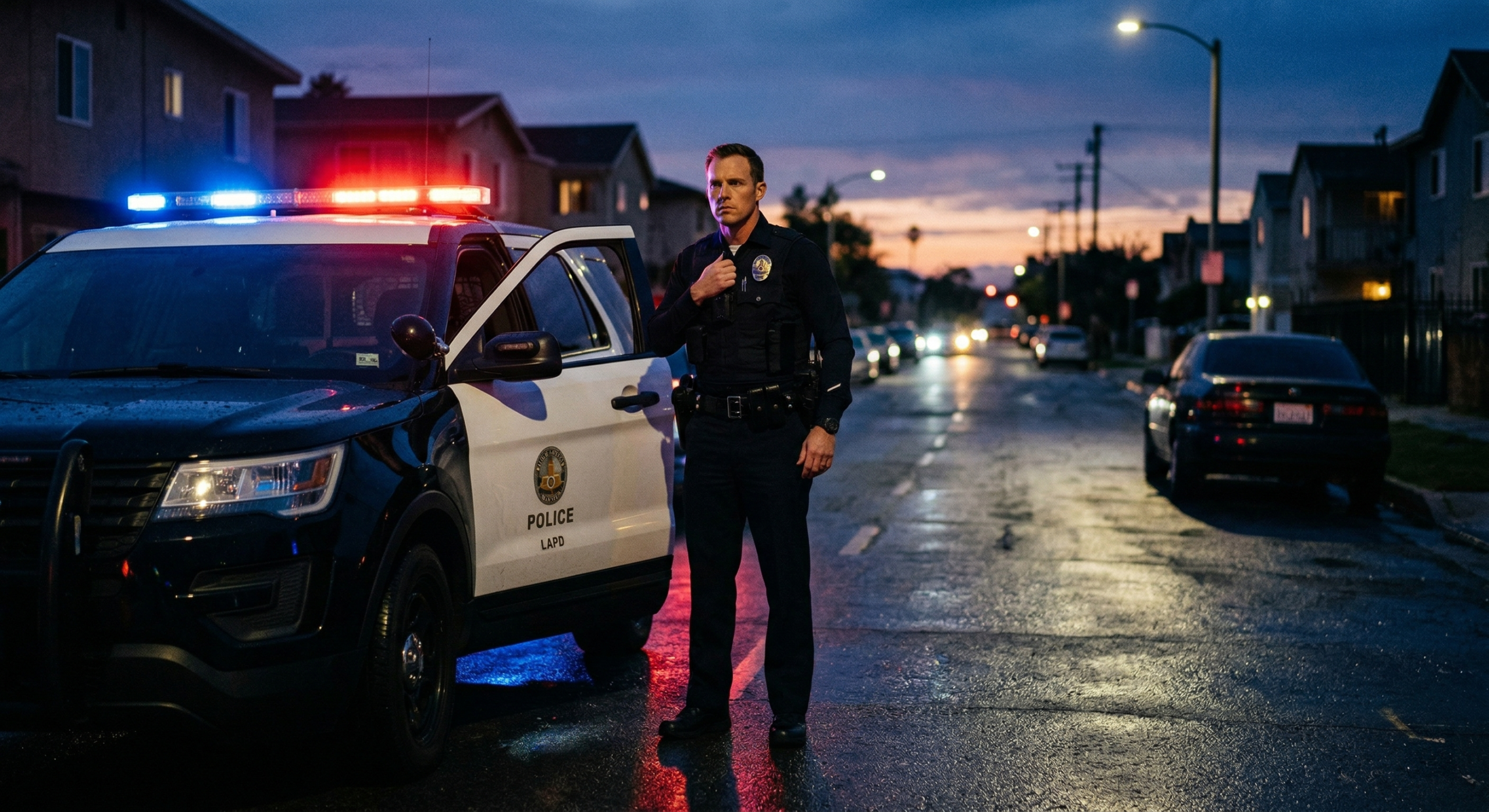
If an officer suffers from severe red-green colorblindness (Protanopia or Deuteranopia), a maroon sedan and a dark green SUV can look completely identical. If an officer arrests the wrong person or engages in a high-speed pursuit with the wrong vehicle based on a color-based misidentification, it destroys the integrity of the court case. Worse, it exposes the department to catastrophic civil rights lawsuits and financial liability.
Blood, Smoke, and Chemical Threats
Police officers are often the first responders to chaotic emergency scenes. In these environments, color provides critical context:
- Forensics & Trauma: Officers must be able to spot fresh blood on dark asphalt, dark clothing, or green grass at night to locate injured victims or track fleeing suspects. To someone with a red-green defect, blood often blends perfectly into dark backgrounds like motor oil or mud.
- HAZMAT Incidents: When responding to industrial accidents or clandestine drug labs, the color of smoke (e.g., yellow-green chlorine gas) dictates the immediate evacuation radius and the required protective equipment.
- Explosives and Narcotics: Tactical officers must frequently distinguish between color-coded wires on explosive devices, while narcotics officers rely on colorimetric spot tests that change from purple to blue to indicate the presence of illicit drugs.
Weapon Safety and Threat Assessment
Modern policing relies heavily on rapid visual threat assessments. Officers must instantly differentiate between a lethal weapon and a non-lethal object—such as spotting the required orange safety tip on a teenager’s airsoft gun.
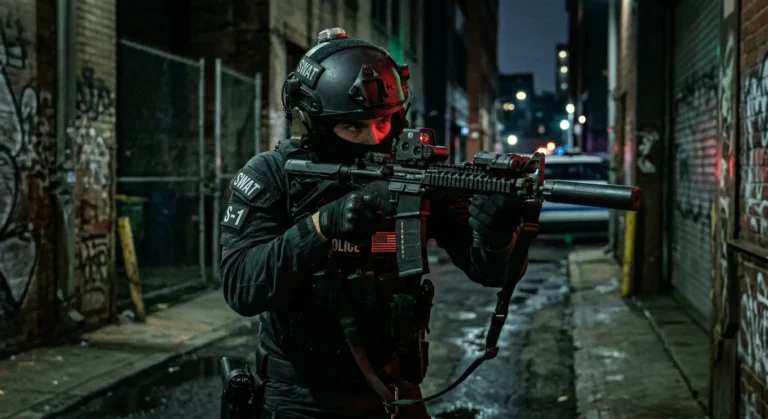
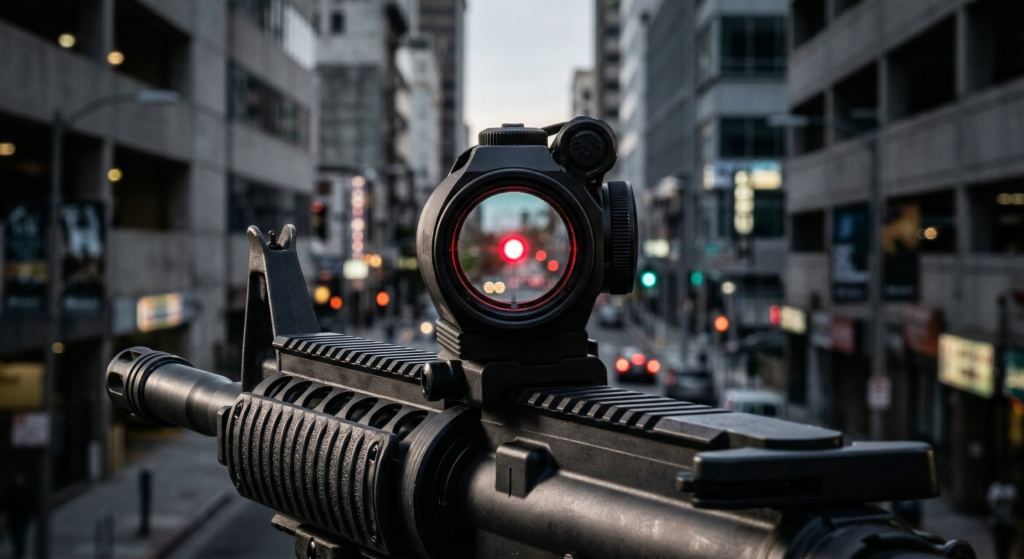
Furthermore, modern police firearms are increasingly equipped with illuminated red-dot reflex sights and Taser targeting lasers. An officer must be able to instantly acquire a red laser dot against a complex, multi-colored background to ensure safe and accurate shot placement.
The Legal Reality: The ADA and the BFOQ Loophole
When candidates are disqualified due to a failed color vision test, their first instinct is often to threaten a lawsuit, assuming they are protected under the Americans with Disabilities Act (ADA).
Unfortunately for applicants, the courts do not agree.
The BFOQ Standard
Under federal employment law, an employer is permitted to discriminate based on a physical limitation if that limitation prevents the individual from performing a Bona Fide Occupational Qualification (BFOQ). Because identifying colors accurately is deemed essential to public safety, the courts protect police departments’ right to enforce these bans.
In landmark legal rulings such as Diffey v. Riverside County Sheriff’s Department and Lekich v. Municipal Police Officers Education Training Commission, federal and state courts explicitly upheld that police officer BFOQ color vision requirements are entirely lawful. The courts found that a severe color vision deficit poses a direct threat to the safety of the officer, their partners, and the public.
Understanding this legal reality saves applicants from wasting thousands of dollars on unwinnable discrimination lawsuits, allowing them to pivot their energy toward finding departments that allow secondary functional testing.
Clinical Perfection vs. Functional Reality: Understanding the Tests
Here is the good news: failing the initial eye exam does not automatically mean your career is over. There is a massive difference between the hyper-sensitive clinical tests used by doctors and the practical, functional vision required on the street.

The Ishihara Plate Test: Why 8% of Males Fail
Most police medical physicals begin with the Ishihara test (the book of colored dots). The Ishihara is incredibly sensitive. It was designed to catch even the most microscopic, genetically inherited red-green anomalies. As a result, it routinely fails candidates who have perfectly functional, everyday color vision.
The Farnsworth D-15: A Functional Lifeline
If you fail the Ishihara, you must immediately advocate for yourself by requesting the Farnsworth D-15 police test.
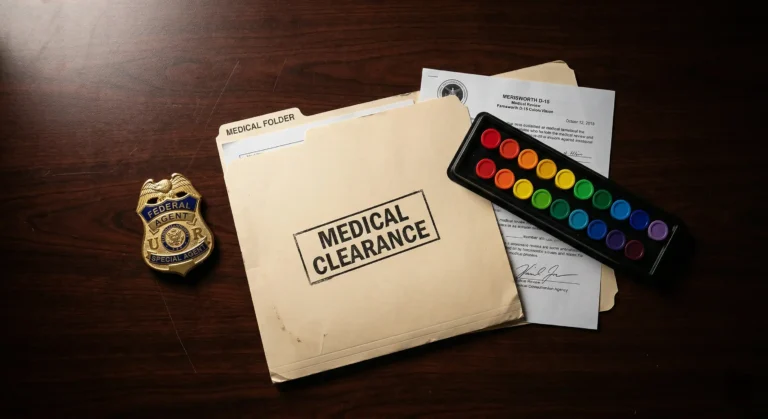
Unlike the Ishihara, the D-15 is an occupational arrangement test. It requires the candidate to arrange 15 colored caps in a smooth chromatic gradient. The test is specifically designed to pass individuals with mild color vision deficiencies while screening out those with severe, functionally debilitating defects. Up to 50% of people who fail the Ishihara can pass the Farnsworth D-15.
| Test Type | Sensitivity Level | What It Measures | Law Enforcement Acceptance |
|---|---|---|---|
| Ishihara Book | Very High | Microscopic genetic anomalies | Universal (Primary Screening) |
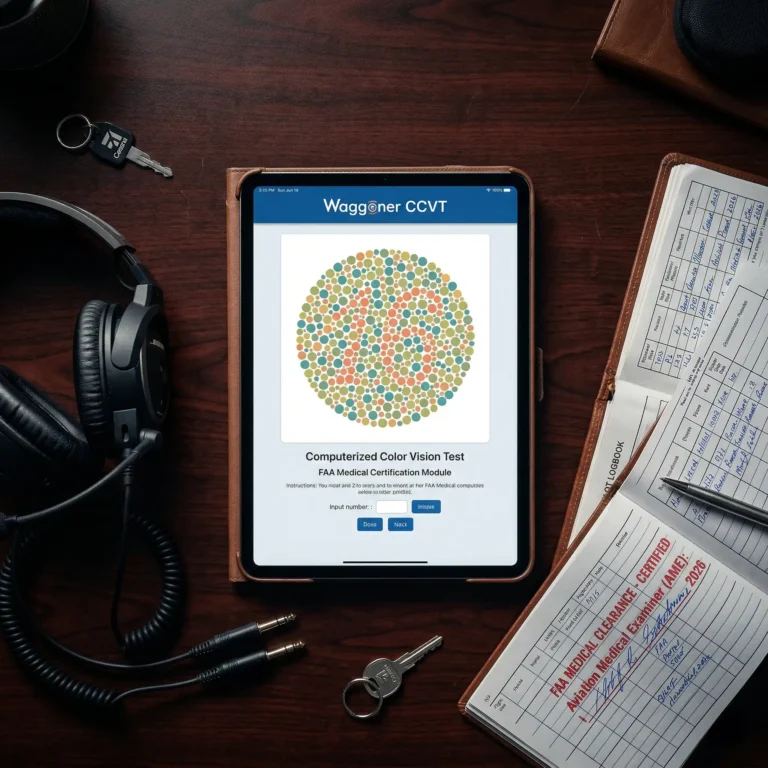
| Waggoner CCVT | High | Digital, exact severity grading | Accepted by FAA & Federal 1811s |
| Farnsworth D-15 | Moderate | Functional occupational capability | Accepted by many local/state agencies |
| Functional Field Test | Low (Practical) | Real-world tasks (e.g., sorting wires) | Accepted on a case-by-case appeal basis |
State-by-State Color Vision Leniency Guide
If you have a moderate deficiency and cannot pass the D-15, your location dictates your future. Police hiring standards are not universal. The level of leniency varies wildly depending on state POST commissions and individual chiefs of police.
| Jurisdiction / Agency Type | Color Vision Policy Approach | Waiver Difficulty |
|---|---|---|
| Major Metro (NYPD, LAPD) | Strictly enforced, non-negotiable standards. Often rely solely on Ishihara or strict D-15 grading. | Very High |
| Strict State POSTs (e.g., Michigan) | Statewide mandates requiring normal vision. Waivers are exceptionally rare for sworn patrol roles. | High |
| Lenient State POSTs (e.g., Oregon, Iowa) | State guidelines specifically allow departments to utilize practical, on-the-job field testing for appeals. | Moderate |
| Federal 1811 (FBI, DEA) | Initial Ishihara screening, but openly allows secondary testing (D-15, Waggoner) for investigative roles. | Moderate |
The Hidden Danger: Acquired Color Vision Loss in Veteran Officers
While the conversation heavily revolves around new academy recruits, the most significant unaddressed risk in law enforcement vision standards is acquired color vision loss in veteran officers.
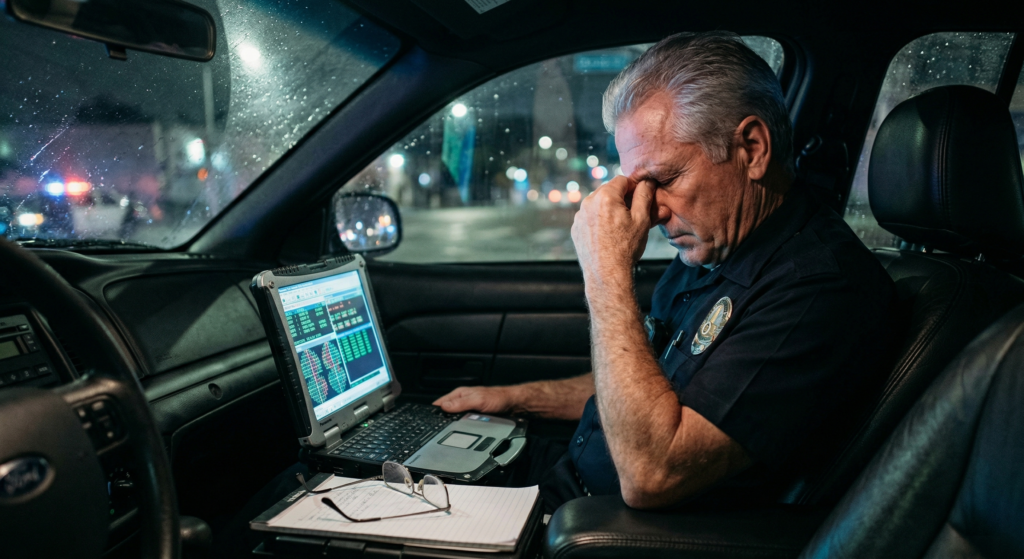
Unlike genetic red-green defects that you are born with, acquired color vision deficiencies develop later in life. Often presenting as a blue-yellow (Tritan) defect, this loss of contrast sensitivity can be caused by:
- Natural aging and the yellowing of the eye’s crystalline lens.
- Systemic diseases such as diabetes, glaucoma, or macular degeneration.
- Toxicity from certain prescription medications or exposure to hazardous chemicals.
Because most police departments only rigorously test vision during the initial pre-employment phase, veteran officers rarely undergo continuous fitness-for-duty vision evaluations. Progressive departments are beginning to utilize digital tests (like the Waggoner CCVT) during annual physicals to monitor aging officers and ensure their tactical safety remains intact.
A Critical Warning: Why “Colorblind Contacts” Are Banned During Exams
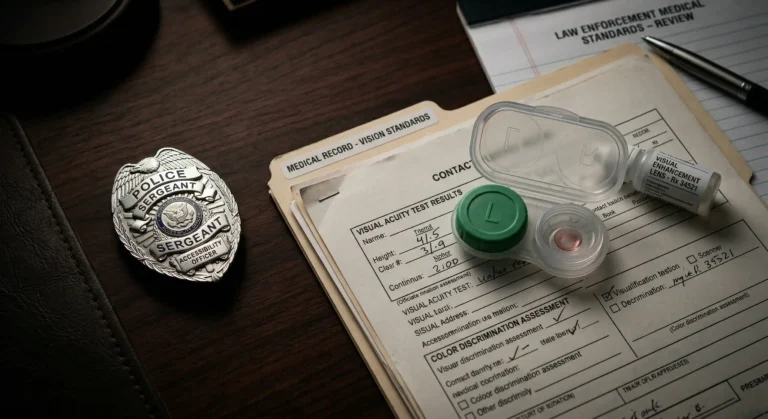
Desperate applicants frequently scour the internet looking for a quick fix, leading them to products like ColorKinds contact lenses or EnChroma glasses. While these optical aids are fantastic for civilian life, utilizing them in law enforcement requires a strict warning.
The Integrity Violation Trap
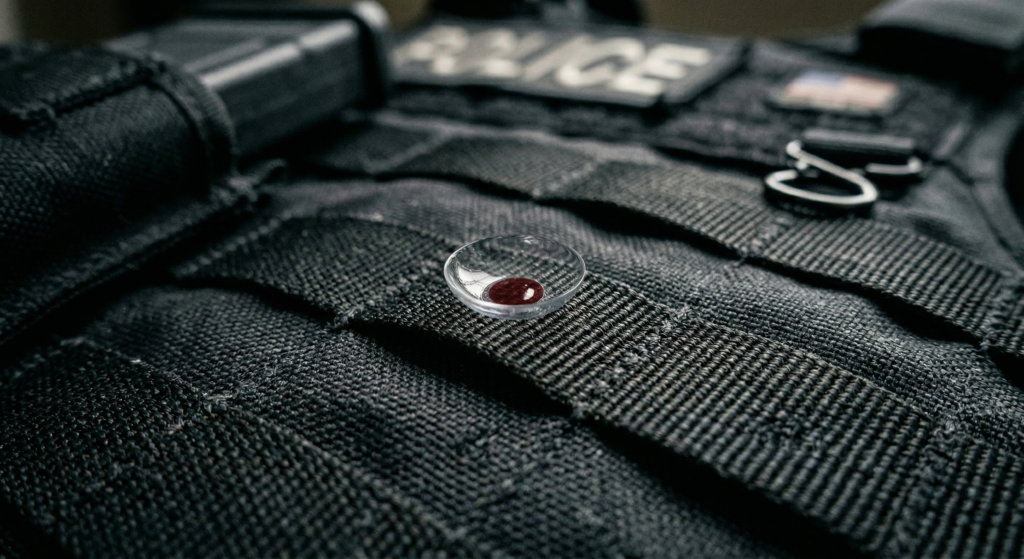
Wearing color-correcting contact lenses during an official law enforcement medical exam is explicitly banned by almost every POST commission in the country. Attempting to sneak them past an examiner is classified as a severe integrity violation. If caught, you will fail your polygraph and be permanently blacklisted from the profession.
The Scotopic Hazard
The ban on these lenses is not just about preventing cheating; it is about keeping you alive. Color-correcting lenses work by acting as a dark filter, restricting the wavelengths of light that enter your eye to create artificial contrast.
During a night shift, human vision shifts to the scotopic (rod-dominant) system. If an officer is wearing a dark red contact lens in the middle of the night, it severely restricts the light entering their eye, devastating their low-light visual acuity and impairing their binocular depth perception. In a profession where fractions of a second matter, artificially blinding yourself to create color contrast is a catastrophic tactical error.
Off-Duty Training: A Strategic Advantage
While you cannot wear colorblind lenses on duty or during an exam, they remain an incredibly powerful tool for off-duty training.
If you manage to secure a medical waiver via the D-15 test, you still have to survive the rigorous training of the police academy, including high-speed driving and firearms qualifications. Wearing specialized lenses during your civilian life—such as at the private shooting range—allows your brain to build critical visual memory. By experiencing high-contrast environments off-duty, you train your cognitive recognition skills, making you sharper and faster when you are on patrol.
To learn more about how different types of color blindness impact occupational testing, explore our insights on how to navigate and prepare for color vision evaluations.
Train Your Brain. Master the Contrast.
While strict regulations ban the use of color-correcting lenses during official police medical exams and active patrol, training with colorblind contact lenses off-duty is a massive strategic advantage. Use them at the civilian shooting range or during tactical driving practice to build your visual memory and contrast recognition.
Condition your eyes off the clock so you are ready to perform when the uniform goes on.
Shop ColorKinds® LensesFrequently Asked Questions About Police Vision Standards
Can I be a police officer if I am red-green colorblind?
Yes, but it depends on the severity of the deficiency and the specific agency’s policies. While severe colorblindness is typically a disqualifier, many departments allow candidates with mild red-green deficiencies to serve if they can pass a functional field test or the Farnsworth D-15 secondary exam.
Why do police need color vision?
Police need color vision for critical life-or-death tactical tasks. These include identifying the color of fleeing suspect vehicles, reading colored HAZMAT smoke placards, distinguishing fresh blood from motor oil in low light, and rapidly identifying red safety switches on firearms.
Does the ADA protect colorblind police applicants from being disqualified?
Generally, no. Federal and state courts have consistently ruled that normal color vision is a Bona Fide Occupational Qualification (BFOQ) for patrol officers due to public safety requirements. Therefore, departments are legally protected when disqualifying candidates who fail color vision standards.
What happens if I fail the Ishihara color plate test at MEPS or the police academy?
Failing the initial Ishihara test does not always mean an automatic disqualification. You should formally request a secondary functional test, such as the Farnsworth D-15 or a practical wire-sorting field test, which measures your real-world functional color discrimination.
Are ColorKinds or EnChroma colorblind contacts allowed during police medical exams?
Absolutely not. Wearing color-enhancing or color-correcting lenses during an official law enforcement medical exam is strictly prohibited. Attempting to use them is considered an integrity violation, which will result in failing the polygraph and permanent disqualification.
Why are colorblind contacts considered dangerous for active-duty police officers?
Color-correcting lenses like the ColorKinds work by acting as a dark red filter, which reduces the amount of light entering the eye. In low-light environments, this severely degrades scotopic vision and impairs binocular depth perception, creating a massive tactical hazard during night patrols.
What is the Farnsworth D-15 police test?
The Farnsworth D-15 is an occupational color arrangement test. Instead of reading hidden numbers, candidates must arrange 15 colored caps in a smooth gradient. It is designed to pass individuals with mild color vision deficiencies while screening out those with severe defects.
Can veteran police officers lose their color vision?
Yes. While recruits are tested for genetic red-green defects, veteran officers can develop acquired blue-yellow (tritan) color vision loss due to aging, glaucoma, macular degeneration, or certain medications. This is known as acquired color vision deficiency.
Do all police departments have the same color vision standards?
No. Hiring standards vary drastically across the United States. Some state POST commissions maintain strict blanket bans, while others give local chiefs and sheriffs the discretion to allow medical waivers and functional field testing for mildly colorblind applicants.
How can colorblind lenses be used safely by law enforcement applicants?
While banned for official testing and active patrol duty, colorblind contact lenses are excellent tools for off-duty civilian training. Recruits can wear them at the shooting range or during tactical driving courses to help train their brains to recognize critical visual contrasts before entering the academy.