Federal Law Enforcement Color Blind Policies: The Ultimate 1811 Medical Guide
Securing a position as a federal Special Agent (the prestigious 1811 job series) is one of the most rigorous hiring processes in the United States government. Applicants spend months—sometimes years—navigating grueling physical fitness tests, complex polygraphs, and exhaustive background investigations. Yet, for a significant percentage of applicants, the entire dream crashes to a halt inside a sterile medical clinic during a single, seemingly simple evaluation: the color vision test.
Navigating federal law enforcement color blind policies is notoriously frustrating. The Office of Personnel Management (OPM) establishes broad medical guidelines, but each specific agency—from the FBI to Customs and Border Protection (CBP)—interprets and enforces these rules differently. What constitutes an automatic disqualification at the Secret Service might be easily waived at the DEA.
For candidates seeking comprehensive career navigation, we recommend reviewing our complete resource on Occupational Solutions for Police & Law Enforcement Professionals. In this specific guide, we will cut through the bureaucratic red tape. We will outline the exact color vision requirements of the “Big Five” agencies, explain the new shift toward digital computerized testing, expose the “integrity trap” of colorblind glasses, and provide a step-by-step playbook for winning your 1811 medical waiver.
Can You Be Color Blind in Federal Law Enforcement?
The short answer is: Yes, but it depends entirely on the severity of your deficiency and the specific agency to which you are applying.
In federal medical evaluations, color blindness is not treated as a binary “pass/fail” condition. Medical Review Boards distinguish between severe color blindness (dichromacy, where an entire cone type is missing) and mild color weakness (anomalous trichromacy, where cone sensitivities overlap).
- Severe Color Deficiency: Individuals who cannot distinguish primary colors (red, green, amber) even under secondary testing will generally face an un-waiverable disqualification from 1811 field positions due to safety concerns.
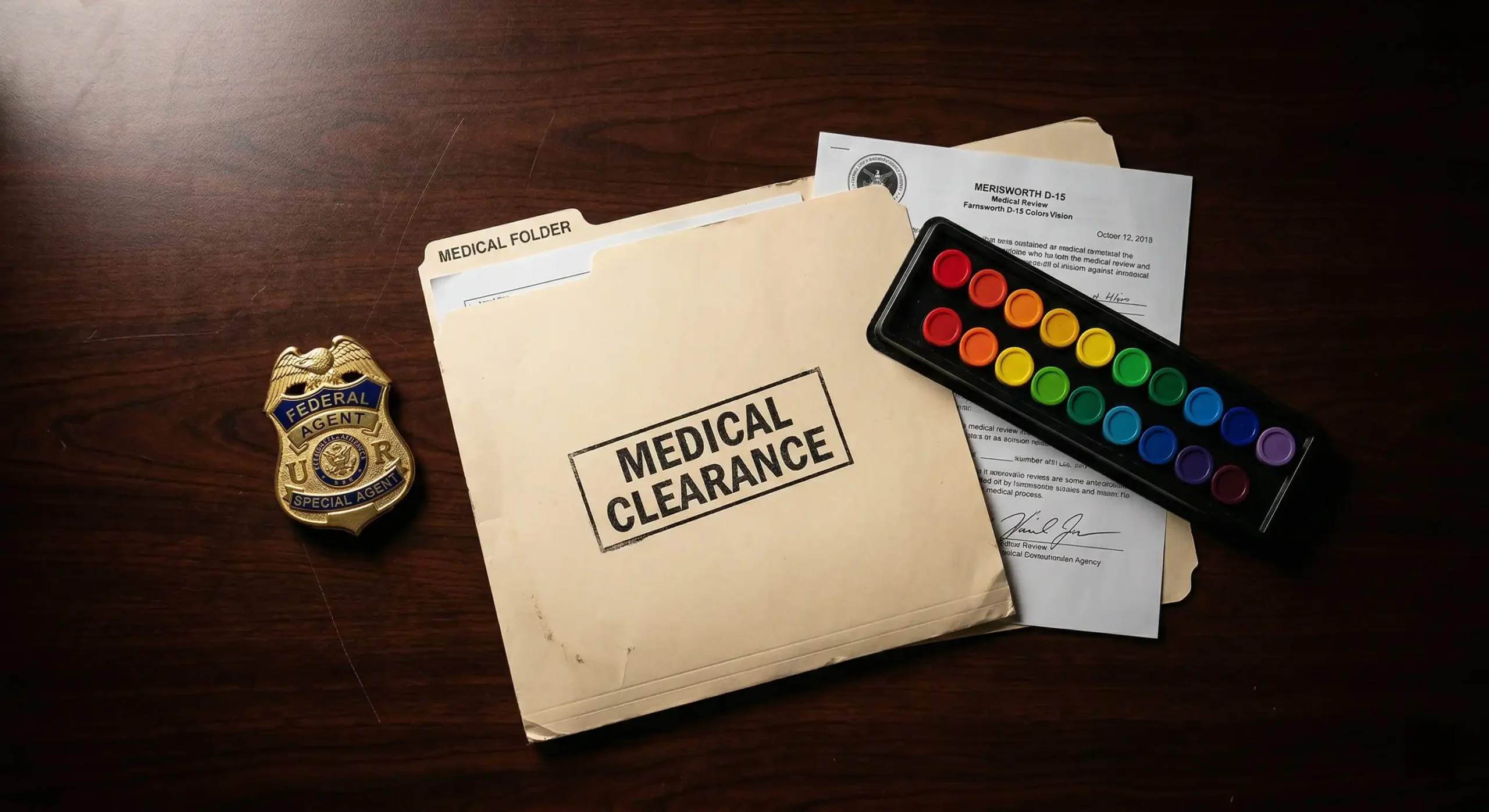
- Mild Color Deficiency: Applicants who fail the initial “dot test” but possess functional color vision can frequently obtain medical waivers by passing advanced secondary tests, such as the Farnsworth D-15.
The key to keeping your application alive is knowing exactly which tests your target agency will accept as proof of your functional capability.
The Ultimate Federal Agency Color Vision Matrix
The most common pain point for federal applicants is the lack of centralized information. To save you from scouring endless Reddit threads on r/1811, we have compiled the medical standards for the major federal law enforcement entities.
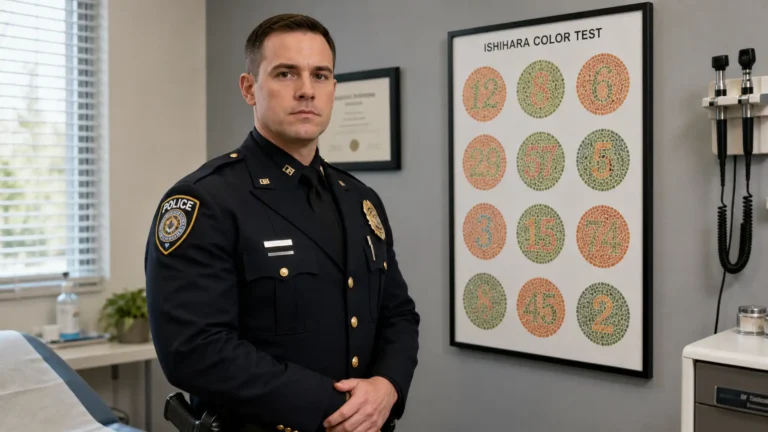
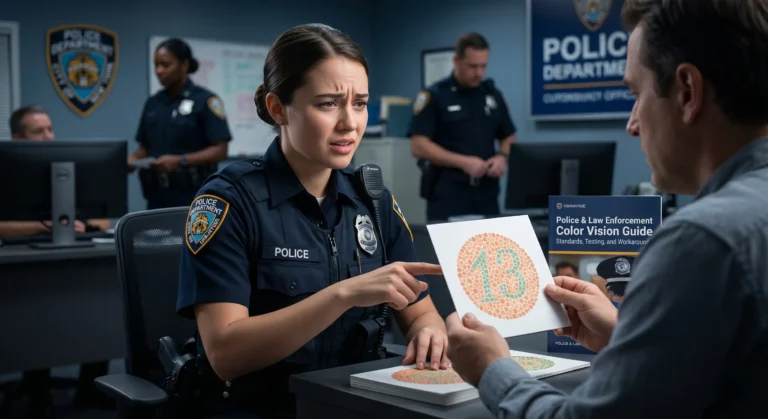
Most agencies utilize the Ishihara Pseudoisochromatic Plate Test (the famous book of colored dots) as their primary screen. Candidates typically must read 9 out of 13, or 10 out of 14 plates correctly. The real difference lies in what happens when you fail that first test.
| Federal Agency | Primary Test | Secondary Test Allowed? | Waiver / Appeal Difficulty |
|---|---|---|---|
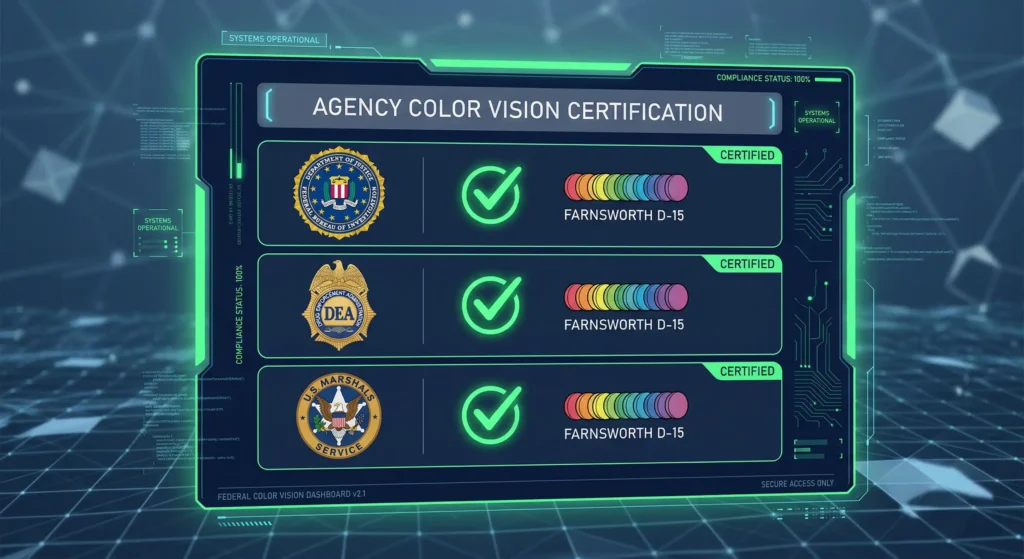
| FBI (Special Agent) | Ishihara / PIP | Yes. Farnsworth D-15 is officially accepted. | Moderate. If you pass the D-15, processing usually continues. |
| DEA (Special Agent) | Ishihara / PIP | Yes. D-15 or approved computerized tests. | Moderate. Case-by-case medical board review. |
| USMS (Deputy Marshal) | Ishihara / PIP | Yes. Farnsworth D-15 is widely accepted. | Moderate. Must prove functional capacity. |
| ATF (Special Agent) | Ishihara / PIP | Yes. Secondary testing allowed, but strictly reviewed. | High. Explosives/arson work requires strict color ID. |
| USSS (Secret Service) | Ishihara / PIP | No. Historically utilizes a strict blanket ban. | Extreme. Very few waivers granted for 1811 roles. |
| CBP / Border Patrol | Ishihara / PIP | Yes. Farnsworth D-15. | Moderate to High. Requires a lengthy Medical Review Board process. |
The Shift to Digital Testing: Say Goodbye to the Ishihara Book
For nearly a century, the Ishihara plate book has been the bane of applicants. However, federal agencies—following the lead of the Federal Aviation Administration (FAA)—are quietly phasing out paper books in favor of modern, computerized color vision tests.
Why the shift? Paper tests fade over time, altering the contrast. They fail to test for blue-yellow (tritan) deficiencies. Most importantly, motivated applicants frequently attempt to memorize the plate patterns to cheat the exam. To counter this, agencies are adopting adaptive digital assessments.
| Modern Digital Test | How It Works | Why Federal Agencies Use It |
|---|---|---|
| Waggoner CCVT (Computerized Color Vision Test) |
Administered on a tablet or PC. Displays randomized colored shapes and numbers that adapt in difficulty. | Impossible to memorize. Accurately grades the exact severity of Protan (red) and Deutan (green) deficiencies. |
| Rabin Cone Contrast Test (RCCT) | Displays faint letters in red, green, and blue that gradually decrease in contrast against a gray background. | Developed for the U.S. Military. Tests each eye’s specific cone cell health individually. |
| CAD Test (Colour Assessment & Diagnosis) |
A colored square moves across a screen filled with dynamic, flashing visual “noise.” | Highly precise occupational test. Often used to determine if a pilot or agent can safely operate red-dot displays. |
If you are preparing for a medical exam, be aware that you may face the Waggoner CCVT instead of a paper book. If you have a known deficiency, ensure you practice with digital simulators before your official date. You can learn more about these secondary evaluations in our guide to the Farnsworth D-15 Color Blind Test.
The “Integrity Violation” Trap: Why Colorblind Glasses Will Ruin Your Career
The most frequently asked question on law enforcement forums is: “Can I just wear EnChroma glasses or ColorKinds contacts to pass my federal medical exam?”
The answer is a definitive, unyielding NO.

Every single federal law enforcement agency explicitly bans the use of color-enhancing lenses during medical evaluations. The OPM requires agents to possess raw, uncorrected functional color vision because specialized glasses can fog up, fall off during a physical altercation, or interfere with Night Vision Goggles (NVGs) and gas masks.
The Polygraph Danger
Wearing tinted contact lenses to a medical exam is not just a medical failure—it is classified as an integrity and honesty violation. During your background investigation (BI) or polygraph, you will be asked if you have ever lied or falsified documents to gain federal employment. Attempting to cheat the eye exam will result in a failed polygraph, permanently blacklisting you from all future federal jobs.
While color-correcting lenses are strictly forbidden for the official exam, they remain an incredibly valuable tool for your civilian life and off-duty tactical training, helping you build better visual recognition habits before you enter the academy.
The 1811 Medical Waiver Playbook: How to Appeal a Disqualification
If the medical examiner closes the Ishihara book, shakes their head, and hands you a disqualification notice, do not panic. For many agencies, failing the primary test is simply the first step in the waiver process. Here is your step-by-step playbook to appeal.
Step 1: Request an Independent Evaluation
Most federal agencies allow you to challenge the clinic’s findings at your own expense. Immediately schedule an appointment with a board-certified, independent ophthalmologist. Specifically request that they administer the Farnsworth D-15 or a computerized test like the Waggoner CCVT. Ensure the doctor explicitly notes in their report that your deficiency is “mild” and does not constitute a severe dichromatic defect.
Step 2: Draft the “Real-World” Supervisor Letter
Medical Review Boards are composed of doctors and administrators, not field agents. They need proof that your clinical diagnosis does not hinder your operational safety. The worst thing you can say is, “I can drive fine because I know green is on the bottom of the traffic light.”
Instead, obtain letters of recommendation from former military commanders, police supervisors, or shooting instructors. These letters must cite specific, high-stress tactical scenarios where you successfully identified colors. For example:
- “Candidate successfully identified and engaged targets based on colored threat-indicators in low-light shoot-house environments.”
- “Officer accurately tracked and called out a maroon suspect vehicle during a high-speed night pursuit.”
- “Specialist consistently distinguished complex, color-coded wiring during EOD cross-training.”
Inside the CBP Medical Review Board: Strategies for Success
Customs and Border Protection (CBP) and the Border Patrol process a massive volume of applicants, making their Medical Review Board one of the most frequently discussed topics online. If you are flagged for color vision by CBP, you will be thrown into a waiting game.
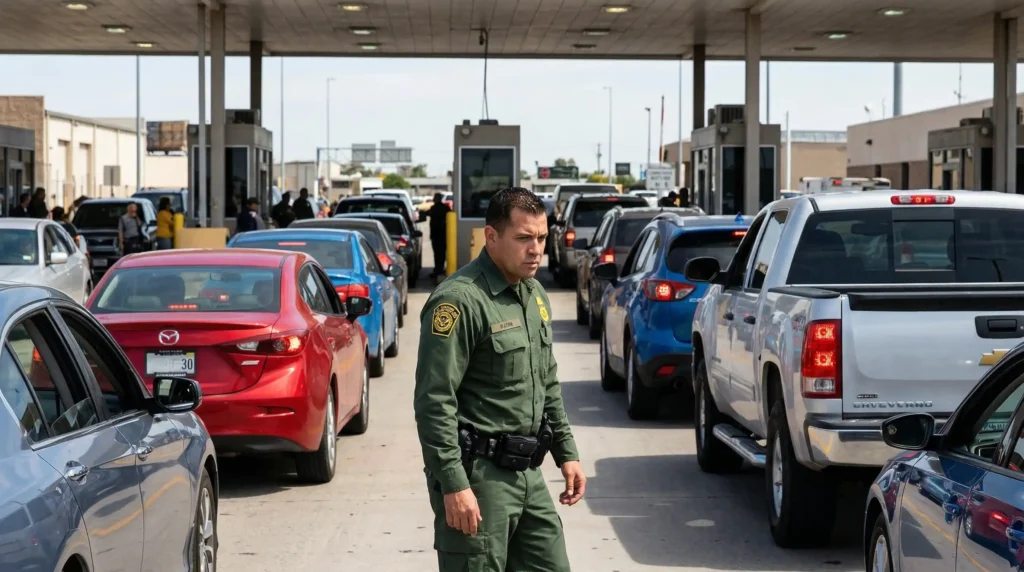
The Timeline: Do not expect a quick turnaround. Applicants routinely report waiting anywhere from 30 days to over 5 months for the CBP board to review their waiver packets. Use this time constructively.
The Strategy: CBP heavily weighs your employment history. When submitting your waiver, tailor your resume specifically for the medical board. Highlight every past job duty that required strict color differentiation. If you were an electrician, emphasize wire sorting. If you were an EMT, emphasize your ability to perform triage using color-coded medical tags. Prove that your visual “defect” has never resulted in an operational failure.
The Push for Change: Secret Service vs. FBI Standards
As medical science advances, the discrepancy between federal agencies is drawing increasing scrutiny and legal advocacy. The sharpest contrast exists between the FBI and the U.S. Secret Service (USSS).
The FBI has modernized its approach. By accepting the Farnsworth D-15 and digital testing, the Bureau acknowledges the difference between clinical perfection and functional capability. Conversely, the Secret Service has historically maintained a rigid, 19th-century blanket ban, frequently disqualifying highly qualified candidates who fail the Ishihara—with no option for a secondary D-15 test.
Investigative vs. Tactical Roles
Even within progressive agencies, you must manage your expectations. A medical waiver will allow you to become a standard 1811 field investigator. However, if your goal is to join elite, specialized units—such as the FBI’s Hostage Rescue Team (HRT) or become a Special Agent Bomb Technician (SABT)—your waiver will likely be denied. Tactical units operate under zero-tolerance medical standards due to the extreme risks of close-quarters combat and explosives handling.
Advocacy groups are currently lobbying the Department of Homeland Security to force agencies like the Secret Service to align their medical standards with the FBI and the FAA, pushing for a future where functional skills outweigh outdated clinical dot tests. To learn more about the testing methodologies you will face, review our comprehensive guide on How to Pass a Color Blind Test.
Master the Visual Field: Train Smarter, Off-Duty
While you cannot wear color-correcting lenses during your official federal medical exam, you must train your eyes to recognize contrast and detail in your civilian life before hitting the academy. Advanced optical technology can help you build the visual recognition habits necessary for the shooting range, tactical driving, and situational awareness.
Gain the contrast needed to track targets, read environments, and see the world in vivid clarity while off the clock.
Shop ColorKinds® Colorblind ContactsFrequently Asked Questions About Federal Vision Standards
What is the exact color blind policy for federal law enforcement (1811) positions?
The policy varies by agency. Most use the Ishihara test as a primary screening. If you fail, agencies like the FBI and US Marshals allow a secondary Farnsworth D-15 test. Passing the secondary test usually secures a medical waiver for mild color deficiency.
Does the FBI allow colorblind Special Agents?
Yes, the FBI allows candidates with mild color blindness to become Special Agents if they successfully pass the Farnsworth D-15 color vision test after failing the initial Ishihara screening.
Are color-correcting glasses allowed during federal medical exams?
No. The use of color-correcting lenses, such as ColorKinds contacts or EnChroma glasses, is strictly prohibited during federal medical examinations. Using them covertly is considered an integrity violation that can result in permanent disqualification.
What is the Waggoner Computerized Color Vision Test (WCCVT)?
The WCCVT is a modern, digital color vision test used by the FAA, military, and increasingly by federal law enforcement. It randomizes testing to prevent memorization and accurately grades the severity of red, green, and blue deficiencies.
How do I get a medical waiver approved by Customs and Border Protection (CBP)?
To get a CBP medical waiver, you must submit a formal appeal to the Medical Review Board. This should include an independent evaluation from an ophthalmologist (passing a secondary test like the D-15) and a resume highlighting your ability to perform color-dependent tasks in past high-stress jobs.
Which federal agencies have the strictest color vision requirements?
Historically, the U.S. Secret Service (USSS) and specialized tactical units (like the FBI Hostage Rescue Team or DEA FAST) have the strictest, zero-tolerance color vision requirements, often not allowing secondary testing.
What happens if I develop color blindness later in my federal career?
Acquired color vision loss is treated differently than congenital color blindness. Incumbent agents will undergo a fitness-for-duty evaluation. Depending on the severity, they may receive reasonable accommodations or be reassigned to non-tactical, investigative roles.
What is a functional field test for color blindness?
A functional field test is a practical, real-world assessment where an applicant must prove their ability to identify colors crucial to the job, such as suspect clothing, vehicle paint, or colored wires in a low-light environment. While common in local police departments, federal agencies rarely use them for 1811 roles, preferring clinical secondary tests.
How long does a federal medical waiver appeal take?
The timeline varies greatly by agency. For example, CBP applicants report that the Medical Review Board can take anywhere from 30 days to over 5 months to render a final decision on a color vision waiver.
Can I be a federal tactical operator (SWAT) if I am colorblind?
Generally, no. While mild color blindness may be waiverable for standard investigative roles, specialized tactical teams require perfect uncorrected color vision due to the extreme safety risks involved in close-quarters combat and explosive ordnance disposal.