Seafarers vs. Shipyard Workers: STCW Color Vision Requirements Explained
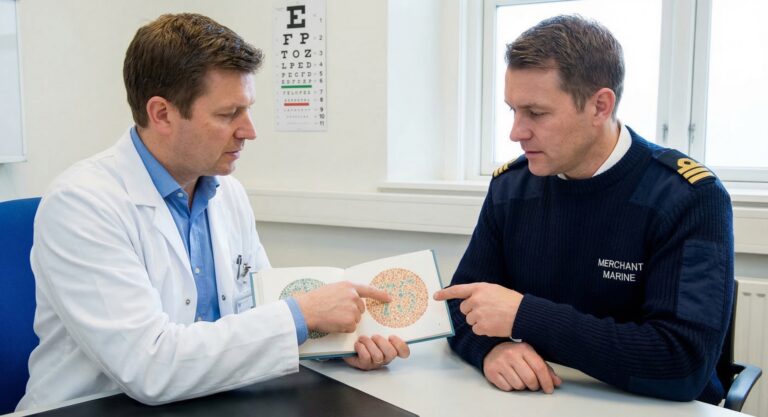
For anyone dreaming of a career on the water or in the booming shipbuilding industry, the pre-employment medical exam is a nerve-wracking experience. You might have the physical strength, the technical intellect, and the passion for the maritime world, but for approximately 8% of men and 0.5% of women, a single book of colored dots can bring that dream to a screeching halt.
Failing the Ishihara color blindness test is a devastating moment for maritime aspirants. However, a failed test does not mean your maritime career is over. It simply means you need to understand the vast differences in industry regulations.
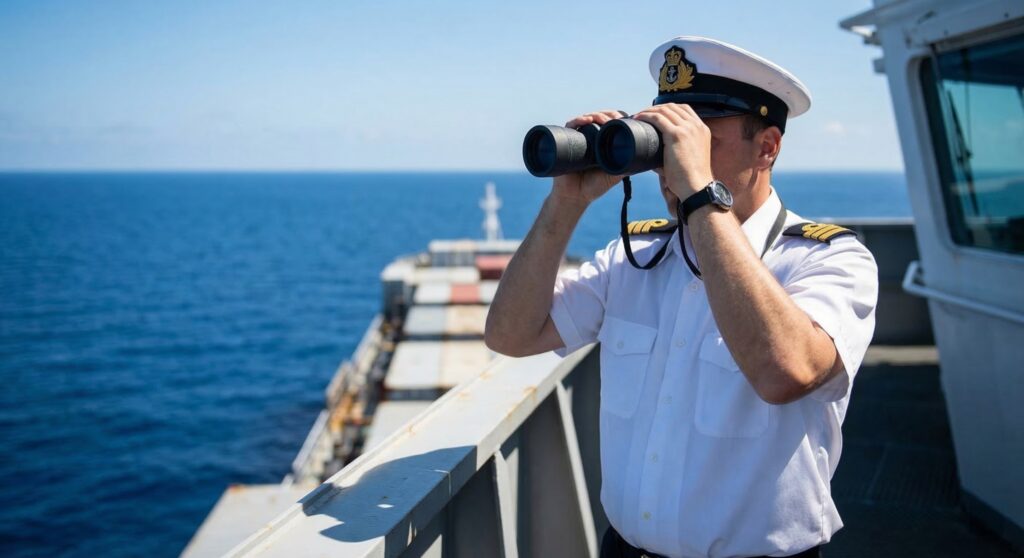
The most important distinction you must make is between At-Sea roles (Seafarers governed by international law) and Shore-Based roles (Shipyard workers governed by local industrial laws).
In this comprehensive guide, we will break down the STCW color vision requirements for seafarers vs shipyard workers. We will explore why the rules differ, what your alternative testing options are, and how you can still forge a highly successful, lucrative career in the maritime sector even if you have a color vision deficiency (CVD).
At-Sea Standards: Understanding the STCW Convention
If you want to work on a commercial vessel that sails in international waters—whether it’s a massive container ship, a luxury cruise liner, or an offshore supply vessel—you are governed by the STCW Convention (Standards of Training, Certification, and Watchkeeping for Seafarers).
Established by the International Maritime Organization (IMO), the STCW sets strict, universally accepted medical standards for seafarers. When it comes to color vision deficiency standards seafarers STCW regulations are notoriously rigid, but they are divided based on your specific department.
Deck Department: The Strictest Standards
When researching STCW color vision requirements for deck officers, you will quickly find that there is zero room for error. Deck officers (Captains, Chief Mates, Navigational Watchkeepers) are the eyes of the ship.
Why is perfect color vision non-negotiable here?
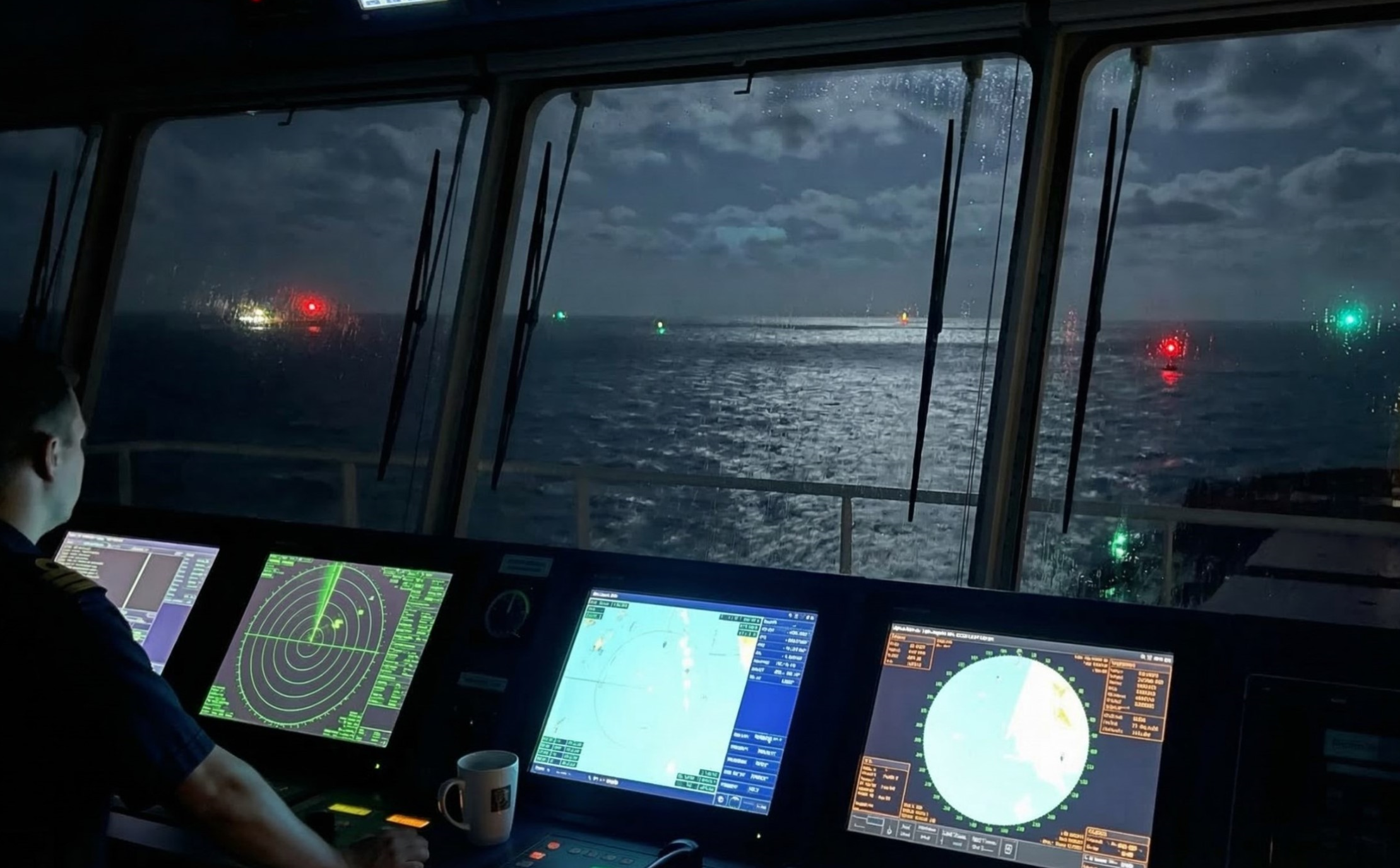
- Navigation Lights: The universal rules of the sea dictate that a vessel’s port (left) side displays a red light, and the starboard (right) side displays a green light. At night, a deck officer must be able to instantly identify these lights to determine which direction another ship is traveling to avoid a collision.
- Buoyage Systems: Entering a harbor requires following the IALA buoyage system. Depending on your region, you must keep red buoys on one side and green on the other. Mistaking a red “nun” buoy for a green “can” buoy can run a multi-million-dollar ship aground.
- Signal Flags: Daytime communication still relies on brightly colored maritime signal flags.
Because of these life-or-death responsibilities, the deck officer color vision standards strictly require passing the Ishihara test or an approved maritime lantern test without the use of color-correcting lenses during the medical exam.
Engine Department: Strict, But Different

The heart of the ship is the engine room. The color vision requirements for marine engineers under STCW are slightly different than for deck officers, but they are still heavily regulated.
Marine engineers do not need to look for navigation lights on the horizon, but they do need to monitor complex control panels. They must rapidly distinguish between:
- Red warning lights (critical failure) and green operational lights.
- Color-coded electrical wiring and circuitry.
- Color-coded pipework (e.g., blue for fresh water, red for fire mains, brown for fuel).
While engineers must still pass a color vision test, some maritime authorities are slightly more lenient on the threshold of deficiency allowed for engine room ratings compared to navigational watchkeepers.
Shore-Based Standards: The Shipyard Advantage
What happens if you absolutely cannot pass the STCW medical exam? Do you have to abandon the maritime industry entirely? Absolutely not.
This is where understanding the maritime medical standards for shore jobs becomes your greatest asset.
Shipyards—where vessels are built, repaired, and retrofitted—are massive industrial hubs that offer high-paying, rewarding careers. Unlike seafarers, shipyard workers do not fall under the international STCW convention. Instead, they are governed by national labor laws (such as OSHA in the United States or regional health and safety executives).
Why Color Vision Standards for Shipyard Workers are More Flexible
Shipyard roles are highly specialized. A colorblind shipyard electrician, a marine welder, and a naval architect all have different visual demands. Because they are not standing a navigational watch at sea, shipyard medical boards evaluate color vision on a case-by-case, functional basis.
In a shipyard, safety is paramount, but employers have the flexibility to implement workarounds. For example, wires can be labeled with text or patterns, and warning lights can be accompanied by audible alarms.
The “Practical Assessment” Lifeline
The biggest difference between going to sea and working in a shipyard is how you are tested. If you apply for a shipyard job and fail the initial dot test, you are often allowed to take a practical color identification test maritime employers use to assess real-world ability.
Instead of staring at abstract dots in a book, a shipyard medical board or hiring manager may hand you a bundle of actual marine-grade electrical cables. If you can accurately and consistently identify the red live wire, the green ground wire, and the neutral wires, you can be passed as “fit for duty.”
This functional approach is why many individuals who are disqualified from STCW seafarer roles go on to have incredibly successful careers as shore-based marine engineers, electricians, and riggers.
Testing Protocols: Ishihara vs. Practical Assessments
To successfully navigate your career path, you must understand the enemy. In maritime medicine, there is a massive debate regarding the ishihara test vs practical color identification test.
1. The Ishihara Plate Test (The Standard)
Created in 1917, the Ishihara test is a book of circular plates filled with colored dots. Hidden inside the dots are numbers or pathways.

- The Problem: It is highly sensitive. It is designed to catch even the most incredibly mild red-green color deficiencies. Many people who fail the Ishihara test can see the colors red and green perfectly fine in the real world—they just can’t see them when they are grouped in varying shades of luminance on paper.
- The STCW Rule: This is the universal first-line test for all seafarers globally.
2. The Maritime Lantern Test (The Second Chance)
If you fail the Ishihara test, maritime law (including the US Coast Guard and the UK MCA) dictates you have the right to a secondary test. These are the Lantern Tests (such as the Farnsworth Lantern/FALANT, Holmes-Wright B, or Optec 900).
- How it works: You sit in a dark room, and a machine flashes pairs of vertical lights (Red, Green, or White) at a distance to simulate ship navigation lights at night.
- The Advantage: It tests practical light recognition, not dot patterns. About 30% of people who fail the Ishihara test will pass the Lantern test and be cleared for unrestricted sea duty.
3. The Trade/Practical Test (The Shipyard Standard)
As mentioned, this is exclusively used for shore-based roles. It tests your ability to do the specific job you are hired for under normal lighting conditions. It is the fairest test for those with mild to moderate color vision deficiency.
Comparison Table: At-Sea vs. Shore-Based Roles
To simplify your career planning, here is a direct comparison of the rules, tests, and flexibilities between going to sea and working in a shipyard.
| Feature / Requirement | Seafarer (At-Sea / STCW) | Shipyard Worker (Shore-Based) |
|---|---|---|
| Governing Body | IMO (STCW), USCG, MCA, DG Shipping | OSHA, Local Labor Laws, Private Unions |
| Primary Vision Test | Ishihara Plate Test (Mandatory) | Ishihara (Commonly used as a baseline) |
| Secondary Alternative | Farnsworth Lantern, Holmes-Wright | Practical Wire/Cable Identification Test |
| Use of Colorblind Contacts | Prohibited during official medical exams | Allowed/Accepted for daily workplace safety |
| Deck Department Strictness | Absolute / Critical (No waivers for failure) | N/A (No navigation watchstanding required) |
| Engineering Strictness | Very High (Lantern test usually allowed) | Moderate (Functional ability is prioritized) |
| Career Flexibility | Low (Failure results in restricted license) | High (Roles can be accommodated for CVD) |
Failed the Ishihara? Your 3 Next Steps
If you have recently failed a color vision screening, take a deep breath. Panic is the enemy of progress. Here is your actionable, three-step plan to save your maritime career.
Step 1: Demand an Alternative Test immediately
Never accept an Ishihara failure as a final disqualification for a seagoing role. If your designated medical examiner tells you that you failed the dot test, immediately request an approved maritime Lantern test or the Farnsworth D-15 arrangement test. It is your right under international maritime law to take a secondary test.
Step 2: Pivot to Shore-Based Maritime Jobs
If you take the Lantern test and still cannot pass, it is time to pivot. Do not abandon your maritime degree or training. Transition your focus to shore-based operations.
- Marine Engineering: Transfer your skills to engine overhaul and repair facilities.
- Port Operations: Work in logistics, cargo loading operations, or harbor management.
- Shipbuilding: Become a marine electrician, welder, or systems integrator.
Step 3: Utilize Functional Assistance for Workplace Safety
If you secure a shore-based role or are taking a practical trade test in a shipyard, you need to ensure you can perform your duties with 100% safety and confidence.
This is where optical technology comes into play. While you cannot wear color-correcting lenses during an official STCW medical exam, colorblind shipyard electricians and engineers use them every single day on the job to ensure workplace safety.
By wearing specially tinted lenses, such as ColorKinds Red-Green Colorblind Contacts, shipyard workers can artificially create a high-contrast separation between red and green wavelengths.
- For Electricians: The red live wire suddenly “pops” and looks vastly different from the green ground wire, eliminating the risk of a dangerous cut.
- For Welders/Fitters: Color-coded structural tags become instantly readable in dimly lit shipyard environments.
- For Discretion: Because they are contact lenses, they fit seamlessly under standard ANSI-rated clear safety glasses or welding hoods without anyone knowing you are wearing them.
Conclusion & Expert Consultation
The maritime industry is vast, complex, and hungry for dedicated talent. While the STCW color vision requirements seafarers vs shipyard workers debate highlights the strictness of international sea law, it also illuminates the massive opportunities available on shore.
Perfect color vision is a strict requirement for steering a ship through the night, but it does not define your worth as a marine engineer, an electrician, or a maritime professional. By understanding the rules, knowing your testing rights, and utilizing modern optical tools for daily workplace safety, you can build a lifelong career around ships.
Disclaimer: Medical standards are constantly updating. Always consult with a licensed Maritime Medical Examiner (such as a USCG-approved doctor or a DG Shipping-approved medical practitioner) regarding your specific vision deficiency and eligibility for licensure.
Ready to take control of your functional workplace vision? Explore our comprehensive guide on passing practical tests and view our specialized optical solutions at our Maritime & Navy Vision Solutions Hub.
FAQ for Maritime Color Vision
- What are the STCW color vision requirements for seafarers? The STCW convention requires all seafarers to be medically fit, including meeting specific color vision standards. Deck officers must have perfect color vision to identify navigation lights and buoys, while engine department requirements may allow for slight variations depending on the national authority.
- Can I be a deck officer if I am colorblind? Generally, no. Deck officers must distinguish red and green navigation lights to prevent collisions. If you have a significant color vision deficiency (CVD), you will likely be disqualified from deck roles during the STCW medical exam.
- What happens if I fail the Ishihara test during a maritime medical? If you fail the Ishihara plate test, you are usually entitled to a secondary, more practical assessment, such as a Lantern Test (Holmes-Wright or Farnsworth), which mimics real-world light identification at sea.
- Are STCW color vision requirements different for the engine department? Yes. While engine room personnel still need to identify color-coded wires and alarms, the standards are often slightly more flexible than those for deck officers, as the colors are usually viewed in well-lit, close-range environments.
- Can I work in a shipyard if I am colorblind? Yes. Shipyard workers are typically governed by local occupational health and safety laws (like OSHA) rather than strict STCW international maritime law, allowing for more flexible, task-based vision requirements.
- What is the difference between seafarer and shipyard color vision standards? Seafarers must meet rigid international STCW standards focused on night-time navigation. Shipyard standards are functional, focusing on whether a worker can safely perform specific trades like welding or electrical work.
- Is the Ishihara test mandatory for all seafarers? It is the standard initial screening tool worldwide. However, it is not the only test; those who fail can often take alternative “Lantern” or “Practical” tests to prove their competency.
- Can a colorblind person become a marine engineer? Yes, depending on the severity of the deficiency. Many marine engineers with mild color blindness pass the required medicals or pivot to shore-based shipyard engineering roles where standards are more accommodating.
- What are the lantern tests used in maritime medicals? The most common are the Holmes-Wright Type B, the Farnsworth Lantern (FALANT), and the Beyne Lantern. These tests require the candidate to identify red, green, and white lights in a dark room.
- Do shipyard workers need an STCW medical certificate? No. Only personnel working on vessels “at sea” in international waters require STCW certification. Shore-based shipyard roles follow different industrial health guidelines.
- Can I use color-correcting glasses to pass an STCW eye test? No. STCW regulations strictly prohibit the use of color-correcting lenses or glasses during official medical examinations.
- Why is color vision critical for maritime safety? It is vital for identifying port and starboard lights at night, recognizing distress flares, and understanding color-coded maritime signal flags and buoyage systems.
- Is there a waiver for colorblindness in the merchant navy? Waivers are extremely rare for deck officers but may be considered for certain “lookout-exempt” or shore-based maritime roles depending on the flag state’s specific medical board.
- What is a functional color vision assessment in a shipyard? It is a practical test where a worker demonstrates they can identify the specific colors required for their job, such as matching electrical wires or identifying color-coded safety signs.
- Which maritime department is best for colorblind individuals? The engine department or shore-based shipyard engineering are generally the most viable paths for those with color vision deficiencies.
- How often must seafarers take a color vision test? Color vision is typically tested during every pre-employment or periodic medical examination (usually every two years) to ensure the seafarer remains fit for duty.
- Can I work on a cruise ship if I am colorblind? For deck and engine roles, you must pass the STCW medical. However, many “Hotel Department” roles (hospitality, entertainment) on cruise ships do not have strict color vision requirements.
- What is the Farnsworth D-15 test? It is a color arrangement test where the subject must place 15 colored caps in the correct order. It is often used as a secondary test for engine room personnel or shipyard workers.
- Are maritime color vision standards the same globally? While the STCW provides the international framework, individual “Flag States” (countries) may have slight variations in how they administer and interpret secondary tests like the Lantern test.
- Can specialized tools help colorblind workers in shipyards? Yes. While not allowed for tests, specialized color-enhancing lenses can be used by shipyard professionals in their daily tasks to increase safety when identifying wires and color-coded machinery.