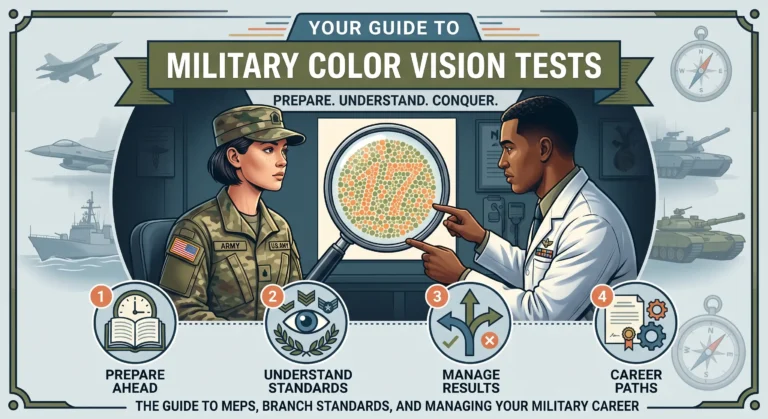

Can You Wear Colorblind Contacts in the Maritime Industry? STCW & OSHA Rules Explained
For aspiring seafarers and maritime professionals, the pre-employment medical exam is a notorious source of anxiety. You have spent years studying navigation, marine engineering, or electrical systems. You are physically fit, highly skilled, and ready to work. But if you are among the 8% of men or 0.5% of women with a color vision deficiency (CVD), a simple book of colored dots—the Ishihara test—can feel like a massive roadblock.
When faced with failing this critical medical screening, almost every maritime candidate asks the exact same question: “Can I just buy color-correcting glasses or contacts to pass the test and do my job?”

It is the ultimate question in maritime occupational health, and the answer requires navigating a complex web of international sea-going laws and shore-based regulations. The rules governing what you can wear during an official government medical exam are drastically different from the rules governing what you can wear to protect yourself on a Tuesday afternoon in a shipyard.
In this comprehensive guide, we clear up the legal confusion. We will explore the strict regulations of the STCW medical exam, the reality of restricted licenses, the flexibility of OSHA shipyard rules, and why colorblind contacts in the maritime industry are rapidly becoming the ultimate daily occupational safety tool.
The STCW Medical Exam: What is Legally Allowed?
If your goal is to work “at sea” on a commercial vessel in international waters, you are governed by the Standards of Training, Certification, and Watchkeeping for Seafarers (STCW). Your medical fitness is evaluated by a designated medical examiner authorized by your flag state (such as a USCG-approved doctor in the US, or an MCA-approved doctor in the UK).

So, let’s address the most heavily searched question directly: can you wear colorblind glasses for STCW medical exams?
The unequivocal, legal answer is no. Under international maritime law, you are strictly prohibited from wearing any form of color-correcting lenses during your official color vision screening. This applies to the primary Ishihara dot test, as well as any secondary tests like the Farnsworth Lantern (FALANT) or the Holmes-Wright Type B lantern.
Quick Reference: Maritime Color Vision Lens Rules
| Regulatory Environment | Activity | Are Color-Correcting Lenses Permitted? |
| STCW (At-Sea) | Official Medical Vision Test (Ishihara/Lantern) | Strictly Prohibited |
| STCW (At-Sea) | Daily On-Duty Operations (Cleared Personnel) | Allowed (Subject to company policy) |
| OSHA (Shipyard) | Pre-Employment Practical Trade Test | Usually Allowed (Must disclose to assessor) |
| OSHA (Shipyard) | Daily On-Duty Operations | Highly Encouraged (Viewed as PPE) |
Can You Wear Colorblind Contacts in the Maritime Industry? STCW & OSHA Rules Explained
For aspiring seafarers and maritime professionals, the pre-employment medical exam is a notorious source of anxiety. You have spent years studying navigation, marine engineering, or electrical systems. You are physically fit, highly skilled, and ready to work. But if you are among the 8% of men or 0.5% of women with a color vision deficiency (CVD), a simple book of colored dots—the Ishihara test—can feel like a massive roadblock.
When faced with failing this critical medical screening, almost every maritime candidate asks the exact same question: “Can I just buy color-correcting glasses or contacts to pass the test and do my job?”
It is the ultimate question in maritime occupational health, and the answer requires navigating a complex web of international sea-going laws and shore-based regulations. The rules governing what you can wear during an official government medical exam are drastically different from the rules governing what you can wear to protect yourself on a Tuesday afternoon in a shipyard.
In this comprehensive guide, we clear up the legal confusion. We will explore the strict regulations of the STCW medical exam, the reality of restricted licenses, the flexibility of OSHA shipyard rules, and why colorblind contacts in the maritime industry are rapidly becoming the ultimate daily occupational safety tool.
The STCW Medical Exam: What is Legally Allowed?
If your goal is to work “at sea” on a commercial vessel in international waters, you are governed by the Standards of Training, Certification, and Watchkeeping for Seafarers (STCW). Your medical fitness is evaluated by a designated medical examiner authorized by your flag state (such as a USCG-approved doctor in the US, or an MCA-approved doctor in the UK).
So, let’s address the most heavily searched question directly: can you wear colorblind glasses for STCW medical exams?
The unequivocal, legal answer is no. Under international maritime law, you are strictly prohibited from wearing any form of color-correcting lenses during your official color vision screening. This applies to the primary Ishihara dot test, as well as any secondary tests like the Farnsworth Lantern (FALANT) or the Holmes-Wright Type B lantern.
Quick Reference: Maritime Color Vision Lens Rules
| Regulatory Environment | Activity | Are Color-Correcting Lenses Permitted? |
| STCW (At-Sea) | Official Medical Vision Test (Ishihara/Lantern) | Strictly Prohibited |
| STCW (At-Sea) | Daily On-Duty Operations (Cleared Personnel) | Allowed (Subject to company policy) |
| OSHA (Shipyard) | Pre-Employment Practical Trade Test | Usually Allowed (Must disclose to assessor) |
| OSHA (Shipyard) | Daily On-Duty Operations | Highly Encouraged (Viewed as PPE) |
Why the Testing Ban Exists: The “Overboard” Scenario
To many candidates, this rule feels discriminatory. If the glasses fix the problem, why can’t you wear them? The reasoning from the International Maritime Organization (IMO) is rooted in extreme worst-case scenario planning.
Imagine you are a deck officer standing a navigational watch during a violent storm. You rely on color-correcting glasses to distinguish the red and green navigation lights of an oncoming supertanker. Suddenly, a wave impacts the bridge, knocking your glasses off. In a split-second emergency, you cannot ask the ocean for a time-out to find your backup pair. Maritime authorities must legally establish that your natural, uncorrected baseline vision meets the minimum safety threshold.
Navigating Failures: STCW Waivers and Restrictions
If you cannot use lenses to pass, what happens if you fail both the Ishihara test and the secondary lantern test using your natural vision?
While passing a maritime color vision test is mandatory for unrestricted roles, failing it often triggers a process where you can apply for a restricted medical certificate or a seafarer color vision waiver.
Depending on your flag state’s specific policies, you may be issued a certificate with strict operational limitations. For deck department personnel, this usually results in a restriction that reads: “Not valid for night watchstanding duties” or “Valid for daylight operations only.” The engine department often enjoys slightly more flexibility. If an engineering candidate fails the standard tests but can pass a practical, onboard assessment—proving they can safely distinguish the critical red, green, and amber lights on the engine control console without optical aids—the medical board may issue a functional waiver.
At-Sea Daily Operations: Combating Cognitive Fatigue
This is where we enter the functional “gray area.” Let’s say you have legally passed your STCW medical exam using your natural vision, or perhaps you secured a waiver for the engine room. Once you are cleared to work, can you wear colorblind lenses to make your daily tasks easier?
In most cases, yes. Once you have proven to the government that your baseline vision is legally safe, many shipping companies actively encourage the use of tools that enhance workplace safety.
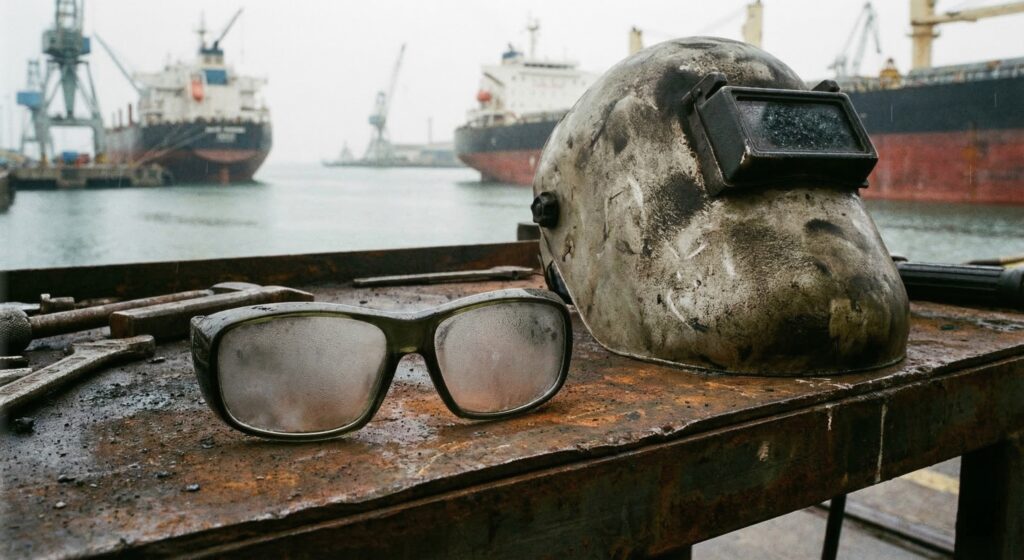
For a seafarer with a mild color vision deficiency, distinguishing colors isn’t always impossible, but it is mentally exhausting. Double-checking a red warning light or tracing complex wiring takes immense concentration. This cognitive fatigue leads to exhaustion, delayed reaction times, and eventual human error. By wearing occupational colorblind lenses while on duty, cleared seafarers artificially boost the contrast between red and green wavelengths, drastically reducing mental strain.
Shipyard Rules and the OSHA Advantage
While STCW laws govern the open ocean, the rules change entirely the moment you step into a shipyard. Shore-based maritime workers are governed by local labor laws, such as the Occupational Safety and Health Administration (OSHA).
When looking into colorblind lenses shipyard policies, you will find a much more forgiving environment focused on functional safety.
Shipyards are massive industrial zones where Personal Protective Equipment (PPE) is non-negotiable. In this environment, occupational color vision lenses are viewed precisely as what they are: another vital piece of PPE designed to keep workers safe. While most clinics prefer you to take the baseline screening with natural vision, many private shipyard employers will allow you to take a practical wire-identification test while wearing your occupational colorblind lenses, provided you disclose this and commit to wearing them on the job.
Contacts vs. Glasses for Maritime Environments
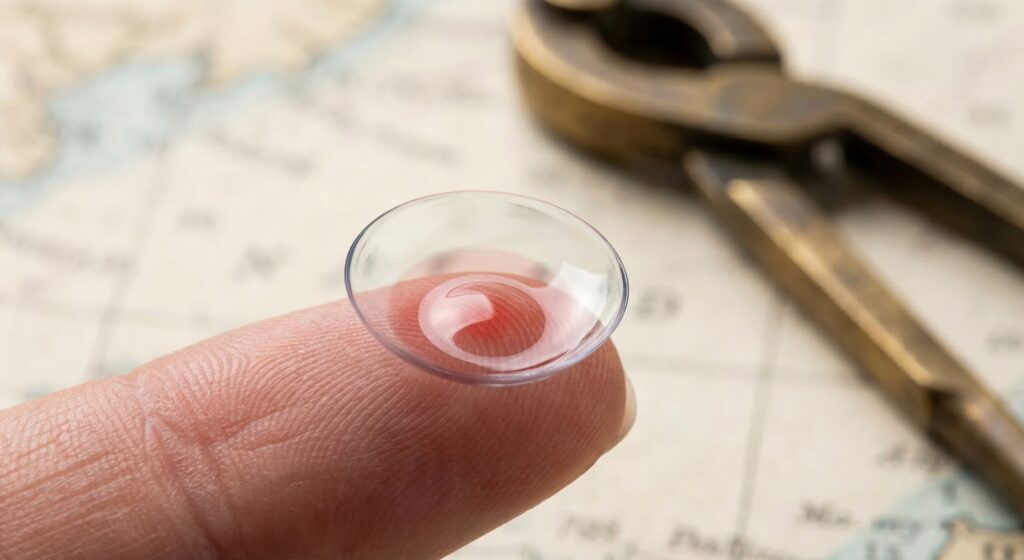
If you are a cleared seafarer, a marine engineer, or a shipyard tradesperson looking to utilize color-correcting technology on the job, you must choose between traditional glasses and specialized contact lenses.
While glasses have become popular, they are fundamentally flawed for the rugged realities of the maritime industry. Here is why colorblind contacts in the maritime industry are the undeniable superior choice.
Comparison: Optical Aids in High-Stakes Environments
| Feature | Traditional Colorblind Glasses | Occupational Colorblind Contacts |
| Fog Resistance | Poor: Fogs instantly in humid engine rooms or cramped ship hulls. | Excellent: Immune to environmental fogging. |
| PPE Integration | Poor: Breaks the safety seal of welding hoods, face shields, and respirators. | Excellent: Fits seamlessly under all ANSI-rated safety goggles and masks. |
| Equipment Use | Poor: Interferes with binoculars, sextants, and radar hoods. | Excellent: Allows natural use of all navigational and diagnostic equipment. |
| Field of Vision | Limited: Frames create blind spots; tint only covers straight-ahead vision. | Full: Moves with the pupil for edge-to-edge color enhancement. |
| Discretion | Low: Deep red/purple mirrored tints draw unwanted attention and questions. | High: Subtle tint blends with eye color for complete professional privacy. |
Conclusion: Enhance Your Safety, Don’t Cheat the System
The relationship between color vision deficiency and the maritime industry is complex, but the rules of engagement are clear.
You should never attempt to use colorblind contacts or glasses to deceive a medical examiner or cheat an STCW test. Doing so is not only illegal but puts the lives of your crewmates at risk should you lose your lenses in an emergency. You must earn your medical certificate using your natural baseline vision.
However, once you have legally secured your license, obtained a waiver, or transitioned into the shore-based shipyard sector, you owe it to yourself to work as safely and efficiently as possible. Occupational color vision lenses are a revolutionary tool designed to reduce cognitive fatigue, eliminate guesswork, and keep you safe.
Ready to stop second-guessing colors in the engine room or on the dry dock? Equip yourself with the ultimate maritime occupational tool. Shop our highly discreet, ANSI-PPE compatible ColorKinds Maritime Colorblind Contacts today and take control of your functional vision.
FAQs
1. Can I wear colorblind glasses during my STCW medical exam? No. International maritime law (STCW) strictly prohibits the use of any color-correcting lenses—including tinted glasses and specialized contacts—during official color vision screenings like the Ishihara or Lantern tests. You must pass using your natural, uncorrected vision.
2. Why are color-correcting lenses banned during maritime eye tests? Maritime authorities ban these lenses during testing to establish your natural baseline vision. This ensures that in a worst-case emergency scenario—such as losing your glasses overboard during a violent storm—you still possess the minimum visual requirements to navigate safely.
3. Am I allowed to wear colorblind contacts while on duty at sea? Yes, in most cases. If you have legally passed your STCW medical exam with your natural vision or obtained a waiver, many shipping companies allow and even encourage the use of occupational colorblind lenses while on duty to enhance safety and reduce cognitive fatigue.
4. What is a “daylight-only” restriction for seafarers? If a deck officer candidate fails the standard color vision tests, they may be issued a restricted medical certificate valid for “daylight operations only.” This disqualifies them from night watchstanding duties on the open ocean but allows them to work on daytime coastal vessels or ferries.
5. Is it easier to get a color vision waiver for the engine room than the deck department? Generally, yes. Because marine engineers do not need to identify distant navigation lights on the dark ocean, they can often secure a functional waiver if they can practically prove their ability to distinguish close-range warning lights and color-coded piping on the engine console without optical aids.
6. How do colorblind contacts help marine engineers on the job? Occupational lenses artificially boost the contrast between red and green wavelengths. This makes critical warning lights and color-coded electrical wires stand out, significantly reducing the mental strain and cognitive fatigue associated with constantly double-checking colors during a long 12-hour watch.
7. Why are contact lenses better than colorblind glasses in a ship’s engine room? Ship engine rooms are notoriously hot and humid. Traditional colorblind glasses will instantly fog up when moving between heavily air-conditioned control rooms and the main engine floor. Contact lenses sit directly on the eye and are completely immune to environmental fogging.
8. Can you wear colorblind glasses under a maritime welding hood or safety goggles? It is highly impractical and often unsafe. Bulky, tinted glasses rarely fit comfortably under mandatory ANSI-rated safety goggles, face shields, or welding hoods, and can break the protective seal. Contact lenses, however, offer seamless PPE integration.
9. Do shipyards allow color-correcting lenses during practical trade tests? Unlike strict STCW sea-going exams, shore-based shipyards governed by OSHA prioritize functional safety. Many private shipyard employers will allow you to take a practical wire-identification test while wearing occupational lenses, provided you disclose it to the safety officer and wear them consistently on the job.
10. Are colorblind contact lenses noticeable to other crew members? Unlike traditional colorblind glasses, which often feature highly reflective and brightly colored mirrored lenses that draw attention, occupational colorblind contacts are highly discreet. They typically feature a subtle central tint that blends naturally with your eye, ensuring professional privacy from coworkers.