Can FBI Agents Be Color Blind? (2026 Medical Standards & Tests)
If you are one of the thousands of highly qualified candidates applying to become an 1811 Special Agent, you already know the process is grueling. From the intense Physical Fitness Test (PFT) to the unforgiving polygraph, the hurdles are immense. But for approximately 1 in 12 men (and 1 in 200 women), the most terrifying hurdle is the medical exam. The question echoes in forums everywhere: can FBI agents be color blind?
Here is the definitive answer: Yes, you can be an FBI agent with mild color blindness, provided you pass specific secondary functional vision tests. However, complete color blindness (monochromacy) or severe red-green deficiencies that cause you to fail backup tests will result in an automatic medical disqualification.
The realization that a genetic trait you cannot control might ruin your dream career is devastating. But do not panic yet. Federal law enforcement agencies have evolved. They recognize that a clinical booklet of colored dots does not always accurately reflect your ability to perform in the real world.
In this comprehensive guide, we will break down the exact FBI special agent medical requirements for vision, the specific tests you will face, what happens if you fail, and the alternative career paths available within the Bureau.
The Short Answer: Why the FBI Cares About Color Vision
It is easy to feel like the medical standards are arbitrary or discriminatory. However, federal courts and the Americans with Disabilities Act (ADA) recognize color vision as a Bona Fide Occupational Qualification (BFOQ) for sworn law enforcement officers.
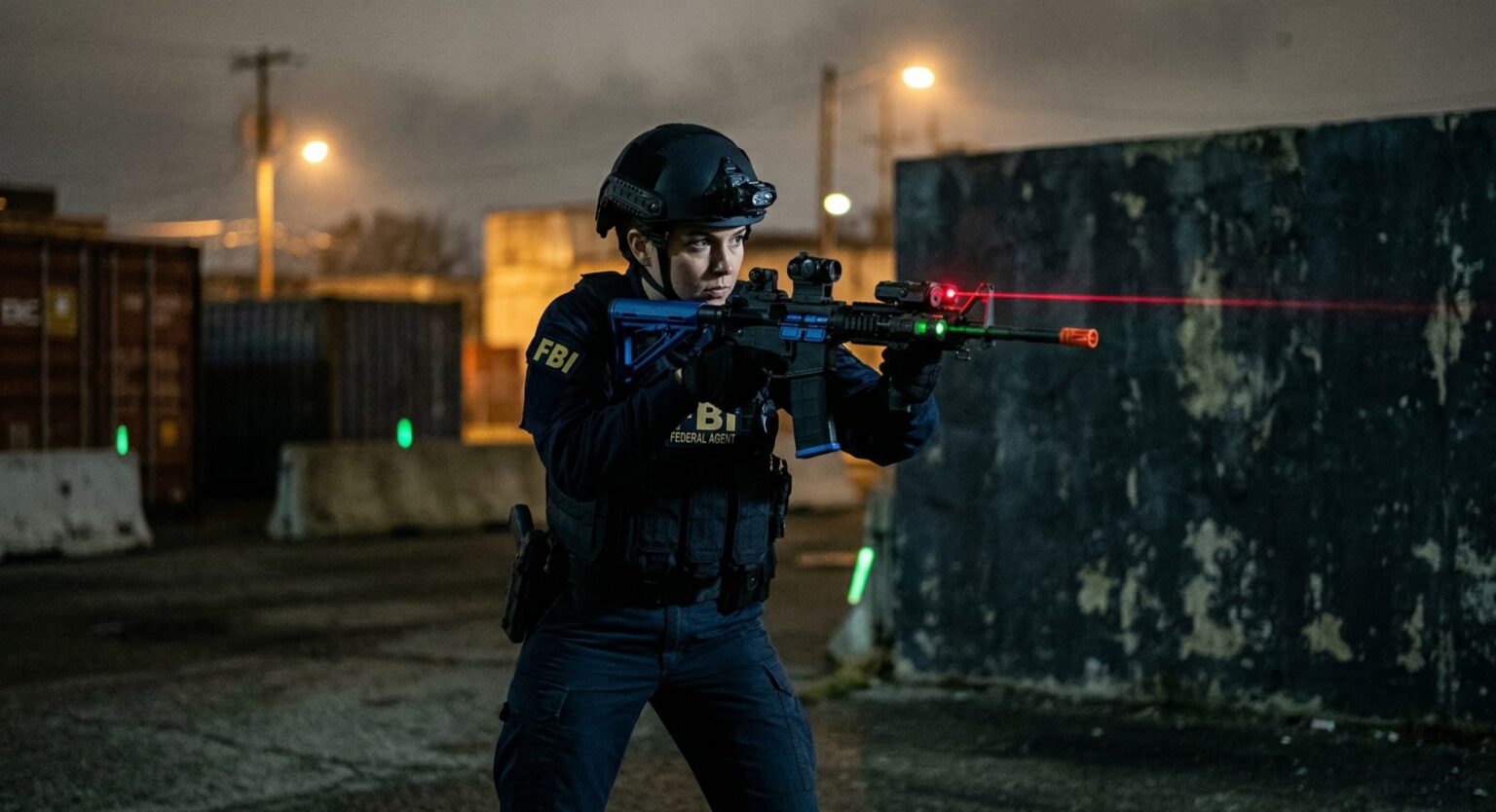
The FBI enforces these strict Federal law enforcement color vision standards because Special Agents operate in high-stakes, life-or-death environments where split-second color recognition is critical. Consider these real-world tactical scenarios:
- Suspect Description and Pursuit: You must be able to instantly and accurately broadcast that a fleeing suspect is wearing a “dark red hoodie,” not a “brown jacket,” to coordinate a perimeter.
- Vehicle Identification: During high-speed pursuits or surveillance, accurately identifying the color of a target vehicle under amber streetlights is vital.
- Crime Scene Processing: Agents must be able to visually distinguish between a dark puddle of water, motor oil, and a blood trail on dark pavement.
- Tactical Operations: In CQB (Close Quarters Battle) scenarios, operators must instantly acquire and recognize the glowing red dot of a laser sight or distinguish between colored wires on an explosive device.
How the FBI Tests Color Vision (The Two-Step Process)
The FBI medical examination is thorough. When it comes to your eyes, the Bureau typically employs a multi-tiered approach. If you have a deficiency, you need to understand exactly what tests will be placed in front of you.
Step 1: The Ishihara Plate Test (The Primary Gatekeeper)

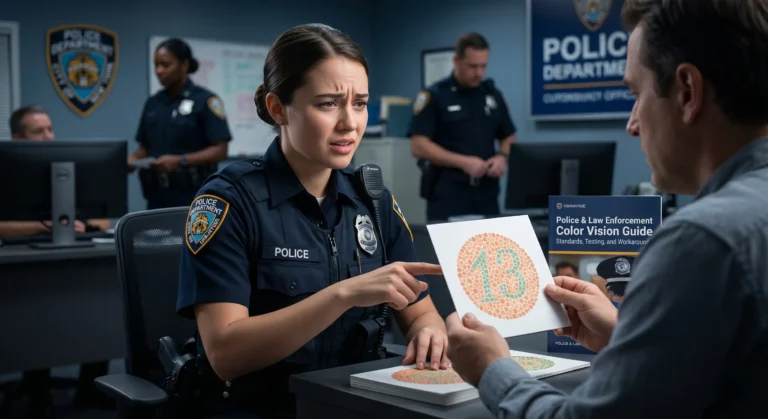
During your initial physical, the examining doctor will almost certainly open a booklet known as the Ishihara Pseudoisochromatic Plate Test. This is the classic “hidden number inside the colored dots” test.
To pass this primary screening, federal standards generally require an applicant to correctly read at least 9 out of the first 13 plates (or a similar ratio depending on the booklet version used).
The Problem with the Ishihara Test
An FBI Ishihara test failure is incredibly common. This test is hyper-sensitive and is designed to catch any anomaly. Many applicants with incredibly mild anomalous trichromacy—who have never had an issue seeing a traffic light in their lives—will fail this test. If you fail, remain calm; you have options.
Step 2: The Farnsworth D-15 (The Backup Test)
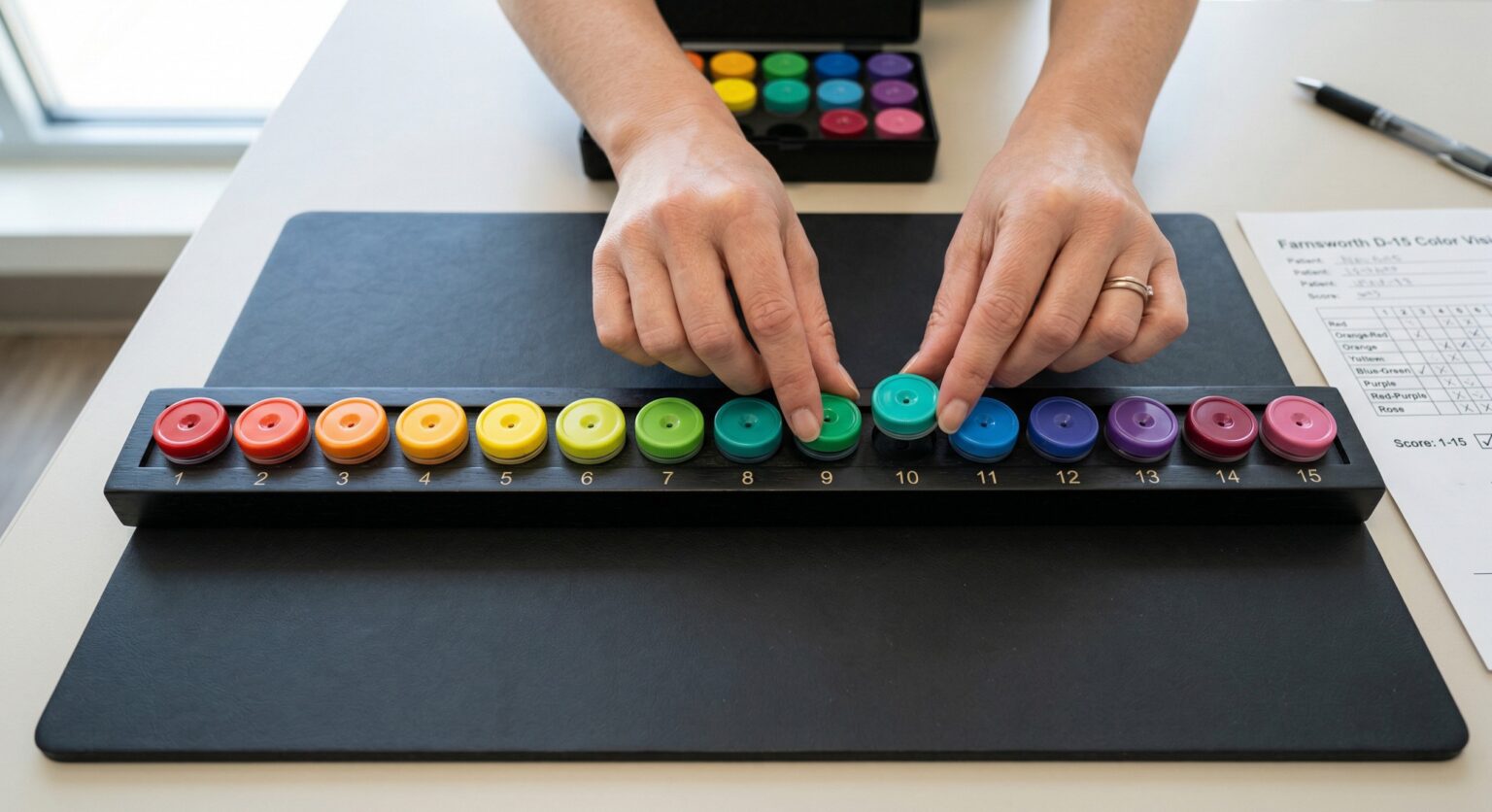
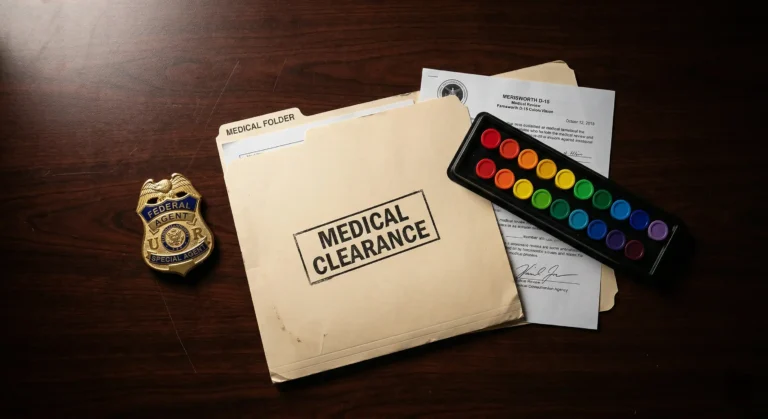
If you fail the initial dot test, you are not immediately disqualified. The FBI allows applicants to prove their functional vision through secondary testing. The most famous of these is the Farnsworth D-15 test FBI standard.
The D-15 is a color arrangement test. You are handed 15 colored caps and asked to arrange them in a smooth, continuous gradient (like a rainbow). This test is vastly more forgiving than the Ishihara. It is designed to screen out severe color blindness while allowing individuals with mild deficiencies to pass.
The Passing Metric: To pass the D-15 for federal law enforcement purposes, you generally must complete the sequence with no more than one “major crossover” error (a sequence jump of 4 or more caps).
The Shift to Computerized Testing (RCCT & WCCVT)
The FBI and other agencies are rapidly modernizing. Many field offices now utilize highly accurate, military-grade computerized testing instead of fading paper booklets.
- Rabin Cone Contrast Test (RCCT): This digital test measures the exact severity of your deficiency in the red, green, and blue cones. Federal aviation and law enforcement standards often require a score of 55 or higher in each color channel to pass.
- Waggoner Computerized Color Vision Test (WCCVT): A highly accurate digital diagnostic tool that eliminates the subjectivity of human examiners.
What Happens if You Fail the FBI Color Vision Test?
If you fail the Ishihara, fail the Farnsworth D-15, and fail the computerized diagnostics, the Chief Medical Officer will issue a medical disqualification. This is a bitter pill to swallow, but you need to know the rules of engagement for your next steps.
The Strict Ban on Colorblind Contacts
As you desperately search the internet for solutions, you will find companies selling color-correcting glasses and contact lenses. You need to hear the brutal truth regarding federal hiring:
Zero Tolerance for Corrective Lenses During Testing
The FBI strictly prohibits the use of ColorKinds lenses, tinted contacts, or colorblind glasses during the official medical examination. The examining physician will check your eyes. Attempting to hide colorblind contacts to pass the Ishihara test is considered an integrity violation and will result in permanent disqualification from the agency.
If you want to know more about how strict these rules are across the country, check out our comprehensive guide: State-by-State Police Color Blind Test Requirements.
How to Navigate the Medical Appeal Process
If you receive a disqualification letter, it is not necessarily the end of the road. You have the right to appeal the decision.
To win a medical appeal, you cannot just write a letter saying “I see colors fine.” You must take on the financial burden of visiting an independent, board-certified neuro-ophthalmologist. You will need them to administer advanced, specialized color vision tests and write a detailed medical report concluding that your specific, functional color vision is sufficient to safely perform the duties of an 1811 Special Agent.
For more insights on passing these exams, read our guide: How to Pass a Color Blind Test: Proven Strategies.
Don’t Give Up on Law Enforcement
While you cannot wear colorblind contacts during the FBI medical exam, they are an invaluable training and study tool. Use them to decipher complex forensic charts, improve target contrast at the shooting range, and train your brain before taking a naked-eye field test for local law enforcement agencies.
Shop Colorkinds Contacts NowFBI vs. Other Agencies: Federal Law Enforcement Color Vision Standards
If the FBI ultimately denies your medical clearance, do not assume your federal career is over. While “1811” is the standard occupational code for federal criminal investigators, medical strictness varies slightly by agency culture.
- DEA, ATF, & Secret Service: These agencies generally share the same strict medical guidelines as the FBI, heavily relying on the Farnsworth D-15 or RCCT as backup tests.
- Local and State Police (The Alternative): If the federal route is blocked, look to your state. State Highway Patrols and municipal police departments are often much more lenient. As detailed in our guide Can a Police Officer Be Color Blind?, many states allow applicants to take a practical “field test” (like identifying car colors in a dark parking lot) if they fail the clinical exams.
High-Paying FBI Career Paths That Don’t Require Perfect Color Vision

If being a door-kicking Special Agent is medically impossible, you can still serve your country and work high-profile cases. The FBI employs thousands of civilian professionals whose medical requirements are far less stringent than those of sworn agents.
1. Intelligence Analyst
Intelligence Analysts are the brains behind the operations. They map out organized crime syndicates, analyze terrorist chatter, and build the dossiers that Special Agents use in the field. Color vision is generally not a disqualifying factor for this highly respected role.
2. Cyber Investigator / Computer Scientist
The modern battlefield is digital. The FBI is desperately hiring computer scientists and cyber experts to track state-sponsored hackers, dismantle ransomware rings, and analyze digital footprints. In this role, your ability to read code is far more important than your ability to read a color plate.
3. Forensic Accountant
To take down massive cartels, human trafficking rings, and corrupt politicians, the FBI follows the money. Forensic Accountants are elite investigators who dismantle criminal enterprises through financial audits. Perfect color vision is not required to trace offshore bank accounts.
A color vision deficiency is a significant hurdle in federal law enforcement, but it is not an absolute wall. By understanding the testing procedures, preparing for the Farnsworth D-15, and keeping an open mind about alternative intelligence careers, you can still achieve your goal of working for the FBI.
Frequently Asked Questions (FAQ)
Is color blindness an automatic disqualifier for the FBI?
Complete color blindness (monochromacy) is an automatic disqualifier. However, mild red-green color blindness is not an automatic disqualification if the applicant can pass an approved secondary functional test, such as the Farnsworth D-15 or the Rabin Cone Contrast Test.
What color vision tests does the FBI use?
The FBI primarily uses the Ishihara Plate Test as an initial screening tool. If an applicant fails, they are typically evaluated using the Farnsworth D-15 color arrangement test or advanced computerized tests like the Rabin Cone Contrast Test (RCCT).
Can I wear colorblind contacts to the FBI medical exam?
No. The FBI and all federal law enforcement agencies strictly prohibit the use of color-correcting lenses, including ColorKinds contacts or tinted glasses, during the official medical examination and while on duty.
Does the FBI accept the Farnsworth D-15 test?
Yes, the Farnsworth D-15 is widely recognized by federal agencies as a legitimate secondary test. To pass, applicants generally must complete the test with no more than one major crossover error.
Can I take a practical field test for the FBI if I fail the clinical tests?
Generally, no. Unlike local or state police departments that may allow you to identify cars in a parking lot at night, the FBI relies strictly on clinical, standardized medical testing to determine color vision functionality.
How do I appeal an FBI medical disqualification for color vision?
If disqualified, you will receive a letter outlining your appeal rights. You must independently hire a board-certified neuro-ophthalmologist to administer advanced color vision tests and submit a detailed report proving your functional vision meets the Bureau’s standards.
What federal law enforcement agencies accept color blind applicants?
Most 1811 Special Agent roles (DEA, ATF, Secret Service) have similar strict standards. However, civilian roles within these agencies, such as Intelligence Analysts or Cyber Investigators, have much more lenient or nonexistent color vision requirements.
Is color blindness considered a disability under the ADA for FBI agents?
No. Federal courts have consistently ruled that normal color vision is a ‘Bona Fide Occupational Qualification’ (BFOQ) for sworn law enforcement officers, meaning the FBI is legally permitted to disqualify candidates based on severe color vision deficiencies without violating the ADA.