Can Police Officers Wear Colorblind Contacts? Navigating Medical Exams & Waivers
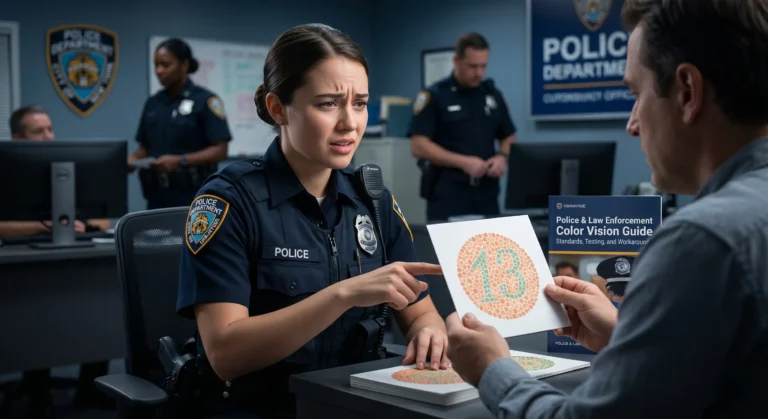
Securing a position in law enforcement is a grueling process of physical endurance tests, psychological evaluations, and extensive background checks. But for thousands of highly qualified recruits each year, the dream comes crashing down in a quiet medical clinic over a simple book of colored dots. The realization that you suffer from a color vision deficiency (CVD) immediately leads to a desperate search for workarounds.
The most common question that surfaces on police academy forums and applicant message boards is: “Can police wear colorblind contacts to pass the medical exam?”
The internet is full of companies selling color-correcting lenses, promising they are the magic key to beating the Ishihara plate test. However, navigating the complex world of law enforcement career opportunities for the colorblind requires absolute transparency and strategic planning.
In this comprehensive guide, we will cut through the sales pitches to deliver the unvarnished truth. We will explore the strict bans on optical cheats, explain why digital testing is rendering these workarounds obsolete, and provide a legal, step-by-step playbook for obtaining a medical waiver without sacrificing your integrity.
The Short Answer: Are Colorblind Lenses Allowed in Law Enforcement?
The short, definitive answer is no.
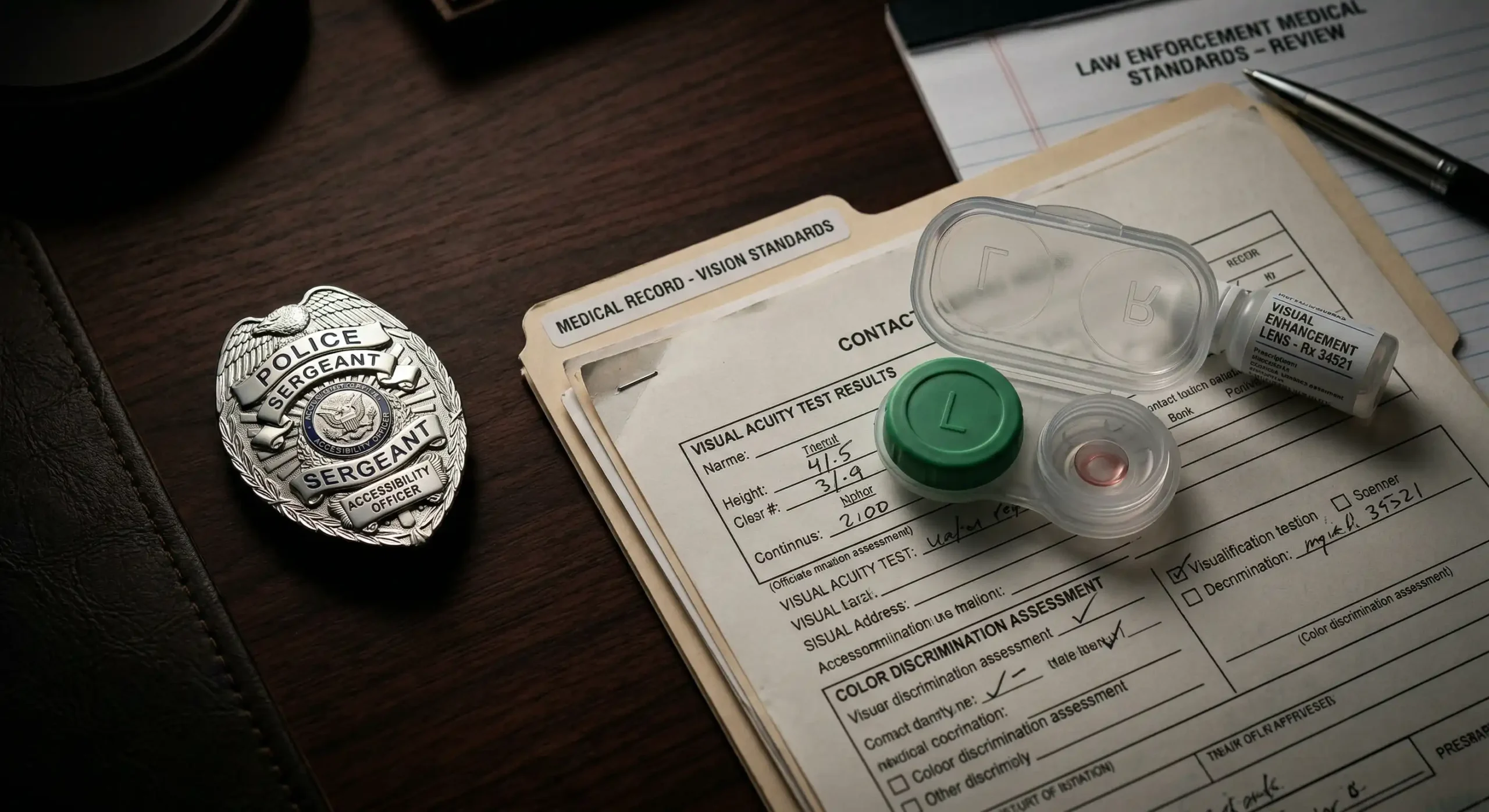
Whether you are applying for a local sheriff’s department, a state highway patrol, or a federal 1811 Special Agent position with the FBI, the use of color-enhancing lenses during an official medical evaluation is universally banned. This includes popular products like ColorKinds contact lenses and EnChroma glasses.
State Peace Officer Standards and Training (POST) commissions and the federal Office of Personnel Management (OPM) explicitly mandate that candidates must possess uncorrected functional color vision. While you can wear standard clear contacts to achieve 20/20 visual acuity, you cannot wear filtered lenses to manipulate chromatic perception.
The “Integrity Violation” Trap: Why Cheating Ruins Careers
Many applicants, knowing their deficiency is mild, attempt to sneak ColorKinds lenses into the optometrist’s office. They reason that because they can function perfectly well in daily life, wearing the contacts is a victimless shortcut to getting the job.
This is the most dangerous mistake a candidate can make.
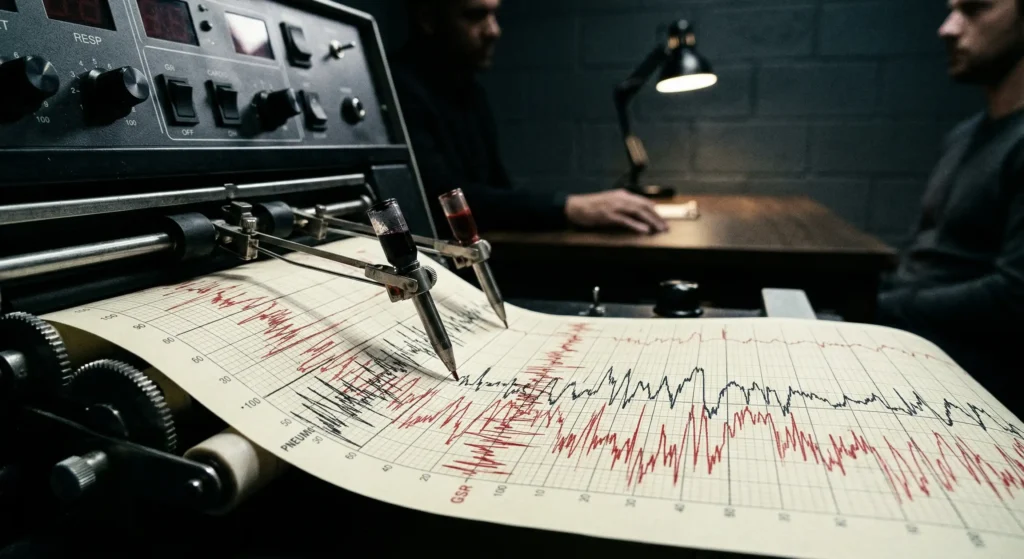
During the exhaustive background investigation (BI) and polygraph exam, candidates are heavily scrutinized on their honesty. You will be explicitly asked if you falsified documents, lied, or cheated during any portion of the hiring process. Attempting to bypass a medical standard is classified as an integrity violation.
Critical Consequence
Failing an eye exam simply means you need to find an agency with more lenient medical standards. Getting caught cheating on an eye exam means you will fail your polygraph and be permanently blacklisted from serving in law enforcement anywhere in the country.
Why Police Departments Ban Color-Correcting Contacts
The prohibition of color-correcting lenses is not an arbitrary rule designed to discriminate against candidates; it is deeply rooted in operational safety and legal liability.
Tactical Liabilities in the Field
Products like the ColorKinds lens work by creating “monocular disparity.” The wearer places a red-tinted lens in their non-dominant eye, while leaving the dominant eye clear. The brain combines the two different signals, allowing the wearer to perceive contrasts they previously could not see—which is how they “beat” the Ishihara dot test.
However, this optical trick creates massive tactical liabilities:
- Low-Light Degradation: A red filter reduces the overall amount of light entering the eye. In low-light environments—where the majority of officer-involved shootings occur—this creates a dangerous visual handicap.
- Color Distortion: While the lens helps differentiate red and green, it simultaneously distorts other colors in the spectrum, potentially causing an officer to misidentify suspect clothing or vehicle paint in a chaotic environment.
- Physical Dislodgement: In a physical altercation with a suspect, or when rapidly donning a CBRN gas mask, a contact lens can easily fold or pop out. Officers cannot rely on a fragile prosthetic for life-saving visual processing.

The Shift to Digital Testing: Why Contacts No Longer Work
Even if an applicant were willing to risk an integrity violation, the physical ability to cheat is rapidly vanishing.
Historically, police clinics relied on the 100-year-old Ishihara book. Because the plates were static, applicants could easily memorize the numbers, or use red-tinted lenses that were perfectly calibrated to defeat that specific type of ink.
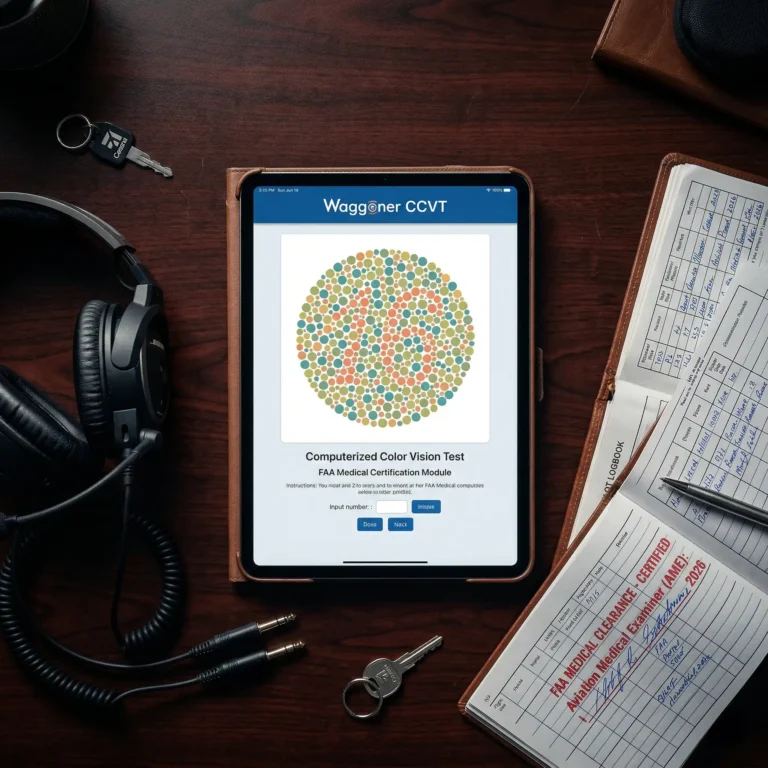
Today, federal agencies and modern police departments are shifting to computerized assessments, such as the Waggoner Computerized Color Vision Test (CCVT) and the Rabin Cone Contrast Test (RCCT). These digital systems utilize randomized, adaptive algorithms. They constantly alter contrast, brightness, and color saturation, effectively neutralizing the monocular cheat provided by colored lenses. The machine evaluates the exact severity of your specific cone deficiency in real-time.
What to Do Instead: The “Don’t Cheat” Medical Waiver Playbook
If you cannot use lenses to pass the initial screening, what are your options? The Americans with Disabilities Act (ADA) generally does not protect colorblind police applicants, as courts have upheld that color vision is a Bona Fide Occupational Qualification (BFOQ). However, this does not mean the door is closed.
Many departments recognize the difference between clinical perfection and functional capacity. If you fail the Ishihara test, you must immediately pivot to the administrative appeals process.
The 1811 & Local Police Waiver Playbook
When the clinic disqualifies you, follow these steps:
- Request an Independent Evaluation: Most agencies allow you to challenge the findings at your own expense. Book an appointment with an independent, board-certified ophthalmologist.
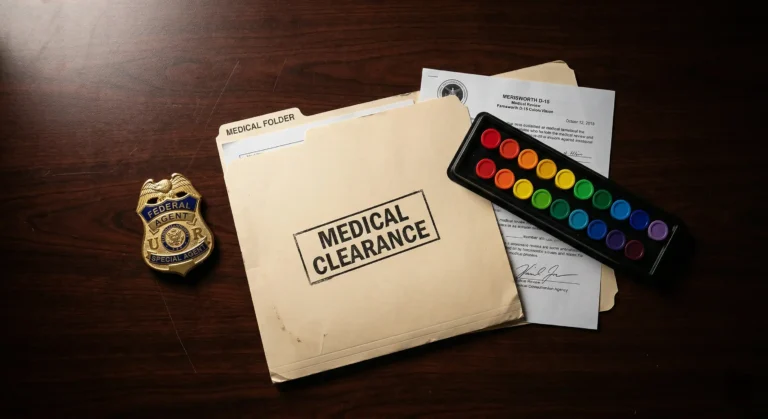
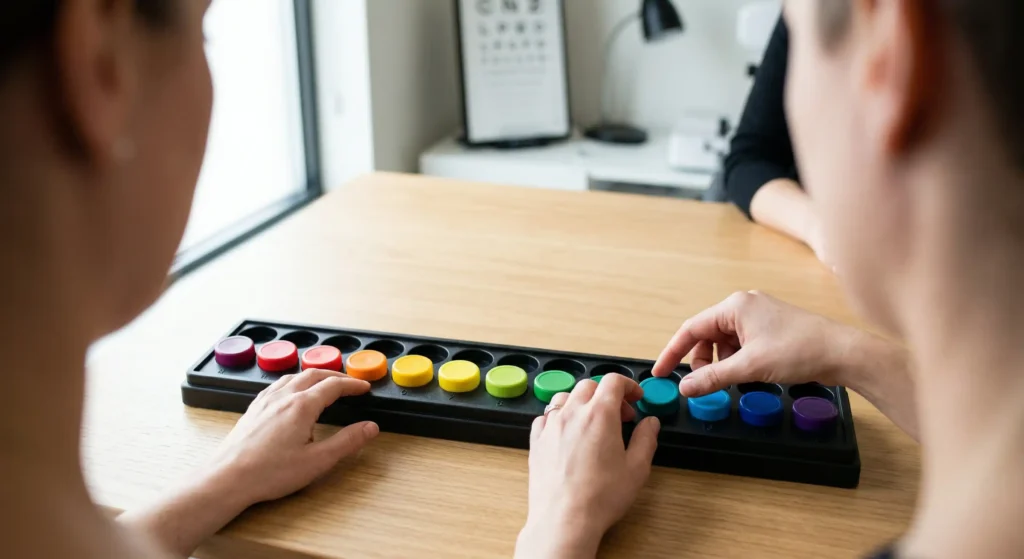
- Demand the Secondary Test: Request that your doctor administer the Farnsworth D-15 secondary test. This test involves arranging colored caps in order. It is significantly easier for mildly colorblind individuals to pass, as it measures functional color discrimination rather than microscopic sensitivity.
- Request a Functional Field Test: If you are applying to a state or local agency (such as those governed by California or Oregon POST), petition the medical board for a live-action test. Prove your worth by correctly identifying vehicle colors, suspect clothing, and hazardous material placards in a controlled, outdoor environment.
Medical Review Board Strategies (CBP & Beyond)
For massive federal agencies like Customs and Border Protection (CBP), waiver packets are evaluated by a centralized Medical Review Board. This process can take anywhere from 30 days to 5 months.
The secret to winning over a Medical Review Board is documenting operational history. The doctors on the board do not care that you know “green is on the bottom of a traffic light.” They need proof that you are safe in a tactical environment.
Waiver Success Tip
Gather letters of recommendation from former military commanders, EMS supervisors, or private security managers. Have them detail specific, high-stress situations where you successfully utilized color identification (e.g., accurately describing a fleeing suspect’s clothing at night, or sorting colored medical triage tags during an emergency).
The Ultimate Law Enforcement Color Vision Matrix
To save you from endlessly scrolling through recruitment forums, here is a breakdown of how different levels of law enforcement handle color vision deficiencies and secondary testing.
| Agency Type | Color Contacts Allowed? | Secondary Test Allowed? | Waiver Difficulty / Outcome |
|---|---|---|---|
| Local / Municipal Police | No | Yes (Usually Farnsworth D-15) | Moderate. Many departments readily accept D-15 passes or offer functional field tests. |
| State Highway Patrol | No | Varies | Moderate to High. Dictated entirely by state POST commissions. |
| Federal 1811 (FBI, DEA, USMS) | No | Yes (Farnsworth D-15) | Moderate. Standard field agents are frequently granted waivers upon passing the D-15. |
| U.S. Secret Service (USSS) | No | No | Extreme. Historically utilizes a rigid blanket ban on applicants failing the initial screen. |
| Tactical (SWAT, HRT, Bomb Tech) | No | No | Impossible. Elite specialized units enforce zero-tolerance BFOQ standards for uncorrected vision. |
The Push for Change: Secret Service vs. FBI Standards
As the matrix highlights, there is a massive discrepancy in how colorblindness is handled, even at the highest levels of the federal government. This inconsistency is driving a massive push for administrative reform.
The FBI and the Federal Aviation Administration (FAA) have modernized their protocols. By allowing secondary testing like the Farnsworth D-15 and the Waggoner CCVT, they acknowledge that clinical perfection is not a prerequisite for occupational excellence.
Conversely, agencies like the U.S. Secret Service maintain an archaic, 19th-century blanket ban. Advocacy groups and frustrated applicants are currently circulating petitions demanding that all federal agencies adopt universal, functional assessments, ensuring that highly qualified candidates are not excluded by arbitrary, outdated medical gatekeeping.

The Off-Duty Advantage: Training with Colorblind Contacts
We have firmly established that you cannot wear color-enhancing lenses inside the medical clinic. However, this does not mean they are useless to a law enforcement professional.
In fact, pivoting how you use these tools can provide a massive tactical advantage. If you manage to secure your medical waiver via a D-15 pass, you still have to survive the rigorous training of the police academy, EVOC (Emergency Vehicle Operations Course), and firearms qualifications.
Wearing specialized lenses during your off-duty civilian life and private range training allows your brain to build visual memory. By experiencing high-contrast environments—seeing the stark difference between a red laser sight and a green target backdrop, or tracking subtle changes in vehicle paint under sunlight—you train your cognitive recognition skills. When you take the lenses out to perform your official duties, your brain is already better conditioned to look for specific contrast cues.
For more insights on preparing for clinical evaluations, check out our guide on how to approach and understand color blind tests.
Train Your Eyes. Master the Environment.
While you cannot wear color-correcting lenses during an official police medical exam, training with colorblind contact lenses off-duty is a game-changer. Use them at the civilian shooting range, during tactical driving courses, and in daily life to build your visual memory and contrast recognition.
See the details you’ve been missing and step into the academy fully prepared.
Shop ColorKinds® LensesFrequently Asked Questions About Police Color Vision Standards
Can police wear colorblind contacts on duty if they already passed the exam?
This depends entirely on individual department Standard Operating Procedures (SOPs). Some local agencies allow the use of tinted lenses on patrol if an officer has already passed a medical waiver, but federal agencies universally prohibit them for sworn 1811 field agents due to safety and tactical liabilities.
Will EnChroma glasses help me pass the Ishihara test?
No. While EnChroma glasses may enhance color saturation in everyday life, they are strictly prohibited from being worn during official law enforcement medical evaluations. Examiners are trained to look for them, and attempting to use them is an automatic disqualification.
Can a polygraph examiner ask if I cheated on my medical exam?
Yes. Polygraph examiners and background investigators routinely ask broad integrity questions about whether you falsified any information or cheated during any portion of the hiring process. Lying about using colorblind contacts will trigger an integrity violation.
Does the ADA protect colorblind police applicants?
Generally, no. Courts have consistently ruled that strict color vision standards for police officers constitute a ‘Bona Fide Occupational Qualification’ (BFOQ). Because identifying colors is essential for public safety, departments are legally protected when disqualifying applicants with severe color vision deficiencies.
What happens if I fail the Ishihara color plate test?
Failing the Ishihara test is not always an automatic disqualifier. Progressive departments and federal agencies like the FBI allow applicants to take a secondary, practical exam, such as the Farnsworth D-15 arrangement test, to prove they possess functional color vision.
What is the Farnsworth D-15 color vision test?
The Farnsworth D-15 is an occupational vision test that requires candidates to arrange 15 colored caps in a smooth chromatic gradient. It is designed to pass individuals with mild color vision deficiencies while screening out those with severe defects.
Can I use ColorKinds lenses for a federal 1811 medical exam?
Absolutely not. The Office of Personnel Management (OPM) and all federal law enforcement agencies explicitly ban the use of ColorKinds contacts or any other color-altering lenses during medical testing.
How does computerized color vision testing work?
Tests like the Waggoner CCVT or Rabin Cone Contrast Test use randomized, adaptive algorithms on a calibrated digital screen. They precisely grade the severity of red, green, and blue cone deficiencies and cannot be bypassed using memorization or color-correcting lenses.
What should I include in a medical waiver appeal for color blindness?
A successful medical waiver appeal should include an independent evaluation from an ophthalmologist showing a passing score on a secondary test (like the D-15), alongside letters from former military or law enforcement supervisors detailing specific, high-stress tactical situations where you successfully identified colors.
Are there federal law enforcement jobs that do not require perfect color vision?
Yes. While specialized tactical units (SWAT, HRT) require perfect color vision, standard investigative roles within agencies like the FBI, DEA, and USMS frequently grant medical waivers to candidates who can pass a secondary functional vision test.